

Product Field NotesLavender Plants
Abrialii Lavender: A Productive Lavandin for Oil and Long Stems
 Save
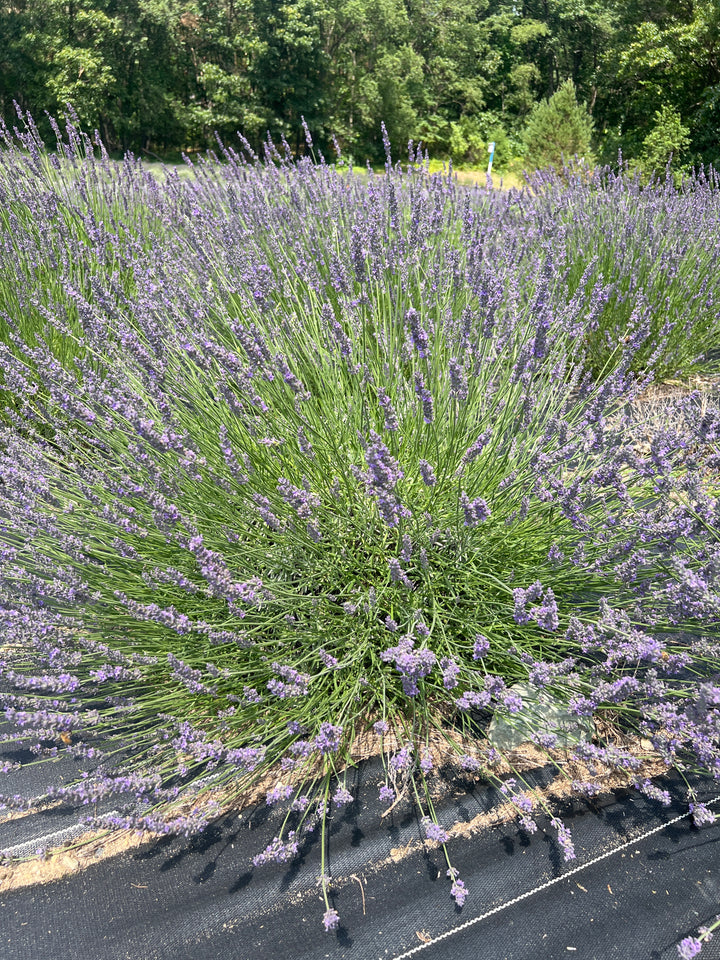
Abrialii lavender is a lavandin, the vigorous hybrid of English lavender and spike lavender. It builds a full, upright mound about 30 inches across and sends up long stems topped with dense, tapered spikes of deep violet flowers over dark violet-green calyces. If English lavender is a garden ornament, Abrialii is a working plant.
Botanically it is Lavandula × intermedia 'Abrialii'. It has a long track record as a reliable, productive lavandin, which is why it shows up in fields grown for oil and bundles.
Abrialii at a glance
| Trait | What to expect |
|---|---|
| Botanical name | Lavandula × intermedia 'Abrialii' |
| Parentage | L. angustifolia × L. latifolia |
| Flower color | Deep violet with dark violet-green calyces |
| Foliage | Gray-green and aromatic |
| Size | About 30 inches tall and 30 inches wide |
| Bloom | Mid-July, single main flush; fall rebloom is common |
| Hardiness | USDA zones 5a to 9b |
| Fragrance | Strong lavandin scent with camphor notes |
| Best uses | Essential oil, dried flowers, fresh bouquets, fragrance |
Why growers plant Abrialii
Lavandins carry more oil and grow bigger than most English lavenders, and Abrialii is rated excellent for oil, for cut flowers, for dried flowers and as a commercial field plant. The stems are long and the spikes dense, so a single plant fills a hand quickly at harvest. It also offers a generous harvest window rather than a frantic few days, which is welcome on a busy summer schedule.
For home gardeners, that same vigor makes it a bold hedge or a backdrop for shorter English lavenders. Its bloom comes after most English types peak, so a mix of both stretches the purple from June into late July.
Planting and spacing
Abrialii wants full sun and soil that drains fast after heavy rain or snowmelt. Lean ground suits it better than rich garden soil. Plan for a mature width of about 30 inches and space plants roughly 30 to 36 inches apart so air moves freely between them. Crowded lavandins stay damp inside and age poorly.
Set the crown at soil level, water the root zone well at planting and keep organic mulch away from the base. A gravel mulch or bare soil around the crown is a better choice in wet springs. The Frost Date Estimator helps time spring planting.
Care through the year
- Establishment: water deeply whenever the top few inches of soil dry out during the first season, then taper off.
- Mature plants: low water needs. Rain usually covers them once roots are deep.
- Winter chill: Abrialii needs a cold winter period to flower well, so Great Lakes winters work in its favor.
- Pruning: cut back after harvest or bloom, leaving a few inches of green growth above the woody base to shape a rounded mound. Never cut into bare old wood. See the Pruning Calendar.
- Feeding: rarely needed. Too much nitrogen makes stems flop.
Harvesting and using the stems
For dried bundles, cut when roughly a third to half of the flowers on a spike are open, on a dry morning after the dew lifts. Bunch the long stems with a rubber band, which tightens as the stems shrink, and hang them upside down somewhere dark and airy. For oil, growers usually wait until more of the spike is open. Fresh stems last well in a vase and add height to mixed arrangements.
In the kitchen, lavandin is stronger and more camphor-forward than English lavender. It is rated good for culinary use, but use only buds grown as a food crop, start with a very small amount and test the flavor before committing a whole batch. Most bakers still reach for English lavender first.
Choosing a plant format
Abrialii is offered as a 3-inch plug, a 4-inch pot or a 1-gallon pot. Plugs suit row plantings, and gallon plants give a hedge a head start. See the product page for current sizes and availability, or use Notify Me there if it is not available right now.
Frequently asked questions
Is Abrialii the same as English lavender?
No. It is a lavandin, a hybrid with spike lavender, so it is larger, blooms later and smells sharper and more camphor-like than English lavender.
Will it rebloom?
Its main show is a single midsummer flush, but it often gives a lighter second round in fall, especially when cut back promptly after the first.
How much room does it need?
Plan for about 30 inches of height and width. The Compare tool puts it beside other lavandins.

































Share how it went in your field