

Product Field NotesCompanion Plants
Age of Gold Hosta: A Bold Golden Specimen for Filtered Shade
 Save
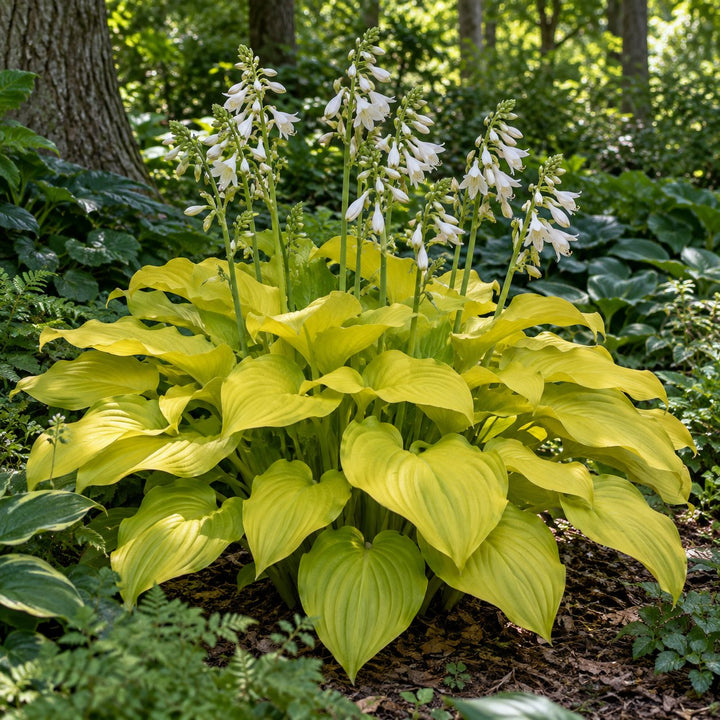
Age of Gold hosta is a large golden hosta with smooth, broad, heavy leaves in bright golden yellow. Its upright, spreading form builds a big round mound about 25 inches tall and nearly 5 feet across. In midsummer, near-white tubular flowers with a faint lavender blush rise on stems 42 to 48 inches tall, towering well above the gold.
Age of Gold at a glance
| Trait | What to expect |
|---|---|
| Botanical name | Hosta 'Age of Gold' |
| Foliage | Smooth, broad, chartreuse to golden yellow |
| Flowers | Near-white with a faint lavender center, on stems 42 to 48 inches tall |
| Size | About 25 inches tall, about 58 inches wide |
| Bloom | Starts early July, peaks mid-July, about five weeks |
| Hardiness | USDA zones 3 to 9 |
| Light | Part sun to part shade, full shade |
| Deer | Susceptible |
Sunshine for the shady side
On a property with a sunny lavender field, the shade can feel like an afterthought. A single Age of Gold changes that. Its broad gold leaves bounce light around under trees, and the tall, slender flower spikes add a vertical line that echoes the upright stems of lavender growing out in the sun. Planted where it can be seen from the lavender beds, it ties the two areas together.
It needs shade and steady moisture, so it should never go in the lavender field itself. Instead, give it a moist, shaded bed and surround it with darker partners: purple coral bells, green ferns and the white or pink hearts of bleeding heart in spring. Plan the shade bed in the Companion Plant Planner.
Getting the brightest gold
Light controls the color. Morning sun or bright filtered shade brings out the strongest gold. Deep shade leans it toward chartreuse. Hot afternoon sun is too much and can scorch the leaves, especially in dry soil. If you have a bed with an hour or two of morning light under high tree branches, that is the spot.
Care through the year
- Soil: evenly moist, humus-rich and well drained; never waterlogged in winter.
- Water: steady, especially in dry spells.
- Slugs: watch for them in damp springs and keep mulch thin near the crown.
- Flowers: large bracts on the stems turn chartreuse as seed forms. Cut the stems after bloom if you prefer.
- Fall and spring: remove collapsed foliage after hard frost, and divide crowded clumps as shoots appear.
Deer, anthracnose and petiole rot are the usual hosta concerns; destroy any plant with mottled or distorted leaves.
The plug tray
Age of Gold comes as a 72-cell plug tray, suited to growers, landscapers and gardeners potting up hostas to grow on. See the product page for current availability.
Frequently asked questions
How much room does it need?
Plan for nearly 5 feet across at maturity. Large hostas take several seasons to get there.
Can it take full sun?
Morning sun is fine and brightens the gold. Afternoon sun can scorch it.
Does it grow near lavender?
Not in the same bed. Give it its own moist, shaded spot on the property.

































Share how it went in your field