

Product Field NotesLavender Plants
Backhouse Purple Lavender: An Easy First English Lavender
 Save
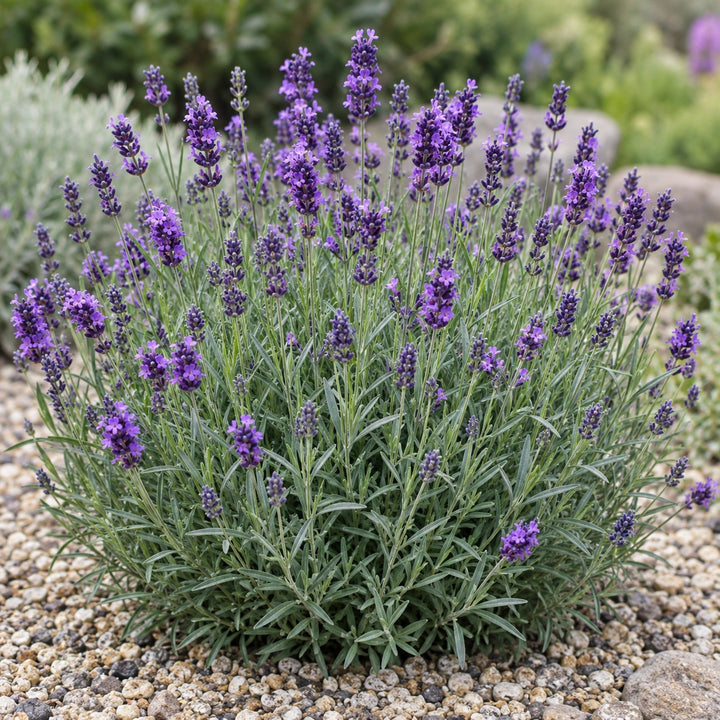
Backhouse Purple lavender is a compact, bushy English lavender about 15 inches tall and wide, with gray-green foliage and classic purple flowers. It begins blooming in early June, peaks in mid-June and carries a strong, sweet scent with soft herbal notes and little camphor. It is the kind of plant that looks exactly like what most people mean when they say lavender.
It is Lavandula angustifolia 'Backhouse Purple', rated for zones 5a to 8b. Its modest size and simple needs make it a sensible first lavender.
Backhouse Purple at a glance
| Trait | What to expect |
|---|---|
| Botanical name | Lavandula angustifolia 'Backhouse Purple' |
| Flower color | Purple |
| Foliage | Gray-green |
| Size | About 15 inches tall and 15 inches wide |
| Habit | Bushy and compact |
| Bloom | Starts early June, peaks mid-June, repeat blooming |
| Hardiness | USDA zones 5a to 8b |
| Fragrance | Strong, sweet and floral, low camphor |
| Culinary | Rated great |
Five mistakes first-time lavender growers make
- Too much water. Once established, English lavender needs very little. Soggy soil is the number one killer.
- Not enough sun. Six to eight hours of direct sun is the minimum. In part shade, plants stretch, flop and flower poorly.
- Rich soil and fertilizer. Lean soil makes compact plants with more flowers and stronger scent.
- Mulch against the crown. Bark and compost piled around the base hold moisture where lavender least wants it.
- Cutting into bare wood. Old, leafless stems often do not resprout. Always leave some green when you prune.
Avoid those five and Backhouse Purple will do most of the rest on its own.
Planting and spacing
Choose full sun and soil that drains quickly; sandy or loamy is ideal, and a raised bed solves heavy clay. Space plants about 15 inches apart for a continuous row, or plant three in a loose triangle for a bushy clump. Set the crown level with the soil and water deeply at planting. The USDA Zone Finder confirms it suits your area.
Care through the year
- First season: water when the top few inches of soil dry, then taper off.
- Winter chill: it needs a cold period to bloom, which Great Lakes winters provide.
- After the June flush: trim spent stems for a moderate second bloom.
- Spring: wait for new green growth before tidying winter damage.
The Lavender Care Academy walks through each season in more detail.
Using the harvest
Backhouse Purple is rated great for culinary use. For the kitchen, cut stems on a dry morning when the buds are fully colored and only a few flowers have opened; use buds grown as a food crop and start with small amounts. It is also rated good for cut and dried flowers. Dried buds fill sachets for drawers and closets, and short bundles tied with twine make easy handmade gifts.
Choosing a plant format
It is offered as a 3-inch plug, a 4-inch pot or a 1-gallon pot. For a first lavender, a 4-inch or gallon plant is the most forgiving start. See the product page for current sizes and availability, and use Notify Me there if it is not available right now.
Frequently asked questions
Is Backhouse Purple a good beginner lavender?
Yes. It is compact, cold-hardy to zone 5a and needs little beyond sun, drainage and a yearly trim.
How is it different from Backhouse Nana?
Their published records for size, bloom and scent are nearly identical. The Compare tool lines them up.
Can I grow it in a pot?
Yes. Use a 12-inch pot with a gritty mix and give it some shelter in winter.

































Share how it went in your field