

Product Field NotesCompanion Plants
Frances Williams Hosta: A Gold-Rimmed Giant for the Shade
 Save
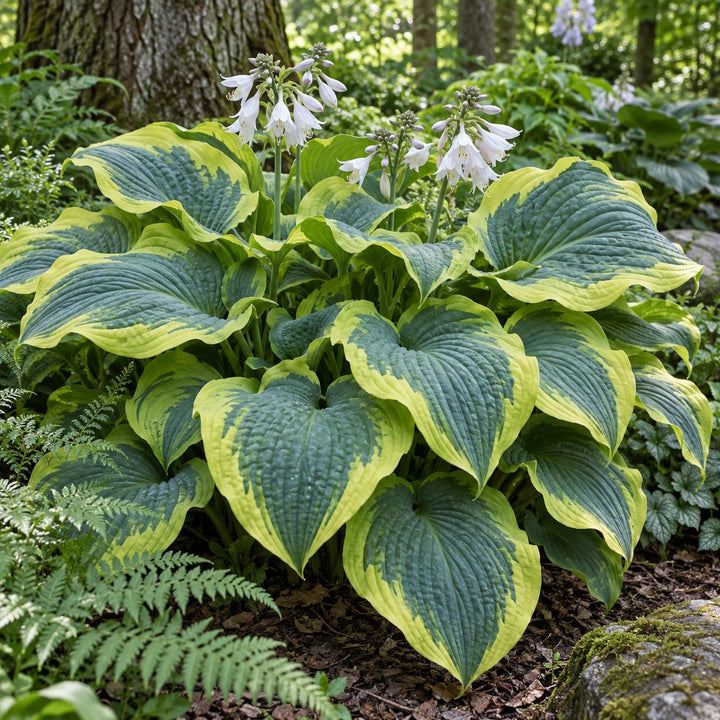
Frances Williams hosta is one of the old standbys of the shade garden, and it has earned the spot. Its giant, rounded leaves are blue-green in the center with wide, irregular chartreuse to yellow margins that get broader as the clump matures, and the heavy puckering gives every leaf a quilted look.
We will be straight with you: this is not a plant for the lavender bed. Lavender wants hot sun and dry feet, and Frances Williams wants the opposite. It belongs on the shady side of the same property, where it can carry the garden while the lavender handles the sunny rows.
Frances Williams at a glance
| Trait | What to expect |
|---|---|
| Botanical name | Hosta 'Frances Williams' (often listed under Hosta sieboldiana) |
| Foliage | Blue-green with wide chartreuse to yellow margins, heavily corrugated |
| Flowers | White bells on 30-inch stems, just above the leaves |
| Size | About 22 inches tall and 4 feet wide |
| Bloom | Starts early July, peaks mid-July |
| Hardiness | USDA zones 3 to 9 |
| Light | Part sun to part shade, full shade |
| Recognition | Royal Horticultural Society Award of Garden Merit |
Where it fits in a lavender garden plan
Most properties with a sunny lavender patch also have a stretch under trees or along a north wall where lavender would sulk. That is where Frances Williams shines. One plant makes a specimen big enough to anchor a bed by itself; three or five in a row make a bold edge along a shaded walk. Pair it with ferns and woodland perennials for contrast in leaf shape. The Companion Plant Planner is a good place to sketch the sunny and shady halves of a garden side by side.
Keeping the gold edges clean
The one thing this hosta asks for is protection from heat and drought. In hot sun or dry soil, the margins can brown and look scorched, a habit growers call melt out. Morning sun is fine; afternoon sun is where trouble starts. Water deeply during dry spells and keep the soil rich in organic matter so it holds moisture.
- Slugs: the thick, puckered leaves resist slugs better than most hostas, which saves a lot of shredded foliage.
- Deer: they will browse it, so plan for that in open rural yards.
- Mulch: keep it thin near the crown, since damp mulch gives slugs a place to hide.
- Health: destroy any plant with mottled or distorted leaves, a sign of a hosta virus that spreads by sap.
Through the seasons
Frances Williams is fully hardy in Michigan and needs a cold winter to rest. Cut the collapsed foliage down after a hard frost, which also removes slug eggs and leaf debris. In spring, divide crowded clumps just as the shoots poke through. The flowers are pleasant and bees visit them, but the leaves are the real show, so do not feel guilty about cutting the stems if you prefer a clean mound.
About the plug tray
This variety is offered as a full 72-cell plug tray, a set of young starter plugs suited to growers, landscapers and anyone planting a large shade bed. Plugs need time to size up into the big mound described here, so be patient for the first couple of seasons. See the product page for current availability.
Frequently asked questions
Can Frances Williams grow next to my lavender?
Not happily. Lavender needs full sun and lean, dry soil, while this hosta needs shade and steady moisture. Grow them in different parts of the same garden.
Why are the yellow edges turning brown?
Usually too much afternoon sun, heat or dry soil. Move it to a shadier spot or water more consistently through summer.
How fast will it reach full size?
Large hostas take several seasons to mature, and the margins widen as the clump ages. Give plugs good soil and steady water and they will fill in.

































Share how it went in your field