

Product Field NotesCompanion Plants
Musical Duet False Indigo: Violet and White Spires That Last for Years
 Save
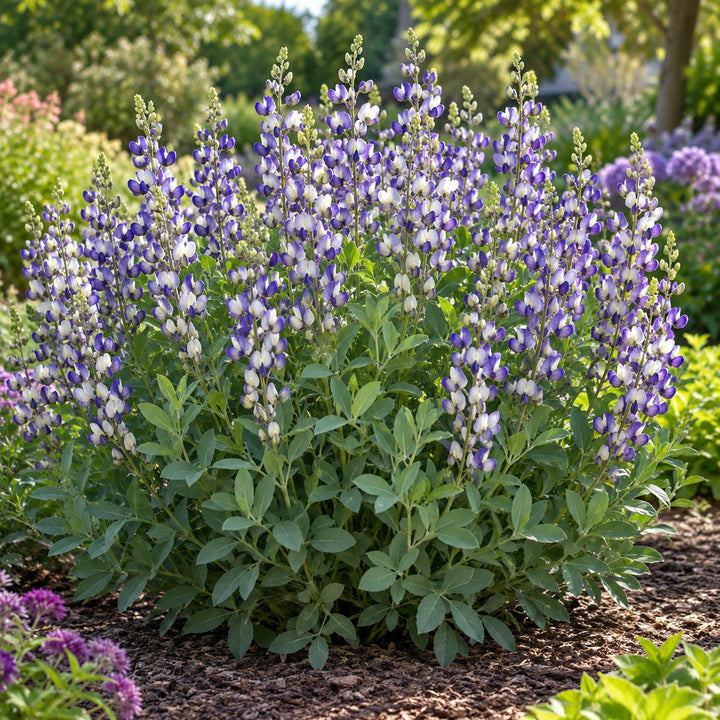
Musical Duet false indigo carries exceptionally long spikes, 12 to 18 inches, of pea-shaped flowers that pair violet upper petals with white lower ones for a crisp two-tone look. Over time it builds into a dense, bushy mound three to three and a half feet tall and up to four feet wide, with blue-green, three-parted leaves.
It is low maintenance, drought tolerant, deer resistant and very long lived. In other words, it is the kind of plant you put in once and then mostly admire.
Musical Duet at a glance
| Trait | What to expect |
|---|---|
| Botanical name | Baptisia 'Musical Duet' |
| Flowers | Violet and white bicolor, on spikes 12 to 18 inches long |
| Foliage | Blue-green, three-parted leaves |
| Size | 36 to 42 inches tall, 42 inches to 4 feet wide |
| Bloom | Late spring into early summer |
| Hardiness | USDA zones 4 to 9 |
| Light | Full sun to part shade |
| Deer | Resistant |
Structure for a lavender garden
Lavender beds are low and mounded. Musical Duet gives them a backbone. Its shrub-like size makes it a good anchor at the back of a lavender border or at the corners of a planting, and its violet-and-white spikes bloom just before lavender, so the two hand off color rather than compete. The blue-green leaves stay attractive all season and set off lavender's silver foliage.
Both plants want sun and lean, well-drained ground, and neither wants rich soil or heavy watering once settled. Give the false indigo its full 4 feet so it does not shade the lavender's south side. Map spacing in the Companion Plant Planner.
Planting and patience
- Placement: pick the forever spot. A deep taproot makes it drought tolerant and also makes moving it a bad idea.
- Soil: lean to average and well drained. As a legume, it needs no fertilizer.
- Water: regular watering the first season, then very little.
- Settling in: expect a couple of seasons of root building before it fills out and blooms heavily.
- Bare root: set the crown just below the soil surface with buds pointing up, and water in well.
Seed pods and fall cleanup
After bloom, false indigo forms inflated seed pods that darken as they ripen and rattle in the wind. You can cut the plant back in late fall, or leave the pods for winter interest. Many gardeners do the second and enjoy the percussion section.
Plug tray or bare root
Musical Duet is offered as a full 72-cell plug tray for growers and large plantings, and as a bare root plant for direct planting. See each product page for current availability, or the Wholesale Hub for tray orders.
Frequently asked questions
How long will it live?
False indigo is very long lived. A well-sited plant can stay in the same spot for many years.
Why is my new plant small?
It spends its first seasons building a deep root system. Growth above ground speeds up once that is in place.
Is it good for cutting?
The long spikes are striking in a vase, and the dried pods are popular in fall arrangements.

































Share how it went in your field