

Product Field NotesLavender Plants
Riverina Thomas Lavender: Long Stems, Silver Leaves, Deep Color
 Save
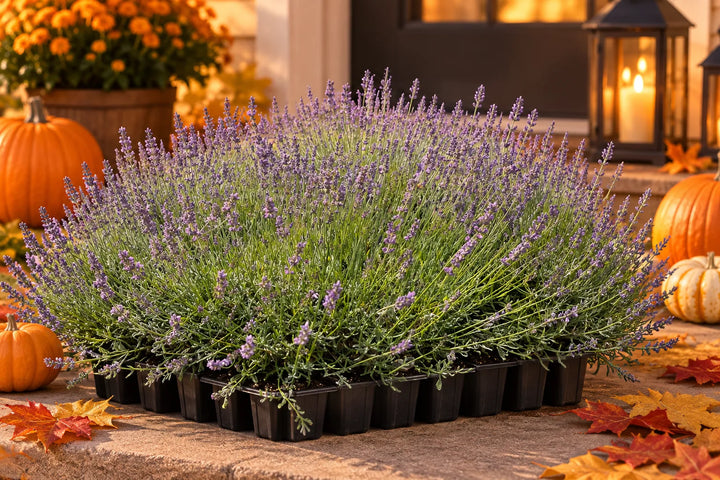
Riverina Thomas lavender is a lavandin with strong color and strong scent. Its flowers run dark blue to purple, its foliage is silvery, and its stems reach about 30 inches, long enough for generous bundles. It grows into a spreading, vigorous plant around three feet tall and four feet wide, with the classic sweet-and-camphor lavandin fragrance.
It is also one of the lavandins that does not stop after one show: its rebloom rating is high.
Riverina Thomas at a glance
| Trait | What to expect |
|---|---|
| Botanical name | Lavandula × intermedia 'Riverina Thomas' |
| Parentage | English lavender × spike lavender |
| Flower color | Dark blue to purple |
| Foliage | Silver |
| Habit | Spreading and vigorous |
| Mature size | About 36 inches tall and 48 inches wide |
| Stem length | About 30 inches |
| Bloom | Midsummer, peaking mid-July, high rebloom |
| Hardiness | USDA zones 5a to 9b |
| Ratings | Excellent for oil, cut and dried flowers, pollinators and field rows |
A bundler's lavandin
Farm documentation for this cultivar singles out its long stems for bundles, and that is where it earns its keep. Thirty-inch stems give you room to tie a tall, tidy bunch with plenty of handle, or to build wreath bases and big fresh arrangements. The dark blue-purple color holds well when dried at the right stage, and the silver foliage makes the plant handsome in the field before and after harvest.
Planting and spacing
Give each plant about four feet of width, with full sun and soil that drains quickly. On heavy ground, raised rows or berms help. Water deeply during the first season and then back off; established lavandins have low water needs. Skip rich compost and high-nitrogen fertilizer, which push soft growth and flopping stems.
Not sure if your site fits? The USDA Zone Finder and Plant Care Guide cover the basics.
Harvest, rebloom and pruning
- Bundles: cut when a few flowers at the base of each spike have opened and the rest are colored buds.
- Oil: growers usually wait until more flowers are open.
- After harvest: shear the plant into a rounded shape, staying in green growth. With high rebloom, this sets up another round of stems.
- Late season: make the last trim by late summer so new growth firms up before winter.
Its culinary rating is good, but lavandin is more camphor-forward than English lavender, so try a small amount before using it in food.
Plants or plug trays
Riverina Thomas is offered three ways. The plants and plugs listing includes 3-inch plugs, 4-inch pots and 1-gallon pots for home gardens. For growers planting rows or potting up their own stock, there is a 72-cell plug tray and a deeper 20-cell plug tray. See each product page for current sizes and availability, and the Wholesale Hub for tray orders.
Frequently asked questions
How is Riverina Thomas different from Riverina Alan?
Both are long-stemmed lavandins. Riverina Thomas is listed a bit smaller, about 3 by 4 feet, with darker blue-purple flowers and high rebloom. Riverina Alan is listed at about 4 by 5 feet with low rebloom.
Is it hardy in Michigan?
It is rated for zones 5a to 9b. Good drainage is what carries lavandins through wet winters.
Which tray should I choose?
The 72-cell tray gives you more plants for a larger planting; the 20-cell tray holds fewer, deeper plugs that are a little further along.



































Share how it went in your field