

Product Field NotesCompanion Plants
Summer Break Peruvian Lily: Pink Cut Flowers All Summer Long
 Save
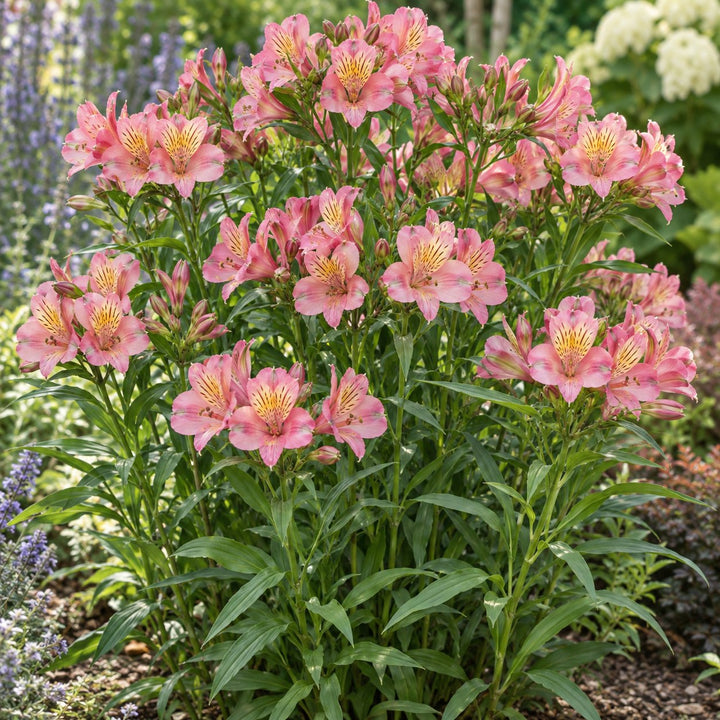
Summer Break Peruvian lily is a free-flowering garden alstroemeria with clusters of soft to medium pink, funnel-shaped flowers, 2 to 3 inches across. The upper petals carry a pale yellow blotch with fine dark streaks, the classic Peruvian lily marking.
Tall, sturdy stems hold the clusters well above the leaves, and the cut flowers last a long time in a vase. If you keep a jar of fresh flowers on the kitchen table all summer, this is a plant for you.
Summer Break at a glance
| Trait | What to expect |
|---|---|
| Botanical name | Alstroemeria 'Summer Break' |
| Flowers | Pink with a pale yellow blotch, 2 to 3 inches, in clusters |
| Size | 36 to 42 inches tall, 30 to 36 inches wide |
| Bloom | Starts early July, peaks early August, continues until frost |
| Hardiness | USDA zones 6 to 9 |
| Light | Full sun to part shade |
| Cut flower | Excellent |
| Deer | Moderately resistant |
A cutting bed beside the lavender
Lavender and Peruvian lilies make a lovely bouquet together, but they want different soil. Lavender prefers lean, dry ground; Summer Break wants fertile soil with even moisture. Plant them in neighboring beds in the same sunny area, and you can cut both on the same morning walk.
The timing is generous. Summer Break starts in early July as the main lavender harvest arrives and keeps flowering until frost, long after the lavender is dried and bundled. Fresh pink lilies with dried lavender stems are a pretty late-summer arrangement. The Cut Flower Planner helps plan a full season of cutting.
How to harvest: pull, do not cut
Alstroemeria has a habit worth knowing. Instead of cutting stems, grasp a flowering stem near the base and give it a gentle twist and pull so it comes away from the root. Pulling, rather than cutting, encourages the plant to send up more flowering stems. Use the same method to remove spent stems. Wear gloves if your skin is sensitive, since the sap can irritate some people.
Planting and winter care
- Planting: set the rhizomes about 1 inch deep in fertile, well-drained soil.
- Water: even moisture; water during long dry spells. Soggy soil leads to root rot.
- Heat: notably heat tolerant for an alstroemeria and keeps flowering through summer in full sun.
- Winter: it has overwintered for several seasons in zone 6. In Michigan, choose a sheltered, well-drained spot and mulch deeply over the fleshy roots after the first hard frost. In zone 5 and colder, grow it in a container and store it frost-free.
Check your zone with the USDA Zone Finder before deciding between ground and container.
Plug tray
Summer Break is offered as a 72-cell plug tray. See the product page for current availability, or the Wholesale Hub for tray orders.
Frequently asked questions
Is Summer Break fragrant?
No notable fragrance. It is grown for color and vase life.
What pests should I watch for?
Slugs, aphids, thrips and spider mites can show up. Wet soil is the bigger risk.

































Share how it went in your field