


When it arrives
Your 3-inch plug
It arrives actively growing. Water it the day it comes, let it rest in bright shade for 2–3 days, then harden it off for about a week before planting. Set the top of the root ball level with the soil — never deeper.
Welcome back.
Forecasts can change. We check destination weather again before live plants leave the farm. Non-plant lavender goods continue shipping normally.
Real dishes from our Field Notes recipes, shared by the people who made them.
Your reaction votes in that category and also adds one equal point to the photo's overall Lavender Crown total.
Category accolades: the photo leading each emoji earns that badge; one photo can earn several. Overall Lavender Crown: all four emoji counts combine, and the highest monthly total wins. Monthly counts restart, but approved photos stay enrolled. Cultivar-confidence votes are separate.
 Lavender grow guide
Woolly lavender · Lavandula lanata
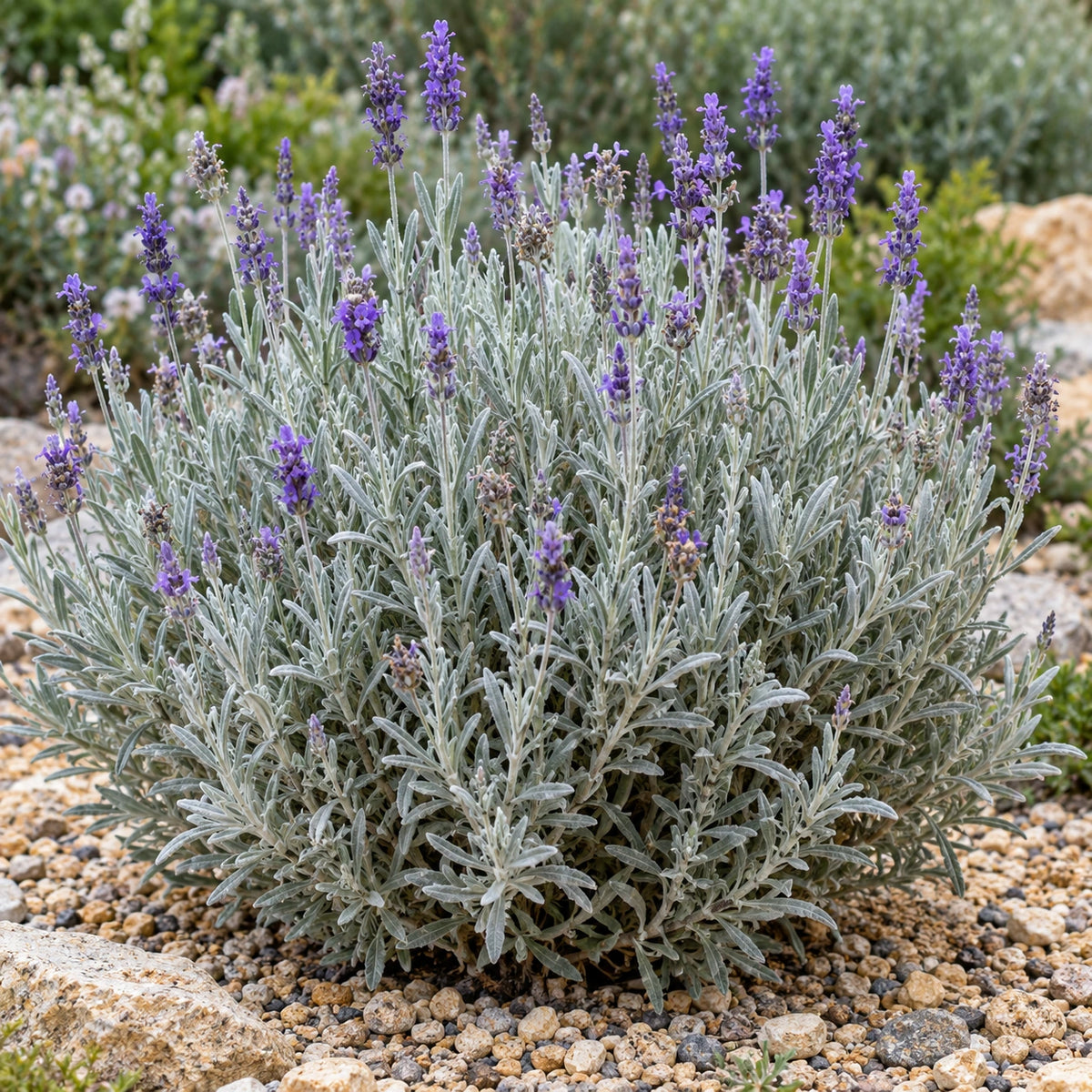
A striking lavender with thick, white-woolly leaves and violet late-summer spikes. Needs full sun, very sharp drainage, alkaline gritty soil and dry winters; its fuzzy foliage rots in wet or humid conditions.
Check my zone & planting dates
 Full sunLight
 Low waterFast drainage
 pH 7.0–8.0Soil
 Zones 8a–10bHardiness
 18″ tall18″ wide
 ResistantDeer · rabbits some resistance
 Mildly toxicPets

Huckleberry saysTell me where you grow and I’ll check if Woolly Lavender Plants & Plugs will thrive there.

Hardy in zones 8a–10b
After the last spring frost, into a raised, gritty bed or clay pot.
Your year with Woolly Lavender Plants & Plugs
When it arrives
It arrives actively growing. Water it the day it comes, let it rest in bright shade for 2–3 days, then harden it off for about a week before planting. Set the top of the root ball level with the soil — never deeper.

When it arrives
It arrives growing in its pot. Water on arrival and let it settle in light shade for 2–3 days. Loosen any circling roots and plant with the top of the root ball level with the soil.

After the last spring frost, into a raised, gritty bed or clay pot.

Set the crown (where stems meet roots) exactly at soil level, or slightly high on a mound, never deeper than it grew in the pot. Burying stems invites rot. Top-dress with pea gravel, not bark mulch. Gravel mulch is especially important for this woolly-leaved species.

18-24 in apart with open air flow around each plant.
Gritty, sandy or rocky soil; in pots a mix with 25-30% grit or perlite · pH 7.0–8.0
Fix-it tip: Wet, cold soil kills this plant faster than frost. Raise beds, add coarse grit, and use clay or unglazed pots with large holes. Lime acidic soil toward neutral per a soil test; avoid peat-heavy potting mixes.
Full sun (tolerates nothing less than full sun).
Give it the hottest, brightest, most sheltered spot. Its woolly leaves hold moisture, so air flow is as important as sun.


Don’t give up on it
Evergreen; it doesn't go fully dormant. Woolly leaves may brown at the base over winter. New white-felted growth appears at stem tips in mid-late spring once warm weather settles.
Plant or move outside after the last frost. Pinch tips and trim lightly to keep it bushy.

Dark violet spikes above silver-white foliage in mid-late summer. Deadhead or harvest spikes to keep new ones coming.

Light trim only. Bring pots inside before frost in cold zones.

Indoors: cool, bright, dry. Outdoors in mild zones: keep drainage sharp and protect from cold, wet spells.

First season: Water deeply at planting and when the top inch of soil is dry through the first season. In pots, check daily in heat, but never let them sit in a saucer of water.
After that: Very drought tolerant. Water only when soil is dry several inches down. Never water overhead; wet woolly leaves rot quickly.

Lean feeder. In the ground, usually none. In pots, a half-strength balanced liquid feed monthly in spring and summer only. Excess nitrogen gives soft, leafy growth and fewer flowers.

Cut faded flower stems back to the foliage after bloom; tidy lightly in spring after new growth starts. Never cut into leafless old wood; it rarely resprouts. Always leave at least 2-3 sets of green leaves on each stem.

Do not divide. Lavender is a woody subshrub with one main stem base; division usually kills it. Replace old woody plants with new ones from cuttings or plugs.

Hardy to about 23 F (-5 C), roughly zones 8-9, and only with dry winter soil. Wet cold is fatal. In zone 7 and colder, overwinter in a pot indoors in a cool, bright, dry spot.

Loves dry heat but dislikes humidity; in muggy climates the woolly foliage can rot or mildew. Grow in a pot or raised gravel bed and never crowd it.
 Whole plant or one side turns gray-brown and collapses in summer
Likely cause: Root or crown rot from wet, heavy soil, overwatering or mulch piled on the crown
What to do: Remove the plant and soil around it. Replant on a gravel-amended mound in full sun and water less.
 Woolly leaves turn brown and mushy
Likely cause: Moisture trapped in the hairs from overhead water, humidity or crowding
What to do: Water at the soil only, increase spacing and air flow, and remove damaged leaves.
 Pale, stretched growth indoors in winter
Likely cause: Too little light and too much warmth
What to do: Give the sunniest window or a grow light 12-14 hr, keep it cool (45-60 F), and water sparingly.
Blackened, limp shoots after a cold nightLikely cause: Frost damage; this lavender is not hardy in cold zones
What to do: Trim damaged tips back to healthy green growth. Bring indoors or cover before nights drop below its hardiness limit.
Overwatering: yellow lower leaves, blackened stem bases, collapse while soil is wet (root rot). Underwatering: crisp gray tips and dropped flower spikes; soft wilting that recovers after watering.


ASPCA lists lavender (L. angustifolia) as toxic to dogs, cats and horses from linalool and linalyl acetate: nausea, vomiting (not horses), appetite loss. Treat this species the same; keep essential oils away from pets.
Deer: resistant · Rabbits: somewhat resistant

Finnegan saysStill not sure what’s wrong? Ask Plant Health — describe it or add a photo.

Good in pots · 1 gallon+
Excellent in pots, which makes it easy to bring in for winter in cold zones. Use a clay pot and gritty mix; move up a size each spring, to 2-3 gallons for mature plants.

Overwinter only
In zones colder than its limit, bring it in before frost to a cool (45-60 F), very bright spot or under grow lights. Water sparingly and move back out after the last frost.
Best after a cold winter
A mountain species from southern Spain; a cool (not freezing, not wet) winter rest likely helps it bloom well.
3-inch plug
1-gallon pot once roots circle the plug Garden bed or a 1 gallon pot
Potted plant
Garden bed or a pot at least 1 gallon
Garden bed or a 1 gallon pot
Potted plant
Garden bed or a pot at least 1 gallonTime to move up? Slide the plant out: if white roots wrap the outside of the soil, it’s ready for the next size.
The one rule that matters
Cut spent stems back to the leafy mound after bloom. Shape lightly in spring. Never cut into bare wood, and prune on a dry day so cuts and woolly leaves dry quickly.

Cut spikes when the first flowers open, for fresh arrangements or drying. Woolly leaves dry well for sachets.

About 23 F (-5 C), roughly USDA zones 8-9, in dry soil. Not reliably hardy in the Great Lakes region; grow in a pot and overwinter indoors.

Not a culinary lavender; use English lavender for cooking.

Not a commercial oil source. Notable mainly as a parent of hardier silver-leaved hybrids such as L. × chaytorae.

Pots and dry beds with rosemary, thyme, sage, santolina, gaura, sedums and other Mediterranean plants that share its love of heat and grit. Its silver foliage glows beside dark purple English lavender.
 Community Grower Report
Real results from growers and farms who grow this cultivar. Answer only what you have experience with.
Loading community reports…
Overall
recommendation
Optional. The farm reads every tip before it appears on this page.
Grower-sourced information. Results reflect real gardens and farms and vary with climate, soil, plant age and care.
Great Lakes Lavender Farm
Use our evidence-led health checker for a practical recovery plan, staff review, or a second opinion from the Grower Community.
Reviews from growers, gardeners and shoppers.
Plants, lavender products, apparel, gifts and growing supplies.


You may also like

Here to help while we’re tending the farm