

Product Field NotesCompanion Plants
Apple Slices Indian Pink: Wine-Red Candles for Hummingbirds
 Save
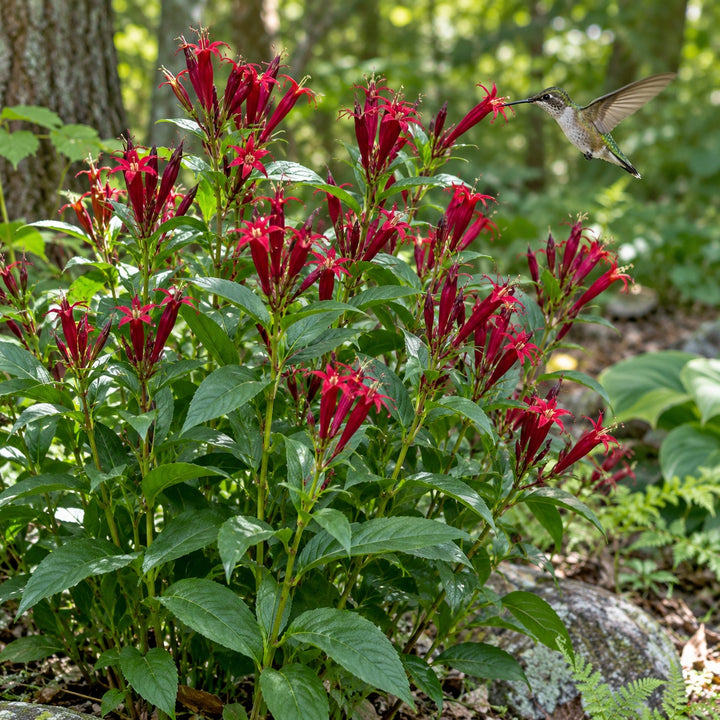
Apple Slices Indian pink is a selection of native Spigelia marilandica. Its narrow tubular flowers, deep wine red outside, stand upright along the tops of the stems like little candles, then flare at the tip into a five-pointed star with a pale, buttery interior. Hummingbirds find them fast. The spent flowers drop cleanly, so the glossy green clump always looks tidy.
Apple Slices at a glance
| Trait | What to expect |
|---|---|
| Botanical name | Spigelia marilandica 'Apple Slices' |
| Flowers | Wine-red tubes with a pale star-shaped tip |
| Foliage | Glossy, dark to medium green |
| Size | 18 to 22 inches tall, 16 to 18 inches wide |
| Bloom | Starts early June, peaks late June, with a smaller fall repeat |
| Hardiness | USDA zones 6 to 9 |
| Light | Part shade to full sun |
| Wildlife | Great for hummingbirds and pollinators; moderately deer resistant |
A companion for the edges of a lavender garden
Indian pink wants richer, more evenly moist soil and some shade, so it does not belong in lavender's dry, sunny bed. It fits the transition zones around it: the woodland edge, a lightly shaded border by the porch or a path that gets morning sun and afternoon shade. Plant it where you can see it from a window, because watching hummingbirds work the flowers is half the fun.
It blooms in June, overlapping with the start of lavender season, so the hummingbirds at the shady edge and the bees in the lavender keep the whole garden busy. Plan the layout in the Companion Plant Planner.
Growing it in Michigan
Apple Slices is rated to zone 6, which puts much of Michigan at or just past its comfort range. Check yours with the USDA Zone Finder. In colder spots, these steps help:
- Shelter: plant near a wall, fence or evergreen that breaks the winter wind.
- Soil: humus-rich and well drained. Waterlogged soil leads to root rot.
- Mulch: cover the crown after the ground freezes.
- Mark it: it emerges late in spring, so flag the spot.
Care through the season
In more sun it blooms more heavily but needs more water, and afternoon shade helps in hot spots. Deadhead after the first flush to encourage the fall repeat. It is slow to establish, so give it a couple of seasons, but it becomes long-lived once settled. Slugs may chew young shoots in spring.
Frequently asked questions
Is Indian pink related to garden pinks?
No. Despite the name, it is not a dianthus. It is a native woodland perennial.
Do I need to deadhead it?
Not for tidiness, since spent flowers drop on their own. Deadheading after the first flush does encourage fall flowers.
Can it take full sun?
Yes, with consistent moisture. In hot, dry sites, afternoon shade is kinder.

































Share how it went in your field