

Product Field NotesLavender Plants
Ashdown Forest Lavender: A Neat Green Hedge in Soft Violet
 Save
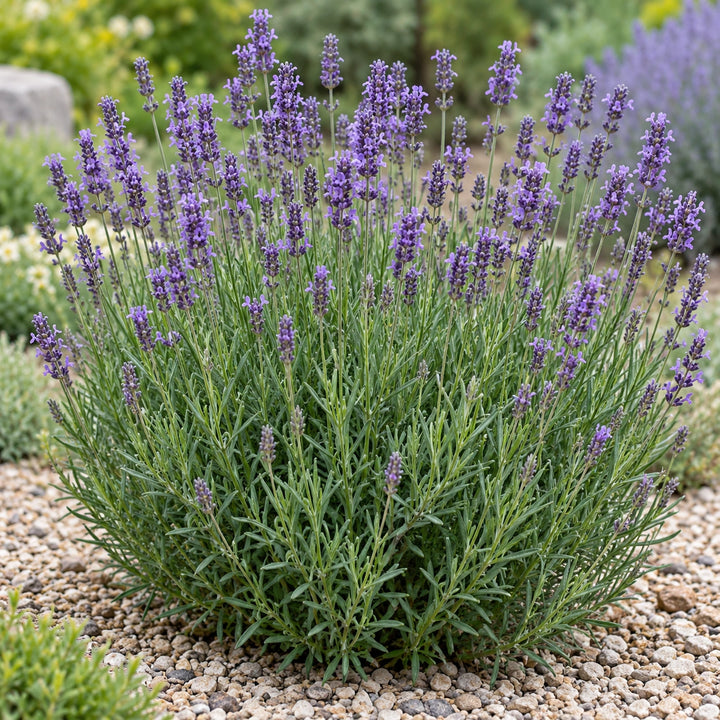
Ashdown Forest lavender is an English lavender with good manners. It grows into an erect, dense, neat evergreen shrub about 20 to 24 inches tall and 20 inches wide, with green aromatic leaves up to about an inch and a half long. In summer it sends up flowering stems of up to about seven inches, tipped with soft violet spikes.
It is Lavandula angustifolia 'Ashdown Forest', rated for zones 5a to 9b with an RHS hardiness rating of H5. Its green leaves set it apart from the many silver-leaved lavenders.
Ashdown Forest at a glance
| Trait | What to expect |
|---|---|
| Botanical name | Lavandula angustifolia 'Ashdown Forest' |
| Flower color | Soft violet |
| Foliage | Green, aromatic, evergreen |
| Size | About 20 to 24 inches tall and 20 inches wide |
| Habit | Erect, dense and neat |
| Bloom | Around midsummer; records list a start from mid-June to mid-July, with moderate rebloom |
| Hardiness | USDA zones 5a to 9b; RHS H5 |
| Fragrance | Moderate |
| Culinary | Rated great |
Building a low lavender hedge
A dense, upright habit is exactly what a hedge needs, and Ashdown Forest holds its shape well. Use it to line a front walk, edge a vegetable plot, frame a formal herb bed or mark the border between lawn and garden. Its green foliage looks crisp and fresh against brick, stone and dark mulch, and the soft violet flowers are easy to pair with almost any color.
For a continuous hedge, set plants about 18 to 20 inches apart in a straight line. A string line between two stakes keeps the row honest; lavender is forgiving, but a wobbly hedge is forever.
Planting and soil
Give it full sun, at least six to eight hours, and soil that drains quickly. Sandy or loamy soil is ideal. Along walks and driveways, check that runoff does not pool where the hedge will go, and raise the planting strip if needed. Set each crown level with the soil, water deeply and keep mulch off the stems. The USDA Zone Finder confirms your zone.
Care through the year
- First season: water the whole row deeply when the top few inches of soil dry.
- Established: low water needs.
- Winter chill: it needs a cold period to flower well, which suits Great Lakes winters.
- Hedge trimming: after the main bloom, shear the whole row to an even, rounded shape, staying in leafy growth. A moderate rebloom may follow. Never cut into bare wood. See the Pruning Calendar.
- Gaps: if one plant fails, replace it promptly so the row fills in evenly.
In the kitchen and the vase
Ashdown Forest is rated great for culinary use, in line with English lavender's reputation as the classic cooking lavender. Harvest buds on a dry morning when they are fully colored and only a few flowers are open, then dry them in a shaded, airy spot. Use buds grown as a food crop and start with small amounts.
Its seven-inch stems suit small bouquets and sachets, and it is rated good for cut and dried flowers.
Choosing a plant format
It is offered as a 3-inch plug, a 4-inch pot or a 1-gallon pot. Plugs are the economical way to plant a long hedge. See the product page for current sizes and availability, and use Notify Me there if it is not available right now.
Frequently asked questions
When does Ashdown Forest bloom?
Around midsummer. Published records differ on the exact start, from mid-June to mid-July, so expect it in early to midsummer depending on your season.
Is it good for cooking?
Yes. It is rated great for culinary use. Use food-grown buds and start small.
Why green leaves instead of silver?
Leaf color varies by cultivar. Ashdown Forest has green aromatic foliage, which gives a hedge a fresh, crisp look.

































Share how it went in your field