

Use & Care NotesCompanion Plants
Autumn Joy Stonecrop: Months of Changing Color Beside Lavender
 Save
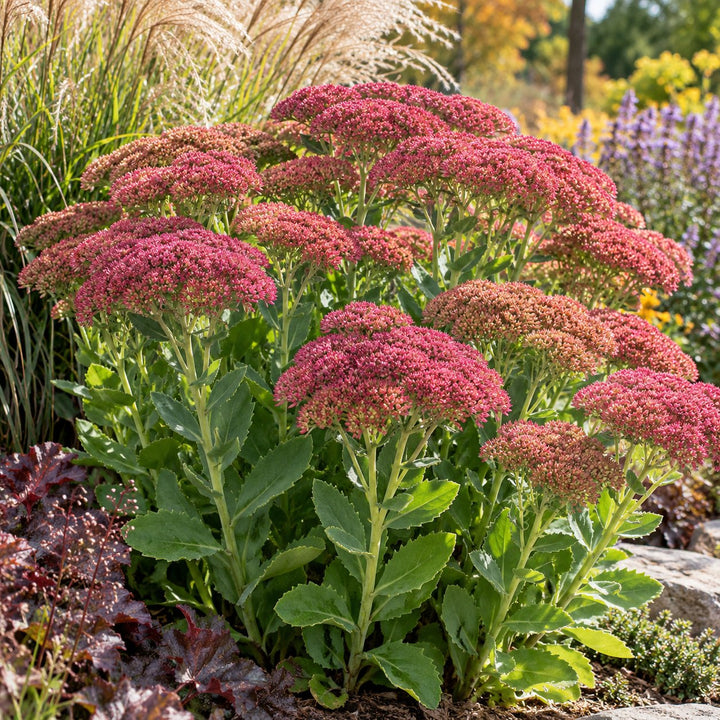
Autumn Joy stonecrop is one of the most widely planted perennials in the country, and it has earned the spot. Its broad flower heads, 4 to 6 inches across, form as pale green buds in summer, open deep rose pink in late summer and slowly age to warm coppery bronze in fall. Light green, fleshy leaves build a substantial upright clump about 2 feet tall and wide. It carries an RHS Award of Garden Merit.
Autumn Joy at a glance
| Trait | What to expect |
|---|---|
| Botanical name | Hylotelephium 'Autumn Joy' (also sold as Sedum 'Herbstfreude') |
| Flowers | Heads 4 to 6 inches, green to rose pink to coppery bronze |
| Foliage | Light green, fleshy, toothed |
| Size | About 24 inches tall, 18 to 24 inches wide |
| Bloom | Starts late August, peaks late September |
| Hardiness | USDA zones 3 to 9 |
| Light | Full sun |
| Wildlife | Excellent for bees and butterflies; moderately deer resistant |
A four-season partner for lavender
Autumn Joy is one of the few perennials that looks good in every season next to lavender. In early summer, its tight green buds look a bit like broccoli and add solid texture beside lavender's spikes. In late summer, as lavender is harvested and sheared, the heads turn rose pink and become the busiest bee stop in the yard. In fall they shift to bronze, and in winter the dried heads stand above the snow while lavender rests.
Both plants want sun, lean soil and dry feet, and both suffer in rich, wet ground. Plant Autumn Joy in groups between lavender plants or as a low hedge along a path. Leave enough space that each lavender keeps its airflow. Plan it in the Companion Plant Planner.
Planting and care
- Soil: average to poor and well drained. Rich soil makes the stems stretch and flop open in the middle.
- Water: regular water until established, then very little. It rots in wet, heavy ground.
- Winter: leave the stems and heads standing for structure and bird food.
- Early spring: cut old stems back as new rosettes appear at the base.
- Watch for: aphids and sedum weevil, and occasional leaf spot or mildew.
Cut, dried and wreath-ready
Autumn Joy rates well both fresh and dried. Pink heads cut in September last well in a vase, and bronze heads cut later dry beautifully. They make sturdy, long-lasting partners for dried lavender in fall wreaths and harvest arrangements.
Plug tray or bare root
Autumn Joy is offered as a 72-cell plug tray for growers and mass plantings, and as a bare root plant for a few clumps in a home bed. See each product page for current availability.
Frequently asked questions
Why does my Autumn Joy flop open?
Usually rich soil or too much water. Lean, dry ground keeps it upright.
Will it spread from seed?
No. It is a self-sterile hybrid, so it does not seed around. It simply forms a bigger clump over time.
How is it different from Autumn Fire?
Autumn Fire is a close relative selected for a tighter habit, sturdier stems and brighter rose flowers. Autumn Joy is the classic, aging to a warmer bronze.
Keep exploring
Ready to plant it?
Sizes, prices and shipping times are on its page.


Share how it went in your field