

Product Field NotesCompanion Plants
Belarina® Mix Primrose: A Spring Patchwork for Shady Beds
 Save
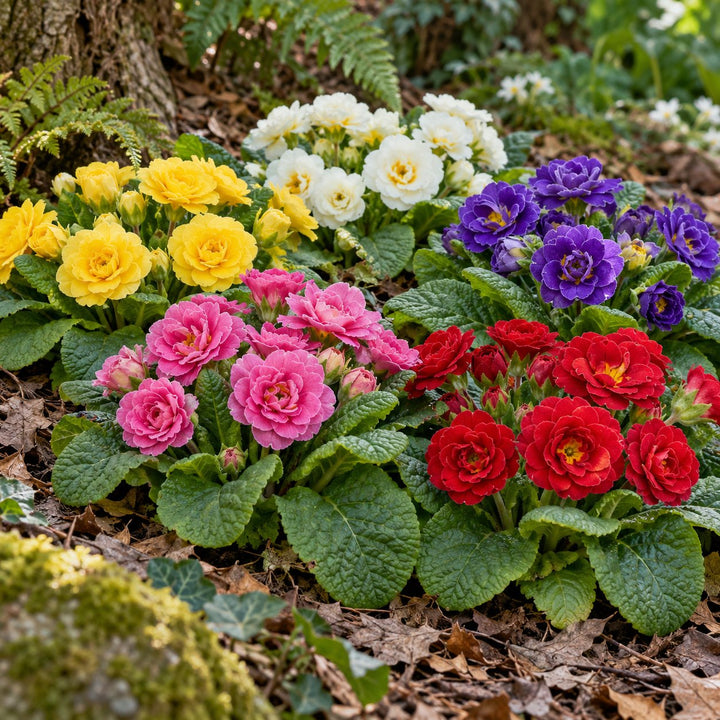
Belarina® Mix primrose gathers a range of double Belarina primroses in one planting. The colors can include reds, pinks, yellows, whites, blues and purples, some with contrasting edges, so a group in bloom looks like a scattered bouquet of small roses. Colors vary from plant to plant, which is half the fun.
Like every primrose, it belongs in the shade. On a lavender property, that means the cool side of the house, not the lavender row.
Belarina Mix at a glance
| Trait | What to expect |
|---|---|
| Botanical name | Primula vulgaris Belarina® Mix |
| Flowers | Fully double, about 1.5 inches, assorted colors |
| Foliage | Bright green, crinkled, flat rosette |
| Size | 5 to 8 inches tall, 10 to 12 inches wide per plant |
| Bloom | Early to late April |
| Hardiness | USDA zones 4 to 8 |
| Light | Part to full shade |
| Fragrance | Light, sweet scent up close |
Designing with a mix
A single color makes a calm, tidy edge. A mix makes a party. Belarina Mix shines when you plant it in loose groups rather than a straight line, so the colors fall into a natural patchwork. A shady path lined with them in April looks cheerful from the first warm day.
Because the colors are assorted, it is a forgiving choice for anyone who cannot decide on just one. If you want more control, plant the mix in a large bed and move a few favorite colors to pots once you see them bloom.
The lavender connection
Primroses are spring shade plants and lavender is a summer sun plant, so they will never share a bed. They do share a garden. Plan the property in zones: lavender in the open, sunny ground; primroses on the shady north side, under trees or along a woodland edge. The primroses finish before the lavender starts, so something is always in flower. The Companion Plant Planner helps you sort sun and shade spots.
Care basics
- Soil: humus-rich, evenly moist, never waterlogged.
- Summer water: keep the soil moist through July and August; heat can push the leaves semi-dormant.
- Timing: plant by early fall so roots establish.
- Winter: a light leaf mulch helps prevent frost heaving in exposed spots.
- Spacing: leave room for air flow to keep gray mold and leaf spot down.
Using a 72-cell tray
With a full plug tray, you can fill a sizable shady bed, stock several window boxes or pot up starts for spring displays. See the product page for current availability and the Wholesale Hub for tray orders.
Frequently asked questions
Which colors will I get?
It is an assortment, so colors vary from plant to plant. Expect a mix that may include reds, pinks, yellows, whites, blues and purples.
Are all the flowers double?
Yes. Every plant in the mix is a Belarina double primrose with rose-like blooms.
Do deer eat primroses?
They are rated moderately deer resistant. Slugs are usually the bigger problem.

































Share how it went in your field