

Product Field NotesLavender Plants
Bentley Lavender: Red-Purple Flags with a Warmer Tone
 Save
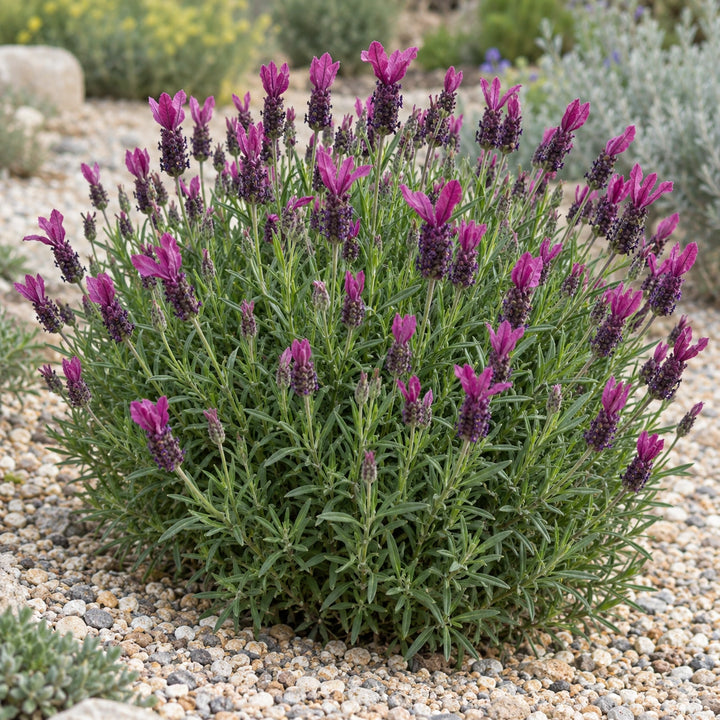
Bentley lavender brings a warmer color to the Spanish lavender lineup. Its broad flower spikes are topped with large red-purple bracts, a tone that leans toward wine and berry rather than blue. The plant is bushy and compact, about 20 inches tall and 24 inches wide, with green foliage and a moderate, resinous scent.
It is Lavandula stoechas 'Bentley', rated for USDA zones 6a to 10b. It starts flowering in early May and reblooms freely through the season.
Bentley at a glance
| Trait | What to expect |
|---|---|
| Botanical name | Lavandula stoechas 'Bentley' |
| Flowers | Broad spikes with large red-purple bracts |
| Foliage | Green |
| Size | About 19.7 inches tall and 23.6 inches wide |
| Habit | Bushy and compact |
| Bloom | Starts early May, peaks late May, high rebloom |
| Hardiness | USDA zones 6a to 10b |
| Fragrance | Moderate, resinous and herbal |
| Wildlife | Great for pollinators; deer resistant |
Designing with a warm-toned lavender
Most lavenders sit on the cool side of purple. Bentley's red-purple tone opens up combinations that blue-leaning lavenders cannot:
- Warm partners: plants with coral, apricot, burgundy or deep red flowers or foliage pick up the red in the bracts.
- Bronze and copper: rusty metal planters, weathered wood and copper accents flatter it.
- Contrast: chartreuse or golden foliage makes the red-purple glow.
- With other lavenders: beside a blue-violet English lavender, it adds depth rather than repeating the same shade.
At about two feet wide, a single plant makes a full, rounded pot, and a row in the ground reads as a solid band of color.
Planting and spacing
Give Bentley full sun, six hours or more, and soil that drains fast. In the ground, plant in sandy, gravelly or raised beds about 20 to 24 inches apart. In containers, use a pot 14 to 16 inches across with a drainage hole and a gritty mix. Keep mulch off the crown.
Care and winter
- Water: regularly while it establishes, then only when the soil is dry.
- Deadheading: snip faded heads at the base of the stem. Its rebloom rating is high.
- Shaping: a light trim after a heavy flush keeps it bushy. Avoid bare wood.
- Winter: rated for zones 6a to 10b. Spanish lavender is generally less cold-hardy than English lavender, so at the cold edge of that range choose a warm, sheltered, well-drained spot, or winter potted plants in a cool, bright, frost-free room.
The USDA Zone Finder confirms your zone.
Cutting and drying
Bentley's listed best uses include fresh bouquets and dried flowers, and it is rated good for both. The large bracts hold their red-purple color when heads are cut just as they open and dried out of direct sun. Use them in wreaths and dried arrangements where a warmer purple helps. Culinary use is not recommended.
Choosing a plant format
It is offered as a 3-inch plug, a 4-inch pot or a 1-gallon pot. See the product page for current sizes and availability, and use Notify Me there if it is not available right now.
Frequently asked questions
Is Bentley red or purple?
Its flowers are recorded as red-purple, a warmer tone than most lavenders. Light and age shift the shade a little.
Is the scent strong?
It is rated moderate, with the resinous, herbal character of Spanish lavender.
Does it dry well?
Yes. It is rated good for dried flowers, better than many Spanish lavenders.

































Share how it went in your field