

Product Field NotesCompanion Plants
Blackbeard Penstemon: Eggplant Foliage and Lilac Bells With Lavender
 Save
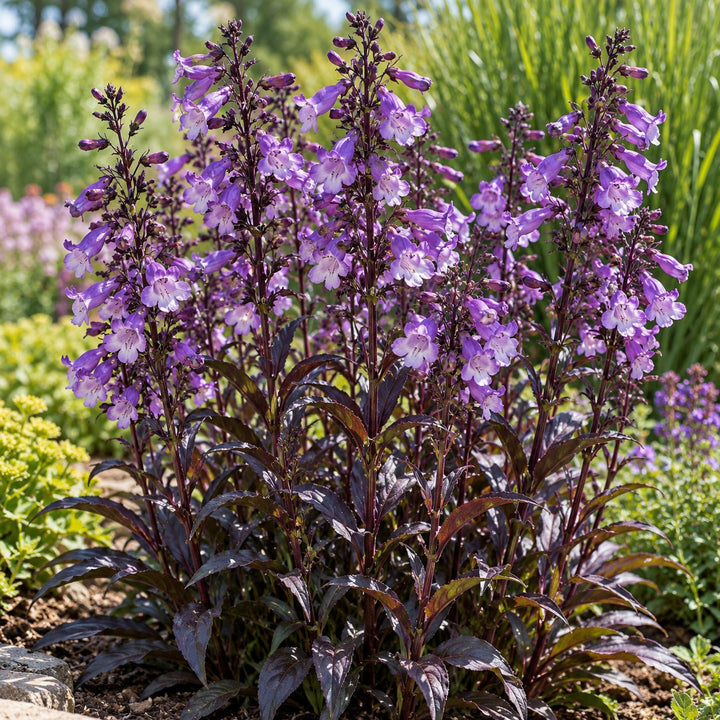
Blackbeard penstemon is a tall beardtongue with glossy, deep eggplant-purple leaves and dark purple stems that stand strictly upright. In early to midsummer those stems carry lilac-purple tubular flowers with flared white throats. Afterward, dark burgundy seed pods keep the stems interesting, and the plant does not flop.
The beard part comes from the fuzzy stamen inside each flower. No grooming required.
Blackbeard at a glance
| Trait | What to expect |
|---|---|
| Botanical name | Penstemon 'Blackbeard' |
| Flowers | About 1 inch, lilac purple with white throats |
| Foliage | Glossy deep eggplant purple; darkest in full sun |
| Size | 28 to 34 inches tall in bloom, about 24 inches wide |
| Bloom | Starts mid-June, peaks late June, about four weeks |
| Hardiness | USDA zones 3 to 8 |
| Light | Full sun |
| Wildlife | Great for hummingbirds and bees; moderately deer resistant |
A tonal partner for lavender
Some companions contrast with lavender. Blackbeard blends. Its dark purple foliage and lilac flowers sit in the same color family as lavender, but in a deeper, moodier key. Plant it among lavender and the bed gains shadows and depth, like adding a darker shade to a painting.
Its upright form helps too. At nearly 3 feet tall, the stiff stems rise behind or between lavender mounds without leaning on them. It blooms from mid to late June, overlapping the start of English lavender, and both plants want sun and good drainage. The dark leaves keep the color going long after the flowers fade.
Planting and care
- Site: full sun for the darkest foliage and best flowering.
- Soil: average and well drained. Like lavender, it should not sit wet over winter.
- Water: regularly while establishing, then it tolerates drought.
- After bloom: leave the stems for the burgundy seed pods and winter interest, then cut back to the basal foliage in late summer or early spring.
- Winter: very hardy; the basal leaves stay evergreen through winter.
It takes heat and humidity in stride and is rarely bothered by pests.
Plug tray or bare root
Blackbeard comes as a 72-cell plug tray for growers, native plantings and large borders, or as a bare root plant for adding a few to a home garden. See each product page for current availability and the Wholesale Hub for tray orders.
Frequently asked questions
Does Blackbeard need staking?
No. Its stems are strictly upright and resist flopping.
Is it good for cut flowers?
Yes. The tall stems are rated good for cutting and pair well with lavender in a vase.
Will hummingbirds visit?
Its tubular flowers are a favorite of hummingbirds and bees.

































Share how it went in your field