

Product Field NotesCompanion Plants
Blue Fortune Anise Hyssop: Licorice-Scented Spikes for Late Summer
 Save
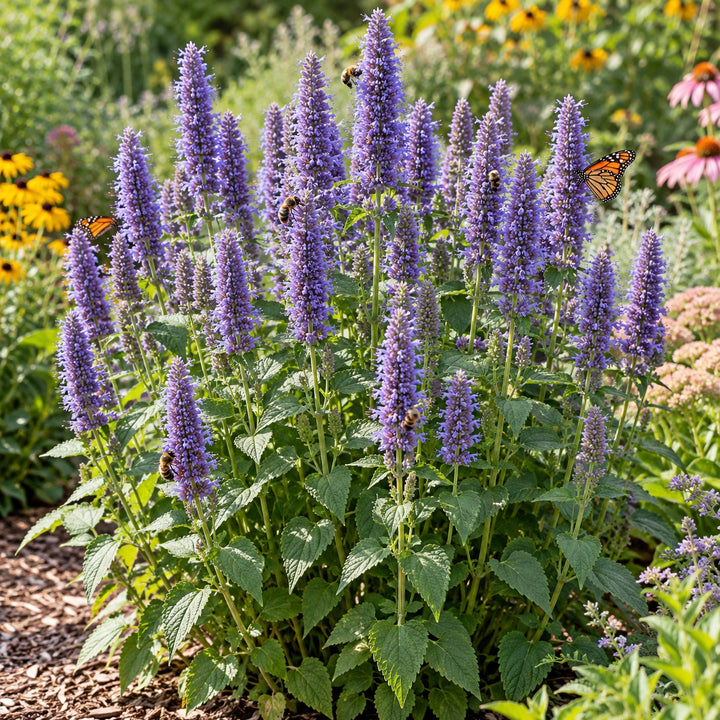
Blue Fortune anise hyssop is a long-proven agastache with soft blue-violet bottlebrush spikes on strong, upright stems. It blooms from early July into early fall and holds a Royal Horticultural Society Award of Garden Merit. Crush a leaf and you get a clear, sweet black licorice scent.
To the bees, a clump in full bloom is the best restaurant in town. Expect a crowd.
Blue Fortune at a glance
| Trait | What to expect |
|---|---|
| Botanical name | Agastache 'Blue Fortune' |
| Flowers | Soft blue-violet bottlebrush spikes, 3 to 5 inches long |
| Foliage | Medium green, toothed; sweet licorice scent when brushed |
| Size | 24 to 36 inches tall, 18 to 24 inches wide |
| Bloom | Starts early July, peaks early August, into early fall |
| Hardiness | USDA zones 4 to 9 |
| Light | Full sun |
| Wildlife | Excellent for bees and butterflies; deer resistant |
Extending the lavender look
Blue Fortune's spikes are thicker and fuzzier than lavender's, but the color and upright form are close enough that the two read as a set. It opens in early July while lavender is peaking and keeps flowering well into late summer after the lavender's main bloom is cut. In a pollinator garden, that means bees have something to visit long after the lavender harvest.
The vase-shaped clump grows 2 to 3 feet tall, so it works behind compact lavenders or mixed into a row of taller ones. It is hardier than the Southwest hummingbird mints and reliable in Michigan in well-drained soil, which is the same soil lavender wants.
Planting and care
- Planting: set the bare root plant with the crown at soil level in spring, and water it in well.
- Soil: average to lean and well drained. Wet winter soil is the main risk.
- Water: regularly in the first season, then only in long dry spells.
- Deadheading: the spikes stay attractive as they fade, but removing them extends bloom.
- Winter: leave the stems standing and cut back in early spring.
In the kitchen and the drying shed
Unlike many ornamental agastaches, Blue Fortune's leaves and flowers have a light anise flavor and are used for tea and as an edible garnish. Use only plants grown without garden chemicals, and start with a small amount. The spikes also dry well: cut them when most florets are open, bundle a few and hang them upside down in a shaded, airy spot, just as you would lavender.
Frequently asked questions
Is anise hyssop a true hyssop?
No. Despite the common name, it is an agastache, a separate plant in the mint family.
Will it spread through the bed?
It forms an upright clump. Deadheading reduces any self-sown seedlings.
Can I use it in arrangements?
Yes. It is good both fresh and dried, and pairs naturally with lavender stems.

































Share how it went in your field