

Product Field NotesCompanion Plants
Blue Spear Switch Grass: A Blue-Green Column Behind Lavender
 Save
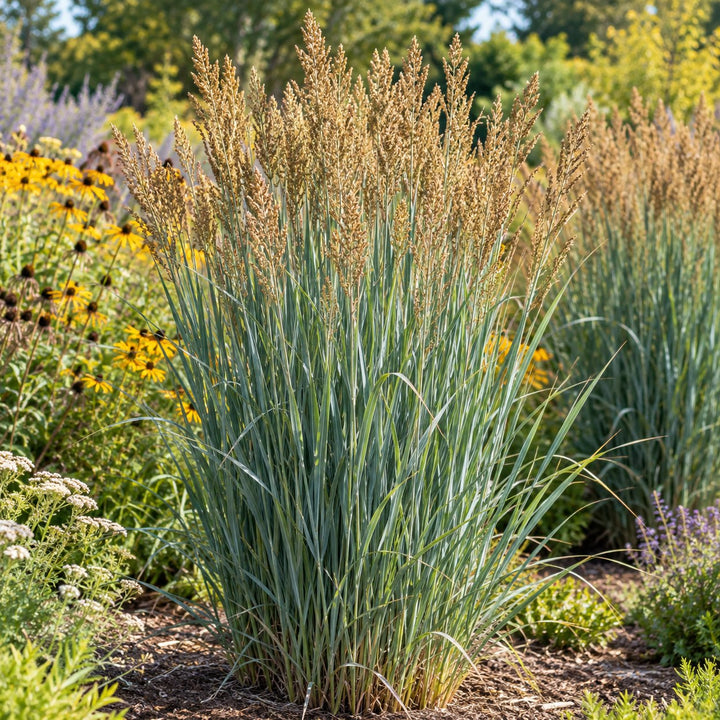
Blue Spear switch grass grows as a straight, sturdy column of narrow blue-green leaves about four feet tall. In late summer it does something most switch grasses do not: instead of opening into an airy haze, its flower heads stay tight and clustered just above the foliage, a bit like small sorghum heads.
That tidy, upright shape makes it a natural back-row partner for lavender. It shares lavender's love of full sun and holds its form long after the lavender has been harvested.
Blue Spear at a glance
| Trait | What to expect |
|---|---|
| Botanical name | Panicum virgatum 'Blue Spear' |
| Foliage | Blue-green, about half an inch wide, turning gold and tan in fall |
| Seed heads | Dense, compact panicles, green-tan maturing to warm tan |
| Size | About 48 to 52 inches tall, 24 to 30 inches wide |
| Bloom | Starts mid-August, peaks early September |
| Hardiness | USDA zones 4 to 9 |
| Light | Full sun |
| Deer | Resistant |
Why it pairs well with lavender
Lavender is a low, rounded, silvery plant. Blue Spear is tall, narrow and blue-green, so the two contrast in shape while sharing a cool color family. Set a few clumps behind a lavender row, or one at each end of a bed like bookends, and the planting looks finished even in November.
Timing works in your favor too. Lavender peaks in early to midsummer; Blue Spear is a warm-season grass that does most of its growing from early summer on and flowers in late summer. One takes over as the other winds down. Leave a little space between the grass and the lavender so the lavender keeps its sun and airflow.
Planting and care
- Soil: almost anything, from sandy to clay. It tolerates drought once established and also handles wetter spots, so it can sit lower in the yard than the lavender.
- Water: regularly through its first season, then rarely.
- Feeding: not needed. Like lavender, it stays sturdier in lean soil.
- Spring: cut the clump back to a few inches in early spring. It is slow to wake up, so do not give up on it in April.
- Problems: rust is the main issue, mostly in humid summers. Good airflow helps.
Fall and winter interest
Leave the clump standing through winter. The tan seed heads and golden foliage catch snow, give birds cover and keep some structure in the garden when the lavender is a low gray mound. Blue Spear also handles wind and salt, which makes it a good choice near driveways and roads.
The seed heads rate well for both fresh and dried arrangements. Cut a few stems in early fall and tuck them into a bundle of dried lavender for a long-lasting arrangement.
Ordering format
Blue Spear is offered as a 72-cell plug tray, a good fit for mass plantings, screens and growers potting up their own plants. See the product page for current availability, or the Wholesale Hub for tray orders.
Frequently asked questions
Does Blue Spear spread like some grasses?
It forms a clump that widens slowly rather than running through the bed.
Will it shade out my lavender?
It can if planted on the south side. Put it to the north or east of lavender, or give it enough distance that its four-foot height does not cast shade on the lavender for long.

































Share how it went in your field