

Product Field NotesLavender Plants
Blue Torch Lavender: A Fernleaf Type for Pots and Warm Gardens
 Save
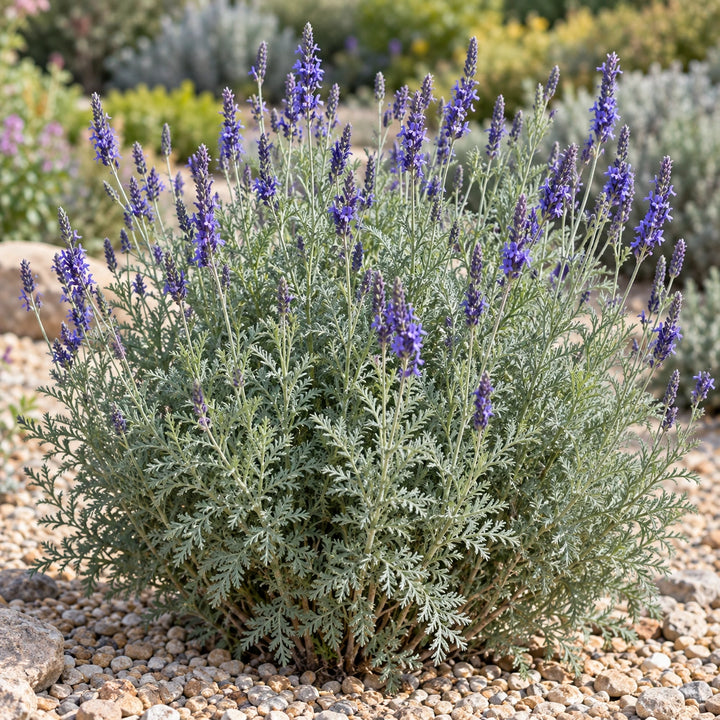
Blue Torch lavender does not look much like the lavender most people picture. Its foliage is silver and finely cut, almost lacy, and its blue-violet flowers rise on branching stems over a bushy sub-shrub. In warm climates it can bloom nearly year-round, and even in a Michigan summer it keeps producing flowers with very little fuss.
It is a fernleaf lavender, Lavandula multifida, from a warm-climate group of lavenders. That means two things: it is a lovely, long-flowering ornamental, and it does not survive hard freezes outdoors.
Blue Torch at a glance
| Trait | What to expect |
|---|---|
| Botanical name | Lavandula multifida 'Blue Torch' |
| Flower color | Blue-violet |
| Foliage | Silver and finely divided, fernlike |
| Habit | Bushy sub-shrub |
| Mature size | About 28 inches tall and 23 inches wide |
| Bloom | Everblooming; year-round in warm climates, peaking around mid-July |
| Hardiness | USDA zones 9a to 11b; tender in freezing climates |
| Fragrance | Moderate, pungent and herbal with resinous, spicy notes |
| Culinary use | Not recommended; grow as an ornamental |
What makes fernleaf lavender different
English lavenders are grown for their sweet scent and their hardiness. Fernleaf types are grown for their look and their stamina. The finely cut silver leaves add texture to a planter all season, and the plant flowers continuously instead of in one or two flushes. It does not need a winter chill to bloom, so it gets going quickly after planting.
The scent is different too: pungent, resinous and herbal, sometimes with a spicy edge, rather than sweet and floral. People who brush past it tend to either love it or squint at it thoughtfully.
Growing it in a cold-winter garden
In zones 9a to 11b it can live in the ground year-round. Everywhere colder, plan for a container:
- Pot: a container with a drainage hole and a gritty, fast-draining mix.
- Summer: full sun on a patio, deck or step. It handles heat well when the soil drains.
- Water: let the top inch or two dry between waterings. Do not leave it in a saucer of water.
- Before frost: move it indoors to the brightest, coolest window you have, or a sunroom. Water sparingly over winter.
- Spring: move it back outside gradually once frost danger has passed. The Frost Date Estimator helps with timing.
You can also simply enjoy it as a summer plant in a mixed container, the way you would a geranium.
Trimming and flowers
Snip spent flower stems back to the foliage to keep it tidy and blooming. A light shaping in spring keeps it bushy. It is rated good for fresh and dried flowers, so a few stems add an airy, branched texture to small bouquets. It is a great pollinator plant, and deer tend to leave it alone.
Because culinary use is not recommended, keep this one in the flower bed and the vase, not the kitchen.
Formats offered
Blue Torch is listed as a 3-inch plug, a 4-inch pot or a 1-gallon pot. For a container centerpiece, the gallon size gives a full plant right away; plugs and 4-inch pots work well tucked into mixed planters. See the product page for current sizes and availability, and use Notify Me if it is not ready yet.
Frequently asked questions
Will Blue Torch survive a Michigan winter outdoors?
No. It is hardy only in zones 9a to 11b. Bring it indoors before frost or grow it as a seasonal plant.
Can I cook with it?
Culinary use is not recommended. For cooking, choose an English lavender.
Why does it smell different from other lavender?
Fernleaf lavenders have a pungent, resinous, herbal scent instead of the sweet floral scent of English types.

































Share how it went in your field