

Product Field NotesCompanion Plants
Bouquet Perfect™ Scarletta Primrose: Bold Scarlet in Spring Shade
 Save
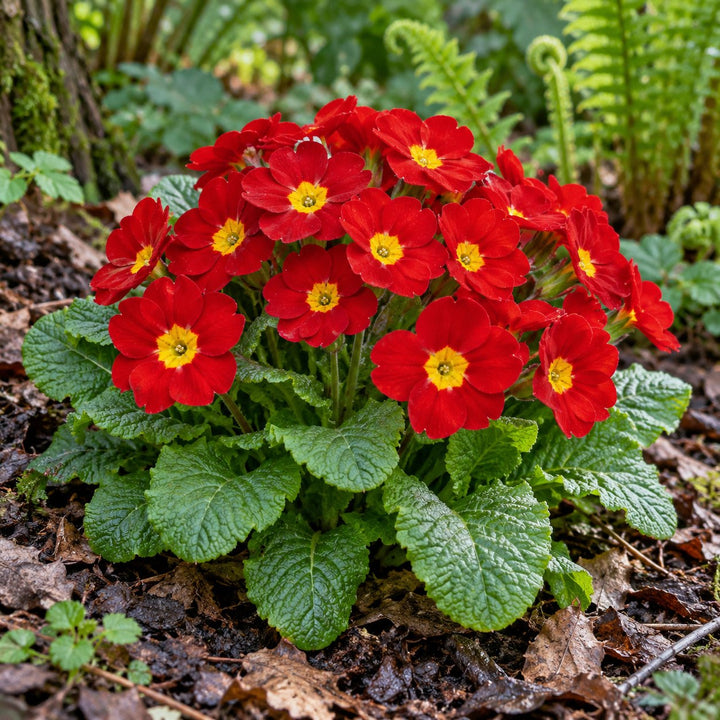
Bouquet Perfect™ Scarletta primrose is the boldest color in its series: bright scarlet-red flowers with five broad, notched petals and a small yellow eye. Its blooms are tied for the largest in the series, and they gather into a dome that hides the crinkled green leaves beneath.
Red is a rare sight in early spring shade, which is exactly where Scarletta belongs. It needs cool shade and constant moisture, so it lives on the opposite side of the garden from your lavender.
Scarletta at a glance
| Trait | What to expect |
|---|---|
| Botanical name | Primula vulgaris Bouquet Perfect™ Scarletta |
| Flowers | Scarlet red with a yellow eye, about 1.5 to 2 inches across |
| Size | 5 to 8 inches tall, 10 to 12 inches wide |
| Bloom | Through April, peaking late April |
| Hardiness | USDA zones 4 to 8 |
| Light | Part sun to part shade, or full shade |
| Deer | Moderately resistant |
Using red in the shade
Deep shade tends to swallow dark colors, but a saturated scarlet holds its own. Plant Scarletta in groups of five or more along a shaded path so the red reads from a distance, or pair it with white and yellow primroses for a classic spring mix. Under trees that leaf out late, it gets enough early light to bloom and then enjoys the shade all summer.
Lavender growers often focus on the sunny beds and leave the shady corners for later. Scarletta is an easy way to put that ground to work in spring, weeks before lavender begins growing again. The Companion Plant Planner helps you plan sun and shade areas side by side.
Planting so it comes back
Primroses are hardy, but new plants need time to root in. Plant by early fall at the latest so roots are established before the ground freezes. In heavy or exposed spots, freezing and thawing can push young plants out of the soil, a problem called frost heaving. A light mulch of shredded leaves after the ground freezes helps, and any plants that lift in spring can be pressed gently back in.
Care through the year
- Spring: keep the soil evenly moist and remove faded flowers. Sterile blooms keep the plant flowering for weeks.
- Summer: do not let it dry out. Heat can send the leaves into semi-dormancy.
- Every few years: divide crowded clumps after bloom.
- Watch for: slugs, aphids, spider mites, gray mold in crowded plantings and crown rot in soggy soil.
Ordering format
Scarletta is offered as a 72-cell plug tray. See the product page for current availability.
Frequently asked questions
Does Scarletta set seed?
No. Its flowers are sterile, which is why the bloom lasts longer than on seed-setting primroses.
Is it fragrant?
Its fragrance is mild. You will notice it most up close.
Can I bring it indoors?
It is sold as a hardy garden perennial. Enjoy it in a pot on a shaded porch in spring, then plant it out in a shady bed.

































Share how it went in your field