

Product Field NotesCompanion Plants
Bouquet Perfect™ Spearmint Primrose: Mint-Tinted White for Shade
 Save
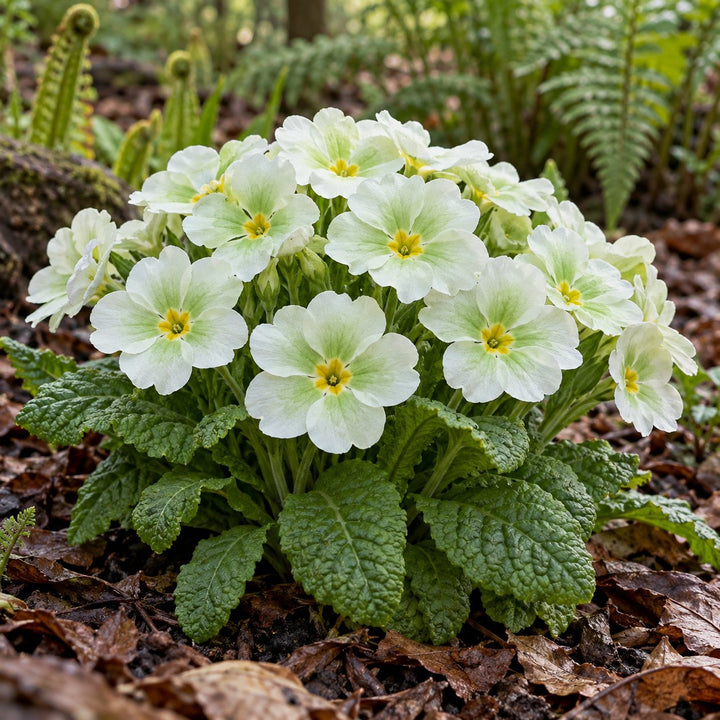
Bouquet Perfect™ Spearmint primrose has an unusual color for spring: white flowers washed with a soft mint green that deepens toward a pale yellow eye. The blooms crowd into a rounded dome over the leaves, and at peak the plant looks like a small green-white bouquet.
Pale colors are the secret to brightening shade, and Spearmint does it gently. It is a shade lover, so plant it in the cool, moist corners of the garden rather than with your sun-loving lavender.
Spearmint at a glance
| Trait | What to expect |
|---|---|
| Botanical name | Primula vulgaris Bouquet Perfect™ Spearmint |
| Flowers | White with a mint-green hue, about 1.5 inches across |
| Size | 5 to 8 inches tall, 10 to 12 inches wide |
| Bloom | Through April with a long season |
| Hardiness | USDA zones 4 to 8 |
| Light | Part sun to part shade, or full shade |
| Fragrance | Mild |
A pale accent that works with everything
Spearmint is a peacemaker in spring plantings. Its green-white color sits comfortably beside the strong reds, pinks and oranges of other primroses and softens them. On its own, a drift of it under trees or beside a shaded bench catches the last of the evening light, when darker flowers have already faded into the shadows.
If your garden runs to cool tones, with lavender, silver foliage and white flowers in the sunny beds, Spearmint carries a similar palette into the shade. It blooms in April, long before the lavender, so the cool color scheme starts early in the shady beds and continues in the sunny ones in summer. The Companion Plant Planner lets you lay out both areas at once.
Growing it well
- Soil: humus-heavy and evenly moist, never waterlogged.
- Light: part to full shade. Deciduous trees that leaf out after bloom are ideal.
- Water: keep it from drying out, especially in summer when primroses can go semi-dormant.
- Deadheading: remove spent flowers as they fade; the sterile flowers keep coming for weeks.
- Planting time: by early fall, so roots settle before winter. A light leaf mulch helps in exposed spots.
- Dividing: every few years after bloom.
Ordering format
Spearmint is offered as a 72-cell plug tray, enough to edge a long shaded border or plant up several spring containers. See the product page for current availability.
Frequently asked questions
How green are the flowers?
The mint tint is a true trait of the flower. It is soft rather than bright, strongest toward the center.
What are the most common problems?
Slugs, aphids and spider mites are the usual pests, while gray mold and leaf spots show up in crowded plantings in muggy weather. Crown rot is the main risk in soggy winter soil.
Does it attract pollinators?
Its pollinator value is fair. Early bees may visit on warm April days.

































Share how it went in your field