

Use & Care NotesLavender Plants
Brabant Blue Lavender: A Compact Choice for the Kitchen Garden
 Save
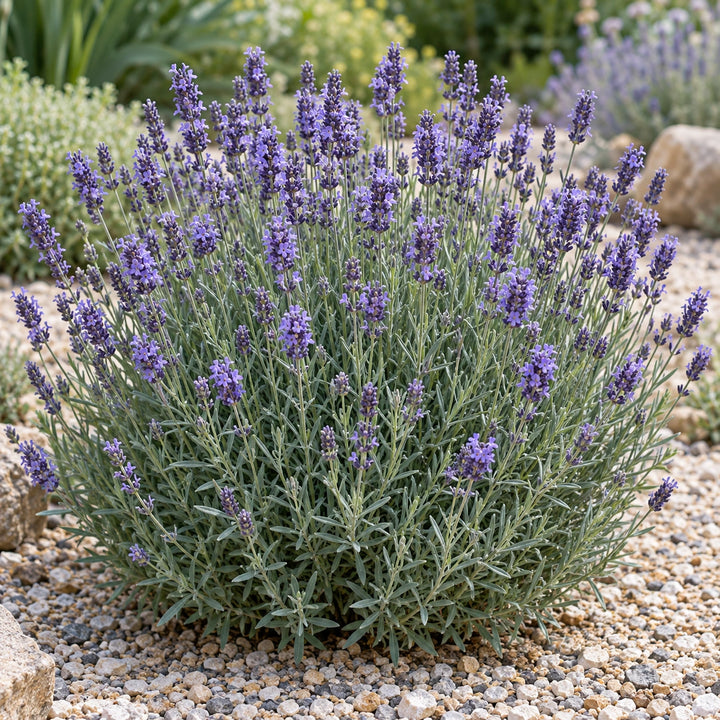
If you grow lavender mostly to cook with it, Brabant Blue lavender deserves a close look. This compact English lavender carries an excellent culinary rating, the top mark, along with violet-blue flowers and a sweet floral scent that has soft herbal notes and little camphor.
Botanically it is Lavandula angustifolia 'Brabant Blue'. It forms a neat evergreen shrub about 20 inches tall and 2 feet wide, a size that fits easily into a kitchen garden or a large pot near the back door.
Brabant Blue at a glance
| Trait | What to expect |
|---|---|
| Botanical name | Lavandula angustifolia 'Brabant Blue' |
| Flower color | Violet-blue |
| Foliage | Gray-green, evergreen |
| Habit | Compact evergreen shrub |
| Mature size | About 20 inches tall and 24 inches wide |
| Stems | About 8 to 10 inches |
| Bloom | Starts early June, peaks mid-June, moderate rebloom |
| Hardiness | USDA zones 5a to 8b |
| Culinary rating | Excellent |
Why it suits the kitchen
English lavenders are the sweetest-tasting lavenders, and within that group, flavor intensity still varies by cultivar. Brabant Blue's sweet, low-camphor profile is the kind cooks want: floral and clean rather than medicinal-tasting. Its listed best uses put culinary first, followed by oil and fragrance.
A few plants are plenty for most households. Lavender is strong, and a teaspoon of dried buds goes a long way in a batch of shortbread or a jar of sugar.
Planting a kitchen lavender patch
Pick the sunniest spot near your kitchen, with at least six to eight hours of direct sun and soil that drains fast. Raised beds are ideal, and they keep the plants at a comfortable picking height. Space plants about 20 to 24 inches apart.
Since you will be eating the buds, grow them as a food crop: skip any garden products not labeled for edibles, and keep the plants away from spots that get lawn treatments or road spray. Brabant Blue needs a winter chill to bloom well and is among the hardier lavender types. Check your zone with the USDA Zone Finder.
Harvesting, drying and storing
- Timing: in June, when buds are fully colored and only a few flowers have opened.
- Cutting: cut on a dry morning after the dew is gone, taking the stem down to the leafy growth.
- Drying: hang small bundles upside down in a shaded, airy room, or lay stems on a screen.
- Stripping: once crisp, rub the buds off over a bowl and sift out bits of stem.
- Storing: keep buds in an airtight jar away from light and heat.
The Harvest Calendar can help you plan the cutting window.
Care after the harvest
- Shape: after the June cutting, trim the mound lightly. This often brings a smaller second round of flowers.
- Water: deeply in the first season, then sparingly.
- Feeding: little to none.
- Winter: keep the crown dry; avoid heavy, wet mulch.
It is a great pollinator plant, so expect company from bees while you pick, and deer tend to leave it alone.
Formats offered
Brabant Blue is listed as a 3-inch plug, a 4-inch pot or a 1-gallon pot. A few gallon plants give a kitchen garden a quick start; plugs work for a longer row. See the product page for current sizes and availability, and use Notify Me if it is not ready yet.
Frequently asked questions
How much dried lavender should I use in a recipe?
Start small, often a teaspoon or less, and taste. Too much lavender is what makes baked goods taste soapy.
Can I use the fresh buds?
Yes, though fresh buds are milder and moister. Most recipes are written for dried buds.
Is it also good for bundles?
It is rated good for fresh and dried flowers. Its shorter stems suit small bundles and sachets.
Keep exploring
Ready to plant it?
Sizes, prices and shipping times are on its page.


Share how it went in your field