

Product Field NotesLavender Plants
Bridehead Blue Lavender: Silver Foliage with Purple-Blue Spikes
 Save
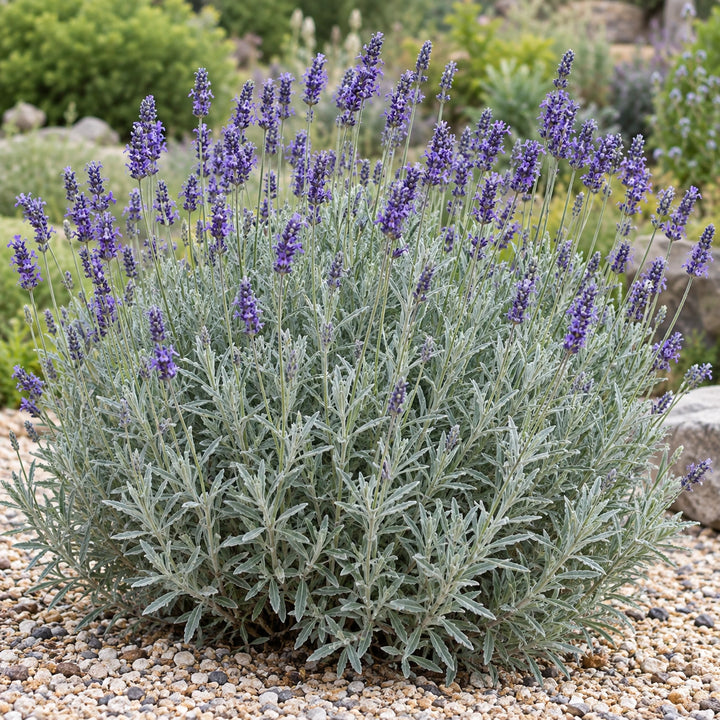
Bridehead Blue lavender is as much a foliage plant as a flowering one. It forms a broad, bushy mound of silver-gray leaves that glow in full sun, and in mid-July it sends up purple-blue spikes with a sweet, herbal, floral scent. Even out of bloom, it brightens a planting like a patch of moonlight.
It belongs to a less common group, Lavandula × chaytoriae, a hybrid of English lavender and woolly lavender. The woolly parent is where that striking silver foliage comes from. It is also why the plant prefers milder winters than a pure English lavender.
Bridehead Blue at a glance
| Trait | What to expect |
|---|---|
| Botanical name | Lavandula × chaytoriae 'Bridehead Blue' |
| Parentage | English lavender × woolly lavender |
| Flower color | Purple-blue |
| Foliage | Silver-gray |
| Habit | Bushy and mounding |
| Mature size | About 30 inches tall and 39 inches wide |
| Bloom | Mid-July, single flush, no rebloom |
| Hardiness | USDA zones 7a to 10b |
| Fragrance | Moderate; floral with sweet, herbal notes |
Designing with silver
Silver foliage is a designer's secret weapon. It cools down hot colors, separates clashing ones and makes deep purples look richer. A Bridehead Blue in a large urn or at the corner of a gravel garden gives you that effect all season, then adds purple-blue spikes in midsummer as a bonus.
It pairs nicely with dark-leaved plants, white flowers and other drought-tolerant perennials that share its love of lean, dry soil. It is a great pollinator plant, and deer tend to leave it alone.
Growing it in a cold-winter region
In zones 7a to 10b, Bridehead Blue can live in a sunny, sharply drained bed. In much of Michigan, that rating means outdoor winters are risky, so most growers here will want one of these approaches:
- Large container: plant in a roomy pot with a gritty mix and drainage holes. Before deep cold, move it to an unheated garage, porch or cold frame where it stays cool and dry but out of hard freezes. It does need a cool winter rest to set flowers, so a warm living room is not the goal.
- Sheltered microclimate: a raised, gravelly bed against a south-facing wall is the best outdoor gamble.
Silver, felted foliage dislikes sitting wet, so drainage and airflow matter even more for this plant than for most lavenders. Check your zone with the USDA Zone Finder.
Care notes
- Water: sparingly. Let the soil dry well between waterings, especially in containers.
- Overhead watering: avoid it when you can. Water the soil, not the leaves.
- Feeding: none needed.
- After bloom: remove spent flower stems and shape lightly. Stay in leafy growth and never cut into bare wood.
- Humidity: give it plenty of space so the silver mound dries quickly after rain.
Flowers and uses
Bridehead Blue is rated good for fresh and dried flowers, and its spikes add a silver-stemmed elegance to small arrangements. Culinary use is not recommended, so enjoy this lavender as an ornamental and fragrance plant. Its best listed uses are pollinators, fragrance and bouquets.
Formats offered
Bridehead Blue is listed as a 3-inch plug, a 4-inch pot or a 1-gallon pot. For container growing, starting with a gallon plant gives you a showy specimen sooner. See the product page for current sizes and availability, and use Notify Me if it is not ready yet.
Frequently asked questions
Why are the leaves so silver?
One parent is woolly lavender, which has soft, silvery foliage. Bridehead Blue inherits that look.
Will it rebloom?
No. It blooms once in mid-July. The silver foliage carries the show the rest of the season.
Can I cook with it?
Culinary use is not recommended. Choose an English lavender for the kitchen.

































Share how it went in your field