

Product Field NotesCompanion Plants
Brother Stefan Hosta: Thick Gold Leaves That Shrug Off Slugs
 Save
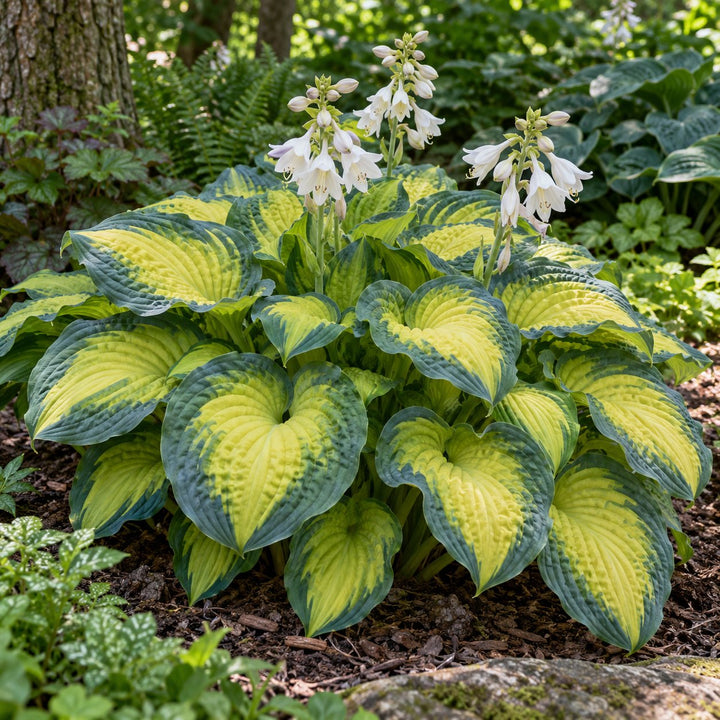
Brother Stefan hosta builds a wide clump of thick, rounded, heavily corrugated leaves, each with a bright gold center and a green margin. In spring a waxy coating makes the margins look bluish and the centers more chartreuse; by summer the gold deepens. It was named Hosta of the Year in 2017.
Like every hosta, it is a shade plant and does not share lavender's sunny, dry bed. Its place is the shady side of the same garden, where its gold leaves act like a spotlight under the trees.
Brother Stefan at a glance
| Trait | What to expect |
|---|---|
| Botanical name | Hosta 'Brother Stefan' |
| Foliage | Thick, corrugated; gold center with green to blue-green margin |
| Flowers | Near-white bells on stems about 2 feet tall |
| Size | About 20 inches tall, 36 inches wide |
| Bloom | Late spring to early summer, around early to mid-June |
| Hardiness | USDA zones 3 to 9 |
| Light | Part sun to part shade, or full shade |
| Deer | Susceptible |
Why the thick leaves matter
Slugs are the bane of most hosta beds, chewing ragged holes in thin leaves by midsummer. Brother Stefan's leaves are thick and heavily textured, which helps them resist slug damage and keeps the plant looking good later into the season. It is not slug-proof in a very wet year, but it holds up far better than thin-leaved hostas.
Planning the shady side
Gold foliage brightens dark corners, so put Brother Stefan where shade is deepest and you want the most light: under a maple, along a north-facing wall or beside a shaded bench. Its wide, three-foot mound works as a single specimen or in a row for a mass planting. Pair it with ferns, astilbe or coral bells, and the textured gold leaves will pull the whole bed together.
A lavender garden plan often has a sunny side and a shady side. The Companion Plant Planner lets you lay out both so the lavender gets its sun and the hostas get their shade.
Care through the year
- Light: shade from afternoon sun. Leaves can scorch in hot, dry sites.
- Soil: evenly moist, rich in organic matter and well drained; not waterlogged in winter.
- Water: during dry spells, especially while it establishes.
- Mulch: keep it thin near the crown, since damp mulch favors slugs.
- Fall: remove collapsed foliage after frost to clear slug eggs and disease.
- Spring: divide crowded clumps as new shoots appear.
Deer are fond of hostas. Destroy any plant with mottled or distorted leaves, which can signal hosta virus.
Choosing a tray size
Brother Stefan is offered as a 72-cell plug tray, good for planting out a large shade area, and a 20-cell plug tray with fewer, larger plugs that size up faster. See each product page for current availability, or the Wholesale Hub for tray orders.
Frequently asked questions
Why does the color change from spring to summer?
A waxy spring coating gives the margins a bluish cast and the centers a chartreuse tone. As the season goes on, the coating wears and the gold deepens.
Is it a good container hosta?
At three feet wide it needs a large pot, but it can work. Most gardeners use it in the ground as a specimen or mass planting.

































Share how it went in your field