

Product Field NotesCompanion Plants
Brush Strokes Little Bluestem: Powder Blue Bristles Beside Lavender
 Save
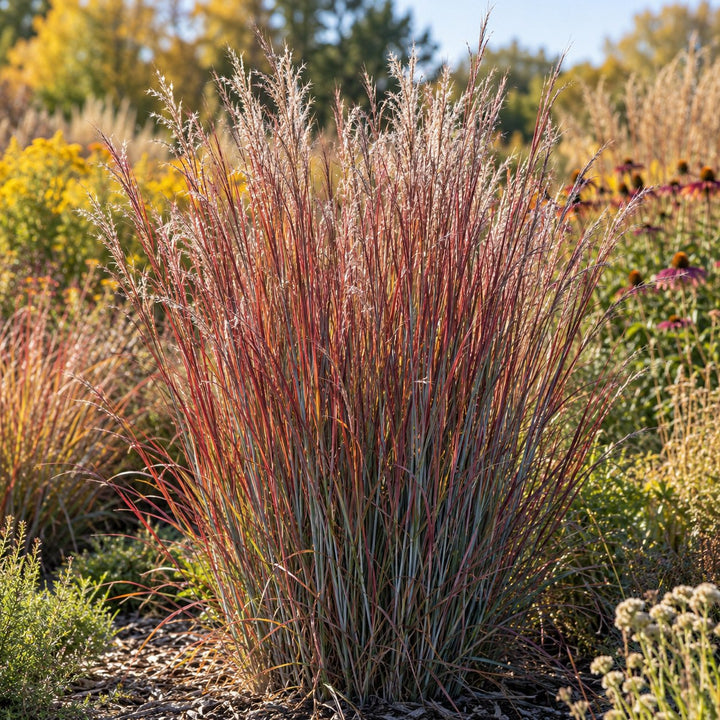
Brush Strokes little bluestem is a native prairie grass whose stems stand straight up like the bristles of a paintbrush. They bend in the wind and spring back, powder blue all summer, and then shift into rich fall color in early autumn.
It loves the same full sun and lean, dry soil as lavender, and dislikes the same thing: wet, rich ground. That makes it one of the most natural partners you can put in a lavender planting, and its blue summer color sits perfectly beside lavender's silver foliage.
Brush Strokes at a glance
| Trait | What to expect |
|---|---|
| Botanical name | Schizachyrium scoparium 'Brush Strokes' |
| Foliage | Powder blue in summer, turning to wine red and purplish tones in fall |
| Seed heads | Small fluffy tan tufts along the upper stems |
| Size | 32 to 36 inches tall, 22 to 26 inches wide |
| Bloom | Starts late August, peaks mid-September |
| Hardiness | USDA zones 3 to 9 |
| Light | Full sun |
| Deer | Resistant |
Four seasons beside lavender
Summer: powder-blue stems rise behind lavender's purple spikes, and the two cool colors blend. Late summer: fluffy tan seed tufts appear along the stems and catch the light. Fall: the grass turns rich wine-red to purplish tones; descriptions vary on the exact shade, so check the listing for the current details. Winter: the stems stay standing, adding color and structure above snow while the lavender rests as a low gray mound.
At about three feet tall and two feet wide, it fits behind lavender without towering over it. A few clumps scattered through a lavender bed give it a meadow feel; a row behind gives it a tidy backdrop. Try both in the Companion Plant Planner.
Planting and care
- Soil: lean to average and well drained. Rich or wet soil makes little bluestem flop or rot, the same way it hurts lavender.
- Water: through the first season, then hardly at all. It has excellent heat and drought tolerance.
- Feeding: none.
- Spring: cut back to a few inches in early spring. As a warm-season grass, it starts growing once the soil warms.
- Problems: few. Rust can appear in humid summers.
Cutting and drying
Brush Strokes rates well for drying. Cut stems in fall once the seed tufts form and the color has turned. Their slim, upright lines and warm tones mix well with dried lavender bundles and fall arrangements.
Ordering format
Brush Strokes is offered as a 72-cell plug tray, ideal for prairie plantings, slopes and mass plantings. See the product page for current availability, or the Wholesale Hub for tray orders.
Frequently asked questions
Is little bluestem a native plant?
Yes. Little bluestem is a native prairie grass, and Brush Strokes is a selection chosen for its upright, brush-like form and color.
Will it help on a slope?
Its dense clumps help hold soil, and it is listed for slopes and erosion control.

































Share how it went in your field