

Product Field NotesCompanion Plants
Bumbleberry Salvia: Hot Pink Spikes for the Front of Lavender
 Save
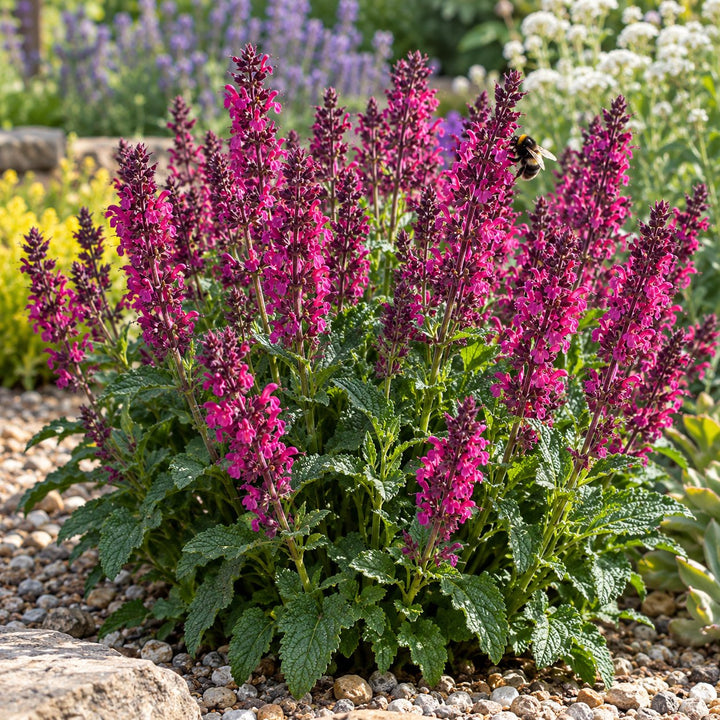
Bumbleberry salvia packs a lot of color into a small plant. Short, dense spikes of dark fuchsia-pink flowers sit in dark wine-purple calyxes, which makes the pink look even richer, and the whole plant stays only 10 to 16 inches tall. Bumblebees find it almost immediately.
It wants the same full sun and lean, well-drained soil as lavender, and its upright spikes echo lavender's shape at a smaller scale. Where most salvias pair with lavender in matching blues and purples, Bumbleberry brings a hot pink contrast.
Bumbleberry at a glance
| Trait | What to expect |
|---|---|
| Botanical name | Salvia nemorosa 'Bumbleberry' |
| Flowers | Dark fuchsia pink in wine-purple calyxes, spikes 3 to 5 inches long |
| Foliage | Deep green, crinkled and aromatic |
| Size | 10 to 16 inches tall; 12 inches to about 2 feet wide with age |
| Bloom | Starts early June, peaks mid-June, reblooms after shearing |
| Hardiness | USDA zones 3 to 8 |
| Light | Full sun |
| Wildlife | Excellent for pollinators; deer and rabbit resistant |
Pink and purple at lavender's feet
Bumbleberry blooms in early to mid-June, often just before or as lavender opens. A row of fuchsia spikes along the front edge of a lavender bed makes the lavender's purple look cooler and bluer by contrast, and the wine-purple calyxes tie the two colors together. After you shear it, the second flush overlaps the tail end of the lavender bloom and carries color past harvest.
Its small size is the main design advantage. It will not hide even compact lavenders, and it fits in rock gardens, between pavers at the edge of a path and in containers. Keep in mind that plants widen with age, so allow room for them to reach about two feet across. Plan your edging in the Companion Plant Planner.
Planting and care
- Sun: full, hot sun gives the best flowering.
- Soil: average and well drained. It is drought tolerant once established.
- Shearing: cut the whole plant back by about a third after the first flush fades. Fresh leaves and new spikes follow.
- Airflow: in muggy, crowded plantings, powdery mildew can show up after the first flush. Shearing and spacing help.
- Winter: reliably hardy in Michigan in well-drained soil. Wet, heavy winter soil is the main cause of loss. Clean up old stems in spring as new leaves appear.
Plug tray or bare root
Bumbleberry is offered as a 72-cell plug tray, enough to edge long beds, and as a bare root plant for a few clumps in a home garden. See each product page for current availability.
Frequently asked questions
Is this the same sage I cook with?
No. It is an ornamental perennial salvia with aromatic leaves, not a culinary sage, and it is not recommended for eating.
Do rabbits leave it alone?
Generally yes. Deer and rabbits tend to skip its aromatic leaves.
Is it good for cutting?
It is fair as a cut flower. The short spikes suit small posies better than tall arrangements.

































Share how it went in your field