

Product Field NotesCompanion Plants
Bug Bat Pitcher Plant: A Bog Garden Centerpiece, Not a Lavender Mate
 Save
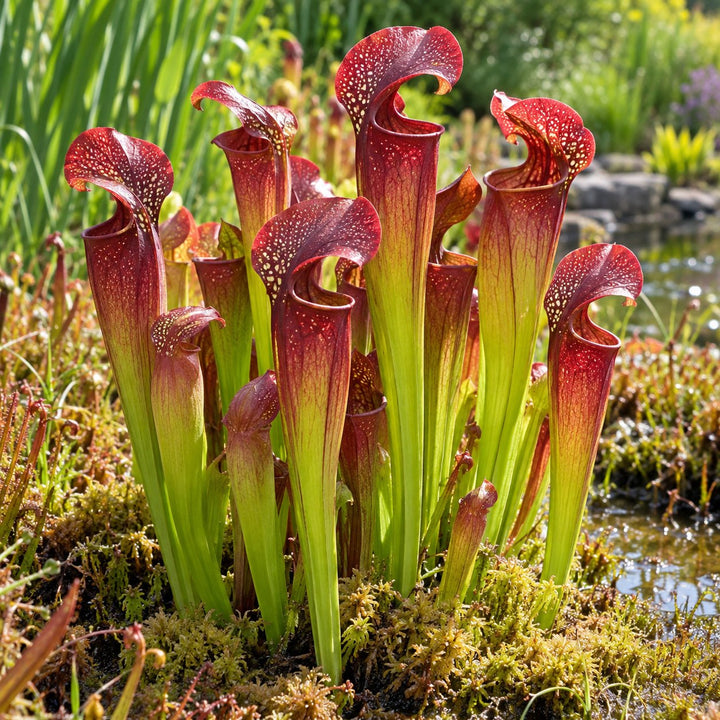
Bug Bat pitcher plant is a carnivorous plant with upright, hooded pitchers about 14 to 16 inches tall. The hoods are a warm cinnamon red that fades to chartreuse green toward the base, and the backs are flecked with small white windows, so each pitcher looks like a little sculpture. Insects that wander inside become the plant's dinner.
It shares exactly one thing with lavender: a love of full sun. Everything else is opposite. Bug Bat needs a constantly wet, acidic, low-nutrient bog, so it gets its own bog garden or container rather than a spot in the lavender bed.
Bug Bat at a glance
| Trait | What to expect |
|---|---|
| Botanical name | Sarracenia 'Bug Bat' |
| Pitchers | Cinnamon red hoods fading to chartreuse green, white-speckled |
| Flowers | Nodding red flowers about 2 inches across in spring |
| Size | 14 to 16 inches tall, about 12 inches wide |
| Bloom | Starts late April, peaks mid-May |
| Hardiness | USDA zones 6 to 9 |
| Light | Full sun |
| Deer | Resistant |
Why it is on a lavender farm's companion list
Not every companion belongs in the same bed. Many lavender properties have a low, soggy spot or a pond edge that will never suit lavender. A small, sunny bog garden there, or a lined container on the patio, gives that wet ground a purpose. Bug Bat is a natural centerpiece, and it is a great conversation plant for kids and guests. Plan it alongside your lavender beds in the Companion Plant Planner.
Setting up a bog container
- Container: a plastic or glazed pot without holes, or a pot set in a deep saucer of water so the mix never dries.
- Mix: peat moss and sand, low in nutrients. Never use regular potting soil, compost or fertilizer.
- Water: rainwater or distilled water only. Tap water minerals build up and harm the roots.
- Sun: as much as possible. Pitcher color is strongest in hot, sunny weather.
- Feeding: none. The pitchers catch their own insects.
Winter in Michigan
Bug Bat is hardy only to zone 6, so in most of Michigan grow it in a container. It needs a real winter dormancy, cold but protected, below 40°F: an unheated garage or a pot buried in the ground works well. Keep the mix moist through winter. In zone 6 bog beds, mulch with pine straw. In early spring, cut away old, browned pitchers before new growth starts. Dead pitchers can harbor gray mold and rot during dormancy, so do not leave them lying in the pot.
Ordering format
Bug Bat is offered as a 72-cell plug tray, suited to growers and bog garden builders who want to plant many at once or pot them up. See the product page for current availability, or the Wholesale Hub for tray orders.
Frequently asked questions
Do I need to feed it bugs?
No. Outdoors it catches what it needs on its own. Never add fertilizer.
Should I remove the flowers?
The nodding red flowers appear in spring, usually before or with the first pitchers. Remove the flower stalks after bloom if you want the plant to put more energy into pitchers.
Can it live indoors year-round?
It needs strong sun in summer and a cold winter rest, so it does best outdoors in a sunny spot with a protected winter dormancy.

































Share how it went in your field