

Product Field NotesCompanion Plants
Bumblesky Salvia: Soft Sky Blue That Mixes With Everything
 Save
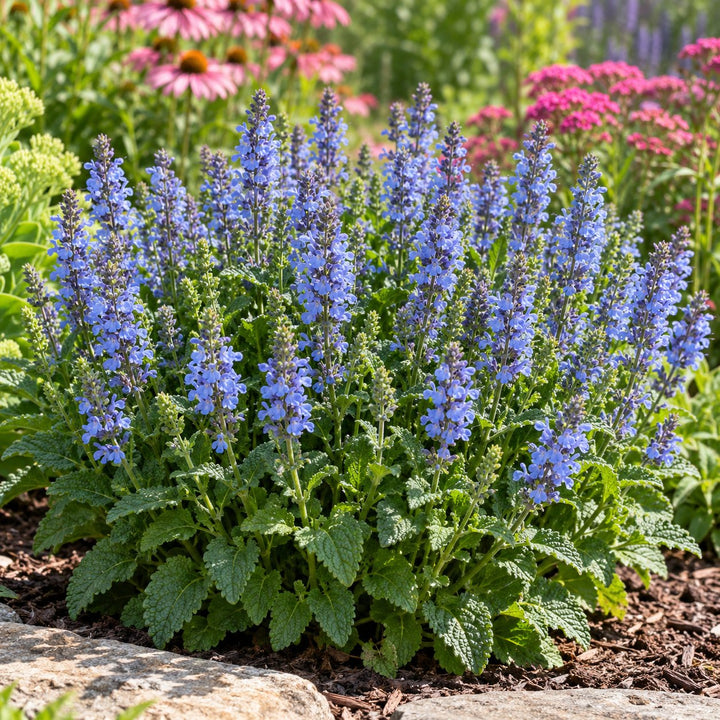
Bumblesky salvia brings a soft, light sky blue to a plant group better known for deep violet. It forms a low, rounded mound and covers it in early summer with short spikes of pale blue florets in green to bluish calyxes, and the bees swarm it.
Like its relatives, it shares lavender's love of full sun and lean, well-drained soil. Its gentle color is the useful part: it sits comfortably beside lavender and also beside pinks, whites and yellows, so it can tie a mixed sunny border together.
Bumblesky at a glance
| Trait | What to expect |
|---|---|
| Botanical name | Salvia nemorosa 'Bumblesky' |
| Flowers | Light sky blue, spikes 3 to 5 inches long |
| Foliage | Deep green, crinkled, aromatic |
| Size | 14 to 16 inches tall, 18 to 20 inches wide |
| Bloom | Starts early June, peaks mid-June, reblooms after shearing |
| Hardiness | USDA zones 3 to 8 |
| Light | Full sun |
| Wildlife | Excellent for pollinators; deer and rabbit resistant |
The color bridge
Deep purple lavender next to bright yellow or hot pink can feel like a lot. Bumblesky softens those jumps. A drift of pale blue between lavender and a neighboring pink coneflower or a yellow stonecrop makes the whole bed read as one planting instead of separate patches. With white-flowered lavender or silver foliage, it creates a cool, airy, almost seaside palette.
Because it stays low and rounded, use it along the front edge, in rock gardens or in containers. In a mixed patio pot, set one lavender in the center and Bumblesky plants around it for color that starts in early June. Lay out color combinations in the Companion Plant Planner before you plant.
Care through the season
- Early summer: the main flush, starting in early June.
- After the first flush: shear the plant back by about a third. Fresh foliage and another round of spikes follow.
- Midsummer: water only in long dry spells once established. It is very heat and drought tolerant.
- Humid stretches: keep plants spaced; crowded salvias can get powdery mildew after the first bloom.
- Fall and winter: leave stems standing or cut back in fall. Wet, heavy winter soil is the main cause of loss, so good drainage matters.
- Spring: clean up old growth as new leaves appear.
Ordering format
Bumblesky is offered as a 72-cell plug tray, a practical size for edging long beds or filling many containers. See the product page for current availability, or the Wholesale Hub for tray orders.
Frequently asked questions
Is the blue strong enough to see from a distance?
It is a soft, pale blue, so it reads best up close or in generous drifts. For a bolder look, mass several plants together.
Can I eat the leaves?
No. This is an ornamental salvia, not a culinary sage. The leaves are aromatic but not recommended for eating.
Will it come back after a hard Michigan winter?
Yes, it is reliably hardy here in well-drained soil.

































Share how it went in your field