

Product Field NotesCompanion Plants
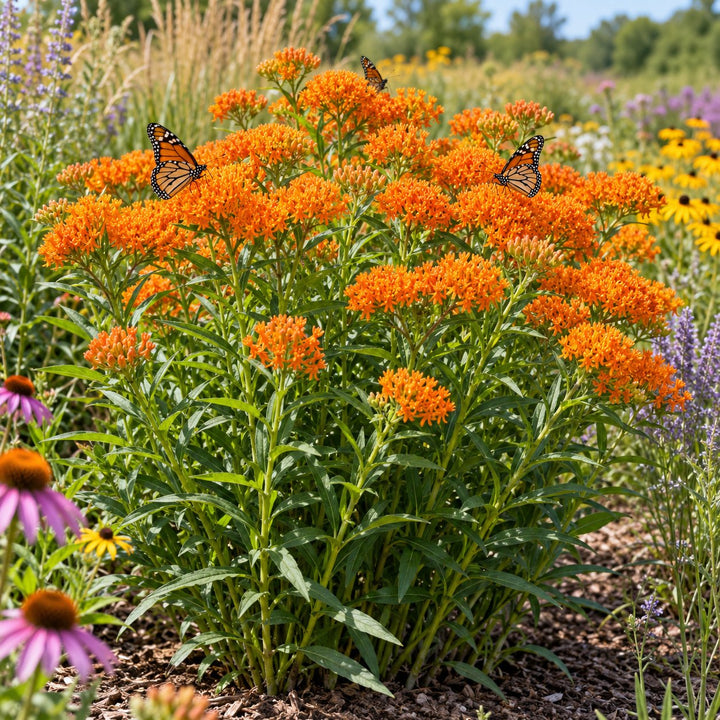
Butterfly Weed: Tangerine Orange and Monarchs Beside Lavender
 Save
Butterfly weed (Asclepias tuberosa) is a tough, long-lived native milkweed with flat clusters of brilliant tangerine orange flowers, sometimes showing red or yellow tones. It was named Perennial Plant of the Year in 2017, and its nectar draws monarchs and other butterflies, hummingbirds and bees, while the leaves feed monarch caterpillars.
It thrives in the same hot, dry, well-drained ground as lavender, and orange and purple sit opposite each other on the color wheel. Plant the two together and you get a bold, high-contrast bed that hums with pollinators from early to late summer.
Butterfly weed at a glance
| Trait | What to expect |
|---|---|
| Botanical name | Asclepias tuberosa |
| Flowers | Tangerine orange clusters, 3 to 5 inches across |
| Foliage | Narrow, slightly hairy, medium green |
| Size | About 2 feet tall and wide |
| Bloom | Starts mid-June, peaks mid-July, long blooming |
| Hardiness | USDA zones 3 to 9 |
| Light | Full sun |
| Wildlife | Excellent for pollinators; monarch host plant; deer resistant |
A pollinator pair
Lavender is famous for bees. Butterfly weed adds butterflies, especially monarchs, which lay eggs on its leaves. If you see striped caterpillars chewing the foliage, that is the plant doing its job. Together, the two cover a long stretch of summer: butterfly weed opens in mid-June, runs alongside the lavender's peak and can push out a smaller second flush if you remove the first spent clusters.
At about two feet tall and wide, it fits between lavender plants or in small groups along the front of a bed. Leave space so neither crowds the other. The Companion Plant Planner makes spacing easy.
Planting and care
- Soil: lean to average and well drained. Heavy, wet soil leads to crown rot, especially in humid summers or over winter.
- Water: until established, then rarely. Its taproot gives it excellent drought tolerance.
- Spring: it is slow to emerge, often after the lavender has greened up. Mark the spot so you do not dig into it.
- Do not move it: the deep taproot makes transplanting risky once it is established.
- Aphids: orange milkweed aphids are common but rarely harmful. A spray of water knocks them back.
Cutting and seed pods
Butterfly weed rates well as a cut flower. After bloom, narrow seed pods form and split to release silky white fluff, which is pretty in dried arrangements. Its sap is not milky, unlike most milkweeds, so cut stems are easy to work with.
Plug tray or bare root
Butterfly weed is offered as a 72-cell plug tray, ideal for pollinator meadows and large plantings, and as a bare root plant for home gardens. Young plugs settle in well, which matters for a plant that dislikes being moved later. See each product page for current availability.
Frequently asked questions
Is butterfly weed invasive?
No. It is a clump-forming native that stays where you plant it, despite the name.
Is it safe to eat?
No. It is an ornamental and not recommended for eating.
Why hasn't it come up yet in May?
Butterfly weed is famously late to emerge. Be patient before assuming it has died.

































Share how it went in your field