

Product Field NotesCompanion Plants
Butterscotch Fizz Siberian Iris: Warm Apricot for a Moist Border
 Save
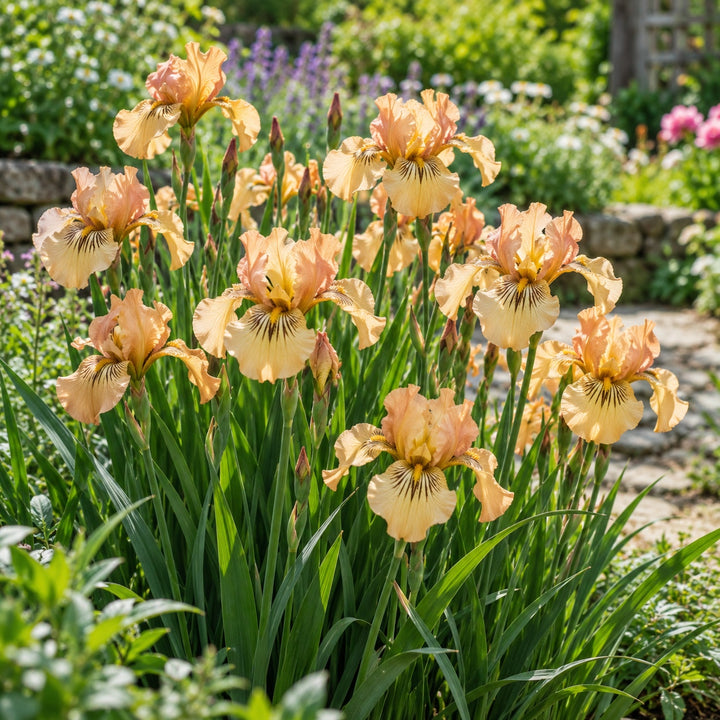
Butterscotch Fizz Siberian iris blooms in soft, warm tones: light apricot flowers with creamy centers, distinct dark veining across the falls and subtle pink and yellow undertones with golden highlights near the base. The colors blend like watercolor, and the flowers carry a slight sweet fragrance. It received an Honorable Mention from the American Iris Society in 2016.
Siberian irises like steadier moisture than lavender does, so Butterscotch Fizz belongs in a moister border or rain garden near the lavender rather than in the dry bed itself. From there, its June flowers open just ahead of the lavender season.
Butterscotch Fizz at a glance
| Trait | What to expect |
|---|---|
| Botanical name | Iris sibirica 'Butterscotch Fizz' |
| Flowers | Light apricot with creamy centers and dark veins; slight sweet fragrance |
| Foliage | Narrow, grass-like, green |
| Size | About 28 inches tall, 18 to 24 inches wide |
| Bloom | Early to mid-June |
| Hardiness | USDA zones 3 to 9 |
| Light | Full sun to part shade |
| Deer | Resistant |
Apricot with purple
Warm apricot and cool lavender purple are a sophisticated pairing, softer than yellow and purple and less expected. If your lavender bed borders a lawn, path or downspout area that stays moist, run a band of Butterscotch Fizz along that edge. In early June the irises carry the color; as they finish, the lavender opens, and the slender green iris leaves become a fine-textured backdrop for the rest of summer.
It also fits rain gardens and cottage borders where moisture is steady. The Companion Plant Planner helps you place moist and dry areas side by side so each plant gets the right conditions.
Planting and care
- Soil: average to rich, kept moist, especially in spring and early summer.
- Summer: water deeply in hot, dry spells to keep the foliage fresh after bloom.
- After bloom: remove spent flower stems.
- Cleanup: cut foliage back in late fall or early spring. No winter mulch needed once established.
- Dividing: split crowded clumps in late summer.
- Near walnut trees: Siberian iris is not bothered by black walnut.
Problems are uncommon. The narrow leaves dry quickly, so foliar disease is rare even in humid summers. Rot only threatens in waterlogged soil.
Cutting
Butterscotch Fizz rates well as a cut flower. Cut stems as the first bud opens; more will open in the vase. Its warm tones are lovely with early lavender stems or white flowers.
Ordering format
Butterscotch Fizz is offered as a bare root plant. See the product page for current availability.
Frequently asked questions
Does Butterscotch Fizz rebloom?
Its rebloom is low. Expect one main show in early to mid-June.
Can it grow in drier soil like lavender?
It can survive drier spells once established, but it flowers and looks best with steady moisture. That is why it does better beside the lavender bed than in it.

































Share how it went in your field