

Product Field NotesCompanion Plants
Cloudburst Phlox: A Billowing Purple Cloud Next to Lavender
 Save
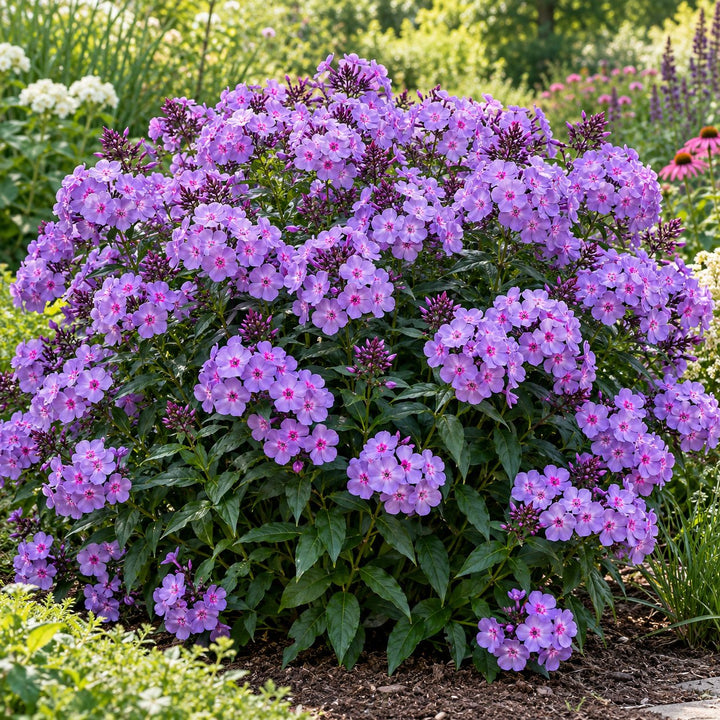
Cloudburst phlox combines the strong color of a border phlox with the rounded dome of a cushion type. Deep purple buds open to soft lilac flowers with bright pink eyes, and unlike typical garden phlox, they cover the whole plant from the top nearly to the soil. At about 28 inches tall and 3.5 feet wide, it is wider than it is tall, a billowing purple cloud.
It loves sun like lavender but wants richer soil and more regular water, so it belongs in the cottage border right next to the lavender bed rather than in it.
Cloudburst at a glance
| Trait | What to expect |
|---|---|
| Botanical name | Phlox 'Cloudburst' |
| Flowers | Lilac purple with bright pink eyes, about 1 inch across; sweet and spicy scent |
| Foliage | Broad, glossy, dark green; strongly resists powdery mildew |
| Size | About 28 inches tall, 42 inches wide |
| Bloom | Starts mid-June, peaks early July, scattered blooms into fall |
| Hardiness | USDA zones 4 to 8 |
| Light | Full sun for the best flowers, or part shade |
| Wildlife | Great for pollinators and butterflies; deer like it |
Next door to the lavender
Cloudburst's lilac flowers are close enough to lavender's color that the two read as one long, soft-purple planting when the beds sit side by side. Its timing helps too: it starts in mid-June and peaks in early July, picking up as the first lavender bloom winds down.
The difference is underground. Phlox wants fertile soil and steady water; lavender wants lean soil and long dry spells. Keep them in adjacent beds, perhaps divided by a path or edging, so you can water the phlox without soaking the lavender. Its broad, glossy dark leaves also contrast nicely with lavender's narrow silver ones across that path. Plan both beds in the Companion Plant Planner.
Planting and care
- Space: give it the full 3.5 feet. It spreads slowly by underground stems.
- Soil: average to fertile and well-drained, with compost worked in.
- Water: regularly, and deeply in dry spells. Drought or reflected heat makes the lower leaves yellow and drop.
- Deadheading: shear spent flower heads after the first flush to keep scattered blooms coming into fall.
- Airflow: it resists powdery mildew, but good air movement still helps. Spider mites can bronze leaves in hot, dry weather.
- Winter: fully hardy in Michigan. Cut stems to the ground after hard frost or in early spring and clear the debris.
Fragrance on summer evenings
Cloudburst has the sweet, spicy-clove scent of garden phlox, strongest on warm evenings. Plant it near a porch or patio and, with the lavender beside it, the evening air smells like a cottage garden. Butterflies and bees visit steadily during the day.
Plug tray or bare root
Cloudburst is offered as a 72-cell plug tray and as a bare root plant. See each product page for current availability, or visit the Wholesale Hub.
Frequently asked questions
Will it get powdery mildew?
It was selected for strong resistance to powdery mildew, the main disease of tall phlox. Spacing and airflow keep it at its best.
Do I need to protect it from deer?
Deer do browse phlox. Plant it close to the house or in a fenced area if deer visit.

































Share how it went in your field