

Product Field NotesCompanion Plants
Dancing in the Moonlight Hosta: Ruffled Blue and Cream in Shade
 Save
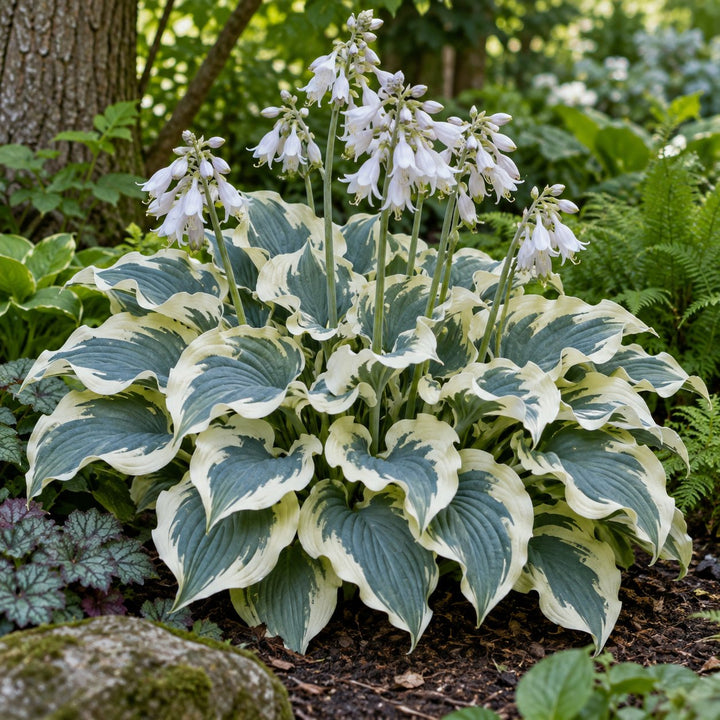
Dancing in the Moonlight hosta has leaves so rippled they look like they are moving. The edges fold upward and ruffle from the tip all the way down the leaf stalk, and each frosty blue center is framed by a wide creamy white margin. In July, near-white bells rise on tall stems above the clump.
It is a hosta to see up close, and like every hosta it wants a different address than your lavender.
Dancing in the Moonlight at a glance
| Trait | What to expect |
|---|---|
| Botanical name | Hosta 'Dancing in the Moonlight' |
| Foliage | Frosty blue centers, wide creamy white margins, heavily ruffled |
| Flowers | Very pale lavender to near-white bells on 22 to 29-inch stems |
| Size | About 18 inches tall, 28 to 32 inches wide |
| Bloom | Early to mid-July |
| Hardiness | USDA zones 3 to 9 |
| Light | Part sun to full shade |
| Deer | Susceptible |
Placing it in a lavender garden
Lavender's bed is sunny, lean and dry. This hosta would scorch and sulk there. Its home is a moist, shaded bed: under a tree, along a north wall or on a covered patio in a large pot. The cool blue and cream coloring still ties it to the rest of the garden, echoing the silver-gray of lavender foliage in a shady setting.
Good shade partners are coral bells, ferns and bleeding hearts, which contrast with its wavy leaves without hiding them. Because the texture is the star, give it a spot near a path or a seat. The Companion Plant Planner can lay out the shady and sunny beds together.
Growing it well
- Light: shade from afternoon sun. Morning light is fine; hot afternoons scorch the leaves.
- Soil and water: evenly moist, rich soil that drains. Water in dry spells.
- Slugs: keep mulch thin near the crown and check new leaves in damp springs.
- Deer: they browse hostas, so use fencing or repellent sprays in open yards.
- Health check: destroy any plant with mottled or distorted leaves, a sign of Hosta virus X.
- After frost: cut collapsed foliage down to cut down slug eggs and disease. It is fully hardy in Michigan.
Choosing a tray
It is offered as a 72-cell plug tray for growers and large plantings and a 20-cell plug tray with fewer, deeper plugs. Both are made for potting up or planting out. See each product page for current availability, or browse trays in the Wholesale Hub.
Frequently asked questions
Does it make a good container plant?
Yes. Its medium size and showy foliage make it a strong choice for a large shaded pot. Water containers more often than garden beds.
Why are the margins scorched?
Usually too much afternoon sun or dry soil. Move it to a shadier spot or water more steadily.
How long until it reaches full size?
Hostas grow from plugs into mature clumps over several seasons. Divide crowded clumps in spring as new shoots appear.

































Share how it went in your field