

Product Field NotesCompanion Plants
Daring Deception Daylily: Dark Purple Eyes to Echo Your Lavender
 Save
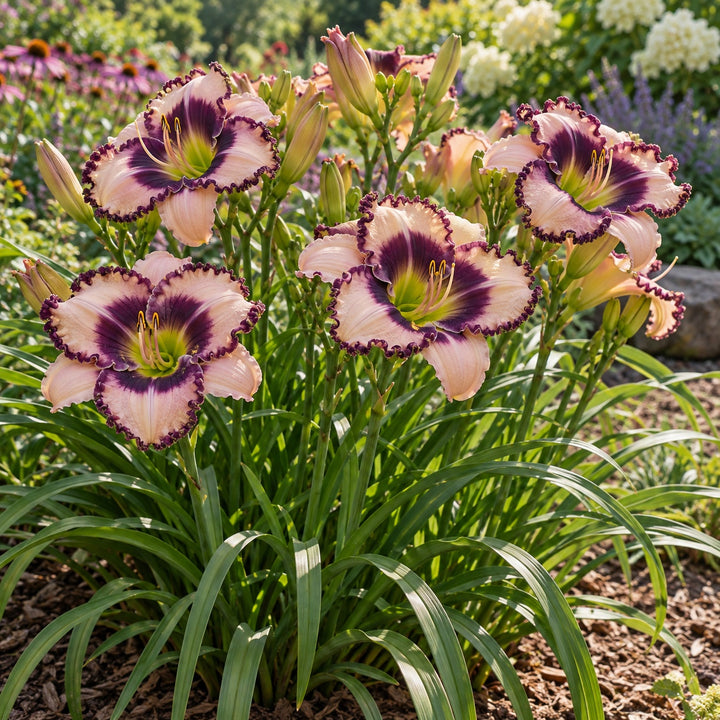
Daring Deception daylily is the kind of flower people stop to look at twice. Its rounded, overlapping petals are a dusty cream-pink, marked with a large dark plum-purple eye and outlined by a matching dark purple, pie-crust ruffled edge. A green throat sits at the center. Flowers run about 5 to 5½ inches across on branched scapes up to about 24 inches tall.
Daring Deception at a glance
| Trait | What to expect |
|---|---|
| Botanical name | Hemerocallis 'Daring Deception' |
| Flowers | Dusty cream-pink with a dark purple eye and picotee edge, about 5 to 5½ inches |
| Foliage | Medium green, arching, semi-evergreen |
| Size | Foliage about 14 inches tall; scapes to about 24 inches; 18 to 24 inches wide |
| Bloom | Starts early July, peaks mid-July, with some rebloom |
| Hardiness | USDA zones 3 to 9 |
| Light | Full sun to light part shade |
| Deer | Susceptible |
Why the purple eye matters
Most daylilies bring warm yellows and oranges, which can fight with lavender's cool purple. Daring Deception sidesteps that. Its dark purple eye and edge pick up the color of the lavender spikes, while the pale cream-pink petals keep the planting soft. Set it just in front of a row of deep purple lavender and the two look like they were chosen together, which they were.
Its bloom starts in early July, overlapping the peak of many English lavenders. Daylily foliage is lush, so give lavender its own breathing room: plant the daylily a little farther out than you would a low edging plant, where its arching leaves will not lean on the lavender. The Companion Plant Planner can help with spacing.
Planting a bare root daylily
- Soak the roots in water for an hour or so before planting.
- Dig a wide hole and build a small mound of soil in the center.
- Spread the roots over the mound and set the crown no more than about an inch below the surface.
- Backfill, firm gently and water well.
Once established, daylilies handle heat, clay and dry spells. A light mulch the first winter helps limit crown rot and frost heaving, and good drainage keeps the crown healthy.
Care through the year
Each flower lasts a single day, but many buds open in turn. Snap off spent blooms if you like a tidy look, and remove finished scapes after the flush to encourage a later round. Blooms can spot after heavy rain, and leaf streak is more common in wet summers. Divide every few years when the clump gets crowded.
It is offered as a bare root plant, a classic way to plant daylilies. See the product page for current availability.
Frequently asked questions
Is it safe for cats?
No. All parts of daylilies are toxic to cats, so plant them where cats will not chew on leaves or flowers.
Is it good for cut flowers?
Not really. Each bloom lasts one day, so daylilies are best enjoyed in the garden.
Do deer eat daylilies?
Yes, deer often browse daylily buds. Protect plants in open, rural gardens.

































Share how it went in your field