

Use & Care NotesCompanion Plants
Dark Side of the Moon Astilbe: Chocolate Leaves, Purple Plumes
 Save
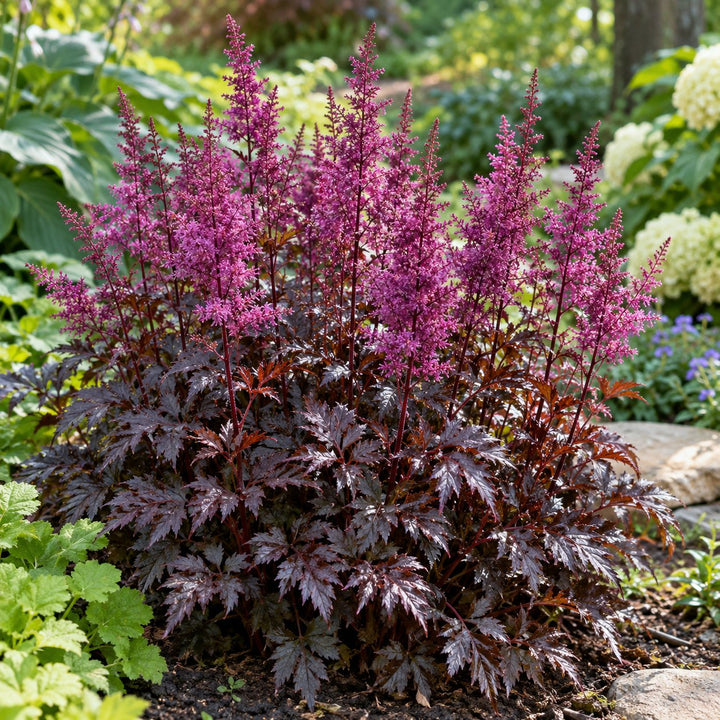
Dark Side of the Moon astilbe combines two things you rarely get together: dark foliage and purple flowers. Its glossy new leaves come up yellow with dark edges, then deepen to a rich chocolate burgundy that holds all season. From late July into August, dark mahogany stems carry raspberry buds that open into dense rosy purple plumes.
The color story is very lavender-garden friendly. The growing conditions are not, so this one belongs on a different part of the property.
Dark Side of the Moon at a glance
| Trait | What to expect |
|---|---|
| Botanical name | Astilbe chinensis 'Dark Side of the Moon' |
| Flowers | Rosy purple plumes from raspberry red buds |
| Foliage | Glossy chocolate burgundy; new growth yellow with dark edges |
| Size | Mound 20 to 22 inches tall, 24 to 28 inches wide; plumes to about 30 inches |
| Bloom | Starts late July, peaks mid-August |
| Hardiness | USDA zones 4 to 9 |
| Light | Part shade; more sun in the north with steady moisture |
| Deer | Resistant; rabbits avoid it too |
Where it fits in a lavender garden plan
Astilbe is a moisture lover, and lavender would rot in the soil astilbe enjoys. Instead of a shared bed, think of a shared palette. Dark Side of the Moon brings purple flowers and deep foliage to the moist, shaded spots, linking them visually to the purple lavender rows in the sun.
Its timing helps too. It blooms in late summer, after the main lavender harvest, so there is purple somewhere on the property from June through August. Pair it with chartreuse or blue hostas and fine ferns, where the dark leaves look even darker. In northern gardens it takes more sun than most astilbes, as long as the soil stays moist, which makes it a good choice for a damp, partly sunny spot near the house. Test placements in the Companion Plant Planner.
Care
- Moisture: never let the soil dry out. Drought scorch is the most common astilbe problem.
- Mulch: a layer of compost or shredded leaves holds moisture and keeps roots cool.
- Air flow: crowded plantings in muggy weather can get mildew or leaf spot.
- Winter: hardy in Michigan. Leave the dried plumes standing, then cut back in spring.
- Every few years: crowns slowly rise above the soil, so top-dress with compost or divide.
Cutting, drying and formats
The plumes are good for both cutting and drying. Cut when about half the flowers are open, then hang to dry; dried astilbe and dried lavender make a nice purple pairing in winter arrangements. It is offered as a 72-cell plug tray and as a bare root plant. See each product page for current availability.
Frequently asked questions
Can it grow in full sun?
In the north, it handles more sun than typical astilbes if the soil stays evenly moist. In dry sun, the leaves will crisp.
Why are the new leaves yellow?
That is normal. New growth emerges yellow with dark edges and darkens to chocolate burgundy as it matures.
Do pollinators visit it?
Some do, but its pollinator value is fair. Plant it mainly for foliage and flower color.
Keep exploring
Ready to plant it?
Sizes, prices and shipping times are on its page.



Share how it went in your field