

Use & Care NotesCompanion Plants
Electric Neon Pink Bee Balm: Glowing Heads for the Pollinator Bed
 Save
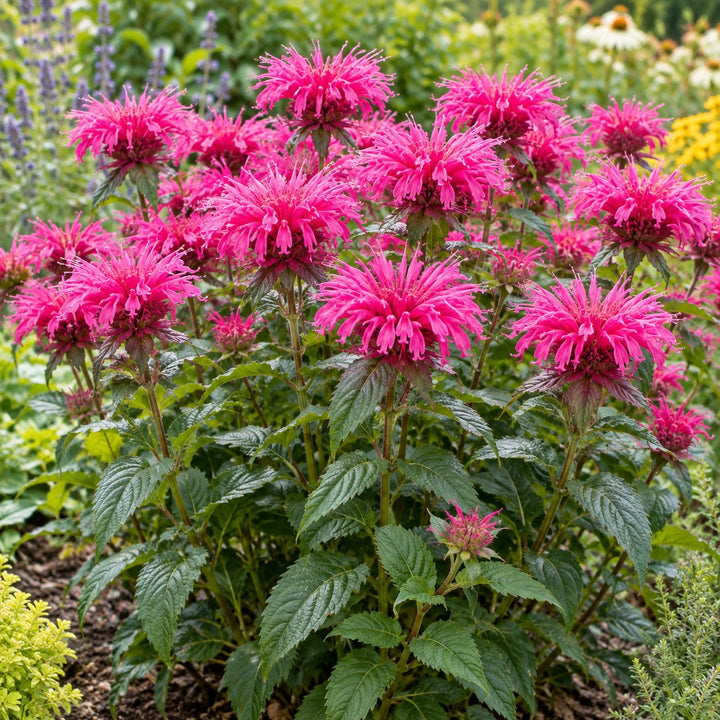
Electric Neon Pink bee balm has some of the biggest flowers in the bee balm world, shaggy heads about 3 inches across made of long tubular florets in a deep, glowing neon pink that pales slightly at the tips for a two-tone look. They sit on dark pinkish bracts over glossy, dark green leaves that smell strongly of mint and oregano when brushed. The plant stays a tidy, upright 20 to 22 inches.
Electric Neon Pink at a glance
| Trait | What to expect |
|---|---|
| Botanical name | Monarda 'Electric Neon Pink' |
| Flowers | Neon pink, lighter at the tips, about 3 inches across |
| Foliage | Glossy dark green, strongly minty when brushed |
| Size | 20 to 22 inches tall, 18 to 20 inches wide |
| Bloom | Starts early July, peaks mid-July, about 3 to 4 weeks |
| Hardiness | USDA zones 4 to 8 |
| Light | Full sun to part shade |
| Wildlife | Excellent for pollinators and hummingbirds; deer resistant |
Keeping the bees busy
Lavender rows hum with bees in July. Plant bee balm in a bed next door and you double the draw: bees work both, and hummingbirds and butterflies head straight for the bee balm's tubular florets. Electric Neon Pink blooms in early to mid-July, right alongside lavender, so the two make one big pollinator moment.
The catch is soil. Bee balm wants richer ground and regular water, which would make lavender soft and short-lived. A neighboring cottage or pollinator bed, a few steps from the lavender, solves it. Neon pink beside lavender purple is bold; soften it with white flowers or silver foliage in between. Sketch it in the Companion Plant Planner.
Clean leaves, long show
- Water: keep the soil evenly moist, especially in dry spells. Drought stress makes mildew worse.
- Airflow: space plants so air moves around the stems. It was bred for good powdery mildew resistance, and airflow helps further.
- Deadheading: snip faded heads to stretch the bloom.
- Dividing: it spreads by shallow rhizomes. Divide every two to three years in spring to keep the center vigorous.
- Winter: very hardy in Michigan. Cut stems back in fall or leave them until spring.
Cutting, containers and the kitchen
The flowers rate well for cutting. In a large container, its compact size makes a bright summer centerpiece. Like other bee balms, the leaves and flowers are edible and can be used for herbal tea or as a colorful garnish; use plants grown without garden chemicals if you plan to eat them. It is offered as a full 72-cell plug tray. See the product page for current availability.
Frequently asked questions
Will it take over the bed?
It spreads slowly by shallow rhizomes but is a compact, tightly clumping type. Regular division keeps it in bounds.
Do deer eat it?
Deer tend to avoid it, likely because of the strong minty scent.
Why are the leaves white and dusty?
That is powdery mildew, the classic bee balm problem. Water during dry spells and improve airflow; this variety resists it better than most.
Keep exploring
Ready to plant it?
Sizes, prices and shipping times are on its page.


Share how it went in your field