

Product Field NotesCompanion Plants
Empress Wu Hosta: A Giant for the Shady Side of a Lavender Garden
 Save
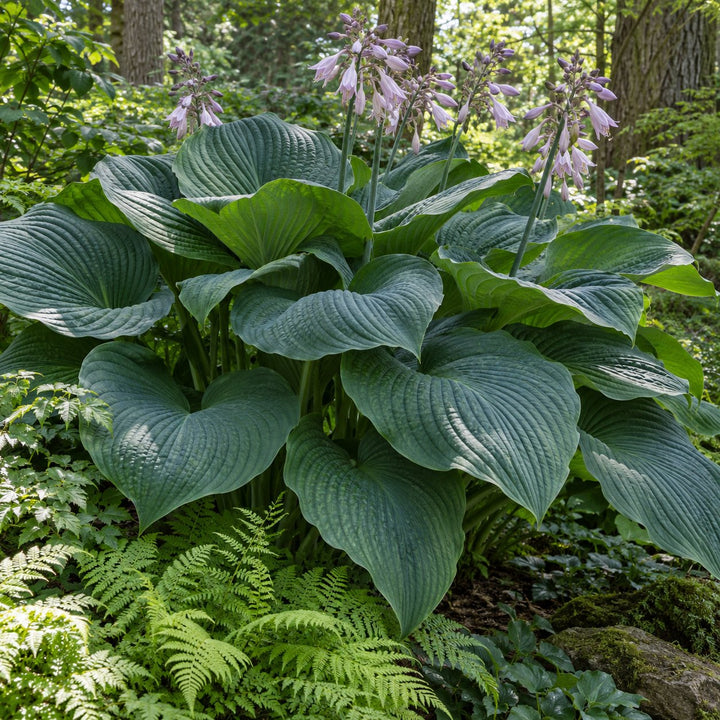
Empress Wu hosta is one of the largest hostas you can plant. Its thick, deeply veined, dark green leaves can grow more than a foot and a half long and wide, and a mature clump stands 3 to 4 feet tall and 5 to 6 feet across. It was named a national Hosta of the Year in 2023, and it tends to stop people mid-sentence.
It is not a lavender bedmate. Empress Wu wants shade and steady moisture, which is the opposite of a lavender row. Where it shines is the shady side of the same property, giving a garden plan a bold anchor where lavender cannot grow.
Empress Wu at a glance
| Trait | What to expect |
|---|---|
| Botanical name | Hosta 'Empress Wu' |
| Foliage | Huge, thick, dark green leaves with deep parallel veins |
| Flowers | Pale reddish violet bells on stems about 4 feet tall |
| Bloom | Starts mid-June, peaks early July |
| Size | 36 to 48 inches tall, 60 to 72 inches wide |
| Hardiness | USDA zones 3 to 9 |
| Light | Part shade to full shade |
| Deer | Susceptible |
Where it fits in a lavender garden
Think of a lavender garden as more than the lavender bed. Most properties have a north side of the house, a spot under a tree canopy or a damp corner where lavender would sulk. That is Empress Wu territory. A single plant can fill a space the size of a small car, so it works as a living screen, a woodland focal point or the centerpiece of a shade border.
Its strong upright shape and dark color also make a good visual bookend. Seen across a yard, a big green fountain in the shade balances the silver and purple of lavender out in the sun. Map both zones of your yard in the Companion Plant Planner to keep each plant in the conditions it likes.
Planting and care
- Space: give it room from the start. Plant at least 5 to 6 feet from neighbors, and fill the gap with annuals while it grows in.
- Soil: humus-rich and evenly moist, but not waterlogged in winter.
- Water: deeply during dry spells. Hot, dry sites can scorch the leaves.
- Slugs and deer: the two main pests. Keep mulch thin near the crown and protect plants where deer browse.
- Fall: cut the foliage down after a hard frost to reduce overwintering slug eggs and disease.
- Dividing: split crowded clumps in spring as new shoots appear, though with a hosta this size you may never need to.
Watch for mottled or distorted leaves, which can signal hosta virus. Remove and destroy affected plants rather than dividing them.
Patience pays
Young plants look like ordinary hostas for a season or two. Empress Wu needs about five years in the ground to show its full size, so plant it where it can stay. Moving a five-foot hosta is a job for two people and a good shovel.
About the plug tray
Empress Wu is offered as a 72-cell plug tray, a good fit for growers who pot up and grow on their own stock or plan a large shade planting. See the product page for current availability.
Frequently asked questions
Can I plant Empress Wu next to lavender?
Not in the same bed. Lavender needs full sun and dry, lean soil, while this hosta needs shade and steady moisture. Use it on a shady part of the same property instead.
Do the flowers attract pollinators?
Yes. The pale violet bells in early summer are visited by bees and hummingbirds.
How cold-hardy is it?
Fully hardy in Michigan and rated for zones 3 to 9. Like other hostas, it needs winter cold to rest.

































Share how it went in your field