

Use & Care NotesCompanion Plants
Ever After Spike Speedwell: Weeks of Blue Spires Near Lavender
 Save
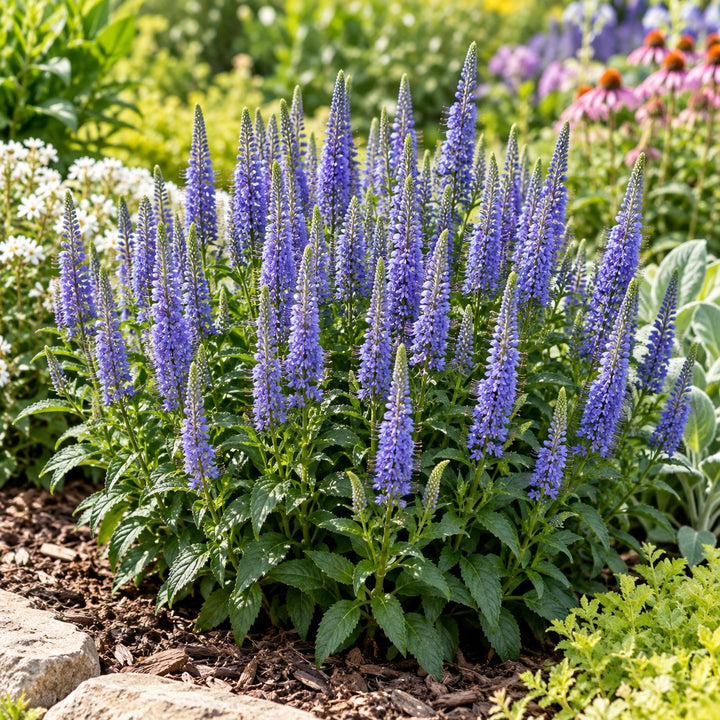
Ever After spike speedwell is among the longest-blooming speedwells you can grow. Its slender, tapering spikes are packed with tiny lavender-blue florets, and at peak they cover the top two-thirds of the plant. The faded flowers drop cleanly, so the plant keeps looking fresh, and it stays compact at 14 to 16 inches tall.
If you love lavender's spiky silhouette, this is a way to have more of it, for longer.
Ever After at a glance
| Trait | What to expect |
|---|---|
| Botanical name | Veronica 'Ever After' |
| Flowers | Lavender-blue spikes, long and slender |
| Bloom | Starts mid-June, peaks mid-July, long blooming with strong rebloom |
| Size | 14 to 16 inches tall, 16 to 20 inches wide |
| Hardiness | USDA zones 4 to 8 |
| Light | Full sun to part shade |
| Wildlife | Excellent for pollinators and butterflies; deer resistant |
| Best uses | Borders, edging, containers, cut flowers |
Growing it with lavender
Speedwell and lavender both want full sun, and their flower shapes are close cousins, so they look natural together. The difference is water. Speedwell prefers soil that does not stay dry for long, while lavender prefers soil that rarely stays wet. The answer is placement: set Ever After along the front edge of the bed or beside a path, where an occasional drink from the hose will not reach the lavender crowns.
Its long bloom window is the other reason to pair them. Ever After opens in mid-June and keeps going for many weeks with deadheading, filling in before and after the lavender peak. In a small garden, that makes the purple-blue look last most of the summer. Work out the front-to-back layout in the Companion Plant Planner.
Planting and care
- Soil: average and well-drained, but not bone dry. Wet winter soil can rot the crown.
- Water: regular water in the first season and during hot, dry spells, when blooming otherwise slows.
- Deadheading: cut each spent spike back to the next pair of side buds. New spikes follow.
- Air flow: space plants so leaves dry quickly, which helps prevent mildew.
- Dividing: lift and split crowded clumps every few years in spring.
- Winter: cut back spent stems in fall or early spring.
Cutting and pollinators
Ever After is a good cut flower. Its slim spires add movement to a jar of summer flowers and sit nicely beside fresh-cut lavender. In the garden, bees and butterflies work the spikes steadily all season, so it earns its spot in any pollinator planting.
Plug tray or bare root
Ever After is offered as a 72-cell plug tray for growers and long border plantings, and as a bare root plant for home gardens. See each product page for current availability.
Frequently asked questions
Is speedwell the same as lavender?
No. They look similar from a distance, but speedwell is a different plant with no lavender fragrance. It is grown as an ornamental, not for eating.
How long does Ever After bloom?
Many weeks, which is longer than most speedwells. Regular deadheading keeps new spikes forming.
Do deer bother it?
Deer tend to leave it alone, which helps in rural gardens.
Keep exploring
Ready to plant it?
Sizes, prices and shipping times are on its page.



Share how it went in your field