

Product Field NotesCompanion Plants
Everything's Rosy Coneflower: Soft Pink Pompons for Summer Lavender
 Save
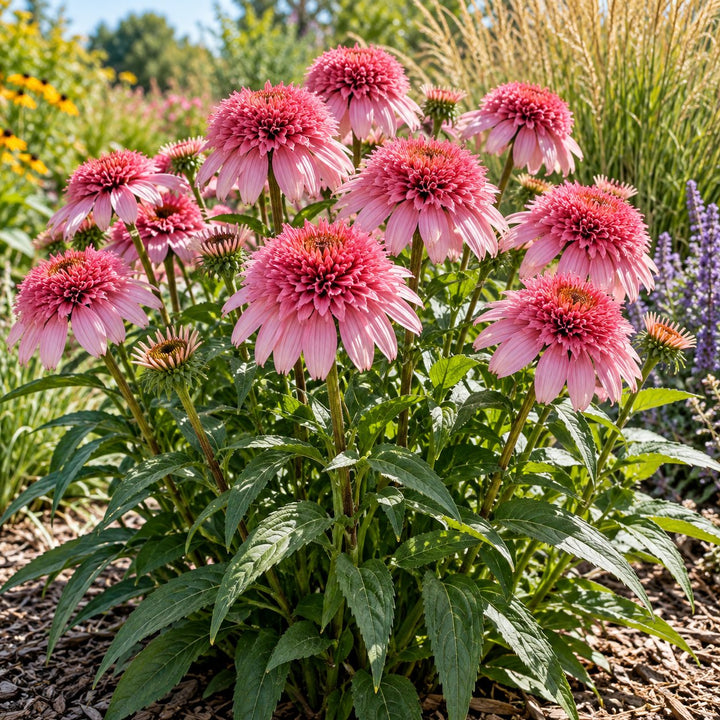
Everything's Rosy coneflower is a double coneflower with 4-inch flowers: broad, soft pink outer petals around a full, domed pompon of shaggy rosy pink petals. It is a lighter, gentler pink than many doubles, and the outer rays darken a little as each flower matures.
The plant is low, wide and heavily branched at 20 to 24 inches, with several flowers per stem, so it suits the front of a sunny border. That is exactly where it meets lavender, which wants the same sun and the same well-drained soil.
Everything's Rosy at a glance
| Trait | What to expect |
|---|---|
| Botanical name | Echinacea 'Everything's Rosy' |
| Flowers | Fully double, about 4 inches; soft pink rays, rosy pink pompon |
| Bloom | Starts early July, peaks late July, continues into late summer |
| Size | 20 to 24 inches tall and wide |
| Hardiness | USDA zones 4 to 8 |
| Light | Full sun to light part shade |
| Scent | Faint, lightly sweet, honey-like |
| Deer | Resistant |
A gentle partner for lavender
Soft pink and lavender purple are a natural cottage-garden combination, and this coneflower's rounded pompons contrast nicely with lavender's narrow spikes. It starts blooming in early July, overlapping the peak of many English lavenders, and keeps going after the lavender harvest is cut.
Because it stays compact, it works in the front or middle of a lavender planting without shading the lavender. Give each plant room for air to move. Try out arrangements in the Companion Plant Planner.
Planting and care
- Timing: plant by late summer so roots establish before winter. Hybrid coneflowers are most often lost to wet winter soil.
- Soil: average to lean and well-drained, the same as lavender.
- Water: regularly the first season; afterward it handles heat and dry spells.
- Deadheading: snip spent flowers to the next bud through summer.
- Fall: leave stems standing over winter and avoid heavy mulch over the crown.
Watch for aster yellows, a disease spread by leafhoppers that causes distorted green flowers. Pull and discard any affected plant so it does not spread. The Plant Health Checker can help you sort out what you are seeing.
Cutting and color
Everything's Rosy is a good cut flower, with strong stems that hold up in a vase. Pair a few pompons with fresh lavender stems for an easy summer jar arrangement. Flower color is richest in moderate temperatures and can fade faster during extreme heat, so early morning cutting gives the freshest blooms.
About the plug tray
This coneflower is offered as a 72-cell plug tray, ideal for growers and for anyone planting drifts along a lavender border. See the product page for current availability.
Frequently asked questions
Do pollinators visit double coneflowers?
Some do, but doubles offer pollinators less than single coneflowers. Pair it with lavender and other single flowers if pollinators are a priority.
Why did my coneflower not come back?
Wet winter soil is the most common reason. Plant in well-drained ground, plant early enough to establish and leave the stems standing over winter.
Will deer eat it?
Deer tend to leave coneflowers alone.

































Share how it went in your field