

Product Field NotesCompanion Plants
Fashionably Early Flamingo Phlox: Tall Lilac-Pink for the Back Row
 Save
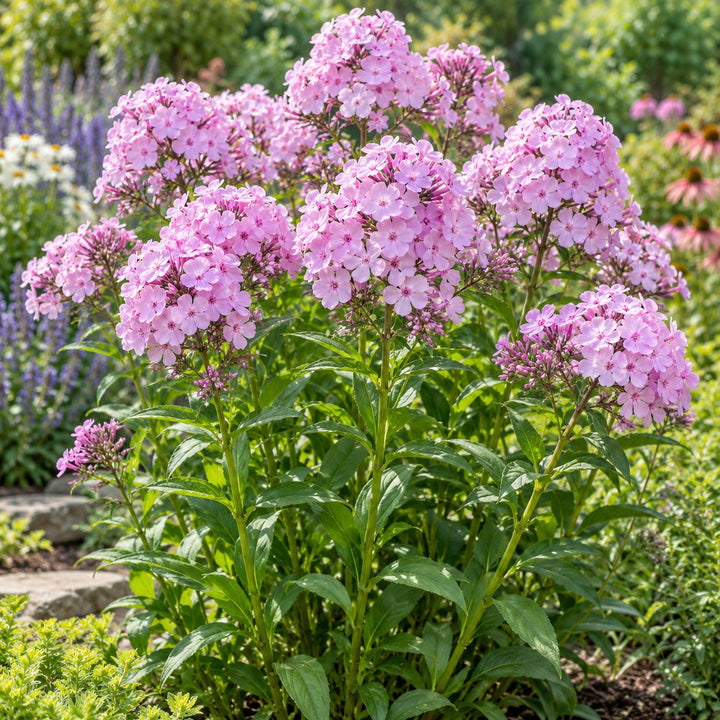
Fashionably Early Flamingo phlox is the tallest of the Fashionably Early series, sending up strong stems 30 to 36 inches tall topped with neat, dome-shaped heads of light pink flowers with a soft lilac cast. It blooms two to three weeks earlier than typical garden phlox, with about five weeks of main bloom and a few more flowers into fall.
The broad, thick, bright green leaves resist mildew and stay attractive all season. It is sweetly fragrant, too, and pollinators visit it often.
Flamingo at a glance
| Trait | What to expect |
|---|---|
| Botanical name | Phlox Fashionably Early 'Flamingo' |
| Flowers | Light lilac pink, fragrant, in dome-shaped heads |
| Bloom | Starts mid-June, peaks early July, repeats into mid-fall with deadheading |
| Size | 30 to 36 inches tall, 26 to 30 inches wide |
| Hardiness | USDA zones 4 to 8 |
| Light | Full sun for the best flowers; tolerates part shade |
| Foliage | Bright green, thick, glossy, mildew resistant |
| Deer | Susceptible |
A tall backdrop for lavender
Most lavender stays under 3 feet, so a border behind it needs something taller to frame the view. Flamingo fits that job. Planted in a cottage border just behind or beside the lavender bed, its lilac-pink heads rise above the lavender and pick up the same cool, purple-pink color family. The two look planned rather than accidental.
Keep the soils separate, though. Phlox wants richer soil and more regular water than lavender, so a separate border a few feet back is better than mixing them. Flamingo's early start means it opens while lavender is in full bloom, and its repeat flowers carry on after the lavender harvest. Lay it out in the Companion Plant Planner.
Planting and care
- Placement: middle to back of a sunny border.
- Soil and water: average to fertile, well-drained, with regular water. Water deeply in drought so lower leaves do not yellow.
- Shearing: cut spent heads after the first flush to bring on more blooms through mid-fall.
- Spacing: give it room for air to move, which helps keep leaves clean.
- Spread: it widens slowly by underground stems.
- Winter: fully hardy. Cut stems to the ground after a hard frost or in early spring.
Cutting and fragrance
Flamingo's tall, sturdy stems make it a good choice for cutting. Its sweet fragrance comes through indoors, and lilac-pink heads look lovely mixed with fresh lavender in a tall vase. Outdoors, butterflies, bees and hummingbirds work the flowers all summer.
Plug tray or bare root
Flamingo is offered as a 72-cell plug tray, suited to growers and long border plantings, and as a bare root plant for home gardens. See each product page for current availability.
Frequently asked questions
Does it need staking?
Its stems are strong and upright. In very rich soil or windy spots, a little support may help, but most gardens will not need it.
What color is it exactly?
Light pink with a soft lilac cast. Flowers can open a bit more lavender-pink and mature paler.
Is it mildew resistant?
Yes, the thick leaves have excellent powdery mildew resistance, especially with good air flow.

































Share how it went in your field