

Use & Care NotesLavender Plants
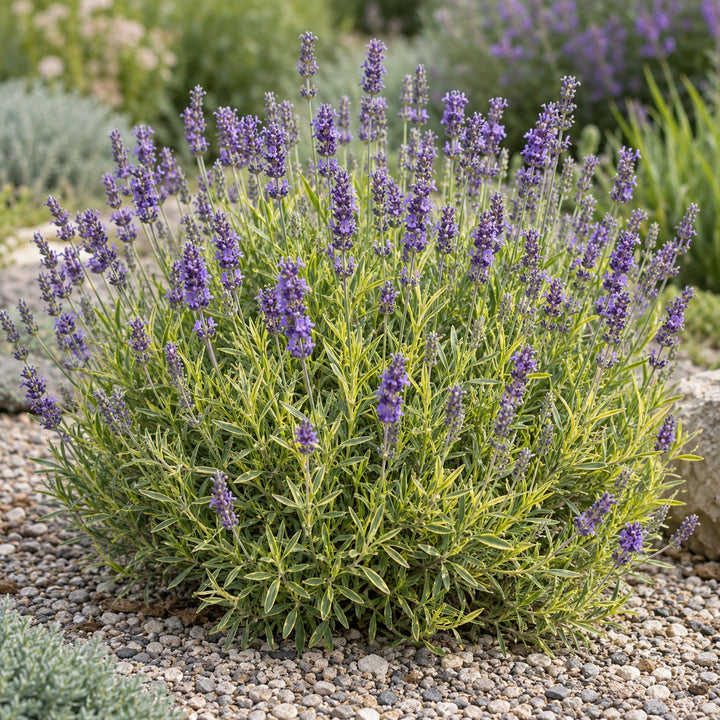
Goldberg Lavender: A Lavandin with Green and Yellow Foliage
 Save
Goldberg lavender is a lavandin that stands out before it ever flowers. Its foliage mixes green and yellow, giving the plant a brighter, warmer look than the usual gray lavender mound. In early summer it adds purple spikes, peaking in mid-July, on a compact, bushy plant about 2 feet tall and 3 feet wide.
As a lavandin, a hybrid of English and spike lavender, it carries a strong floral-herbal scent with a fresh camphor note, and it rates excellent for oil, bouquets and drying.
Goldberg at a glance
| Trait | What to expect |
|---|---|
| Botanical name | Lavandula × intermedia 'Goldberg' |
| Parentage | L. angustifolia × L. latifolia |
| Flower color | Purple |
| Foliage | Green and yellow |
| Mature size | About 23.6 inches tall and 36 inches wide |
| Bloom | Starts early June, peaks mid-July, single flush |
| Hardiness | USDA zones 5a to 8b |
| Fragrance | Strong floral-herbal lavandin, fresh camphor notes |
Foliage as the main event
Lavender spends most of the year as a leafy mound, so foliage color does a lot of work. Goldberg's green and yellow leaves light up a bed in spring and fall, contrast sharply with silver-leaved lavenders, and make purple flowers look even more saturated. Try it beside dark purple English lavender, blue fescue or deep burgundy foliage. Repeated along a walkway, it gives a garden a cheerful rhythm.
Planting and spacing
Like every lavender, Goldberg needs full sun and sharp drainage. Plant it in sandy or gritty soil, or raise the bed on clay. Space plants about 36 inches apart so they can reach full width without crowding. Set the crown at soil level, water deeply at planting, and keep wood mulch and compost away from the stems.
It benefits from a winter chill to flower, which suits cold-winter gardens. Confirm your zone with the USDA Zone Finder.
Care notes
- Water: deeply through the first summer, then only in long dry spells. Low water needs.
- Fertilizer: rarely needed. Rich soil can soften growth and dull the plant.
- Pruning: after the flowers are cut, shape into a rounded mound in green growth. Do not cut into the woody base.
- Winter: drainage matters most. Keep the crown free of wet mulch.
The Pruning Calendar covers the timing for lavandins.
Harvest and use
Goldberg's flowers rate excellent for fresh bouquets and dried bundles. Cut for drying when buds are colored and the first few flowers open; for the strongest scent in sachets, let a bit more of the spike open. Hang bundles in a dark, airy spot. Lavandin rates good for culinary use but has more camphor than English lavender, so use it sparingly in food.
Plant sizes
Offered as 3-inch plugs, 4-inch pots and 1-gallon pots. See the product page for current sizes and availability.
Frequently asked questions
Does the yellow in the foliage stay all season?
Goldberg's foliage is described as green and yellow. Leaf color can shift a little with light and season, but it remains its main ornamental feature.
Is Goldberg good for oil?
Yes. Like most lavandins, it rates excellent for oil and high oil production.
Will it rebloom?
Rebloom is low. Expect one main summer flush peaking in mid-July.
















Share how it went in your field