

Product Field NotesLavender Plants
Grappenhall Lavender: A Tall Lavandin for the Back Row
 Save
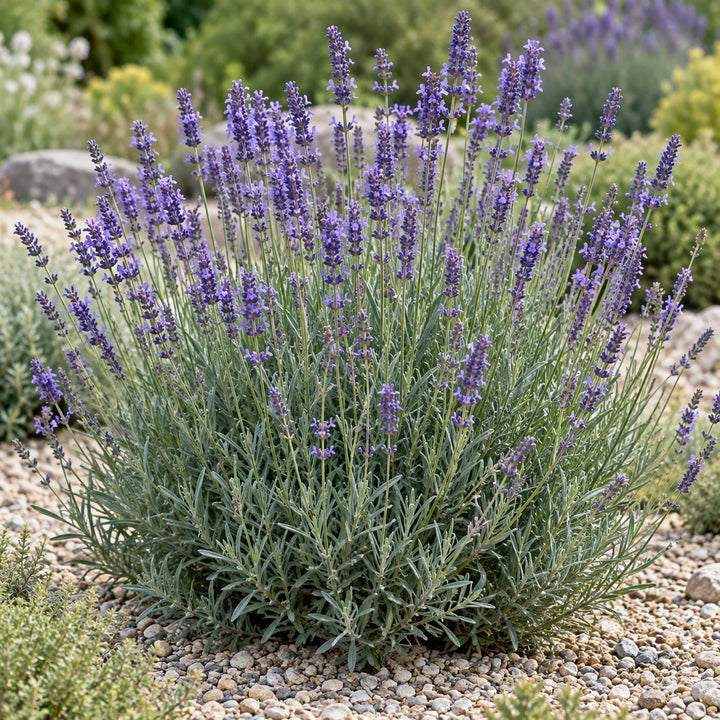
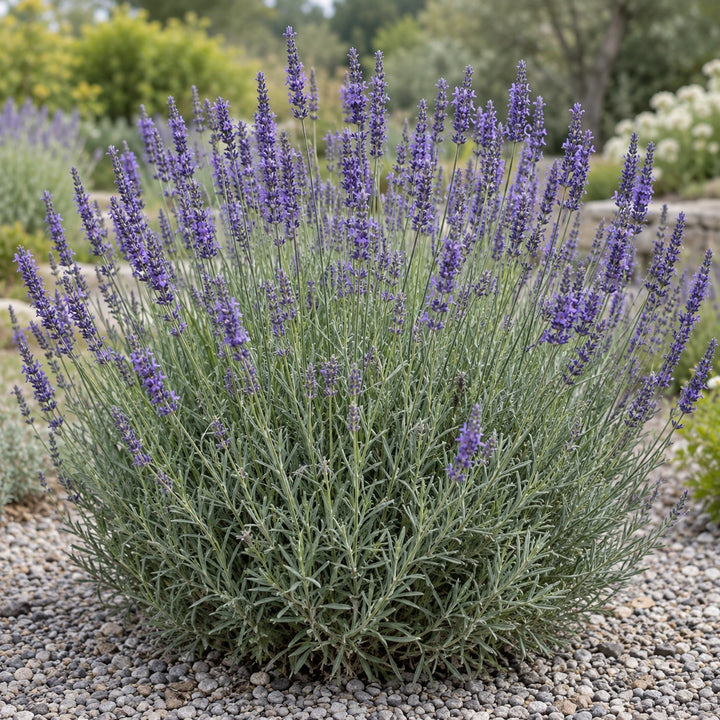
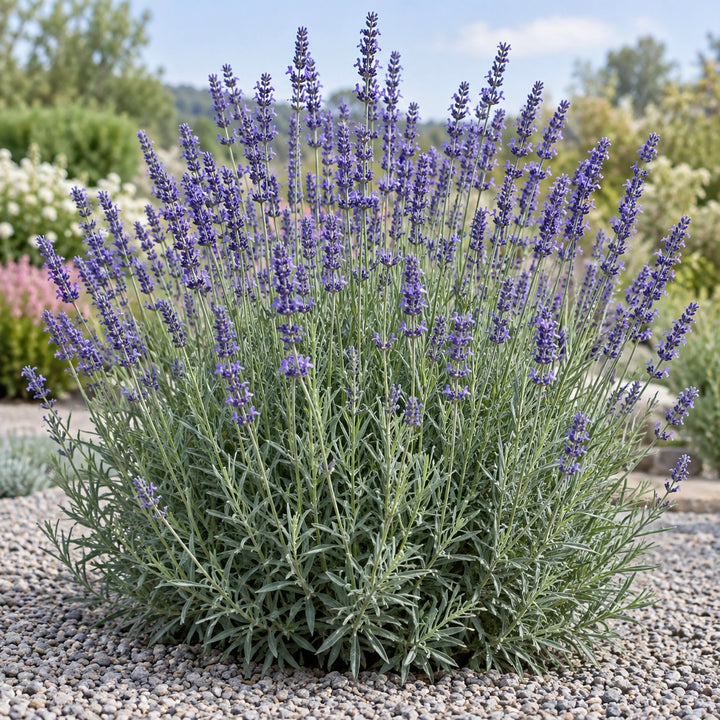
Grappenhall lavender is a big lavandin. It grows into a bushy plant up to about 4 feet tall and 3 feet wide, with gray-green foliage and purple-blue to violet-blue flowers on stems around 2 feet long. If most lavenders are border plants, Grappenhall is a shrub.
The scent is strong and floral-herbal, sweet lavender with a fresh camphor edge, and it rates excellent for oil, bouquets and dried bundles.
Grappenhall at a glance
| Trait | What to expect |
|---|---|
| Botanical name | Lavandula × intermedia 'Grappenhall' |
| Parentage | L. angustifolia × L. latifolia |
| Flowers | Purple-blue to violet-blue |
| Foliage | Gray-green |
| Mature size | About 48 inches tall and 36 inches wide |
| Stems | About 23.6 inches |
| Bloom | Starts mid-June, peaks mid-July, single flush |
| Hardiness | USDA zones 5a to 8b |
Using a 4-foot lavender
Height opens up options. Grappenhall can stand at the back of a perennial bed behind shorter English lavenders, form a soft, fragrant screen along a property line, or anchor the corner of a large garden. A row of them along a fence will be buzzing with bees in July; it rates excellent for pollinators.
Its size also means fewer plants to fill a space. Just plan for it: a 4-foot plant set too close to a path will be brushing every passerby, which, to be fair, is not the worst fate.
Planting and spacing
- Sun: full sun, all day if possible.
- Soil: lean, fast-draining; raised rows or berms on clay.
- Spacing: 36 to 48 inches between plants and well back from walkways.
- Planting: crown at soil level, deep watering at planting, then whenever the top few inches dry in the first season.
Grappenhall benefits from a winter chill to flower well. Check your zone with the USDA Zone Finder.
Harvesting long stems
Stems around 2 feet long make generous, dramatic bundles and tall fresh arrangements. Cut for drying when buds are fully colored and a few flowers are open. Band bunches tightly, since stems shrink as they dry, and hang them in a dark, airy place. For sachet buds with the strongest scent, wait until more of each spike is open. Lavandin rates good for culinary use but is more camphorous than English lavender, so most cooks use it sparingly.
Pruning a big lavandin
Pruning keeps a large lavandin from splitting open and going woody. After harvest, shear the plant into a rounded dome, leaving several inches of green growth above the wood. Finish by early fall. In spring, tidy any winter tips once new growth shows. The Pruning Calendar has the timing.
Plants, plugs and trays
Grappenhall is available as individual 3-inch plugs, 4-inch pots and 1-gallon pots, plus 72-cell and deep 20-cell plug trays for growers planting rows or potting up their own stock. See each product page for current sizes and availability, or the Wholesale Hub for tray orders.
Frequently asked questions
Is Grappenhall really 4 feet tall?
It is listed at about 48 inches tall at maturity, including the flower stems. Size varies with soil and climate.
Can I keep it smaller with pruning?
Annual shearing keeps it dense and shapely, but it will stay a large plant. For a smaller lavandin, compare options in the Compare tool.
Does it rebloom?
Rebloom is low. Expect one strong summer flush.

































Share how it went in your field