

Product Field NotesLavender Plants
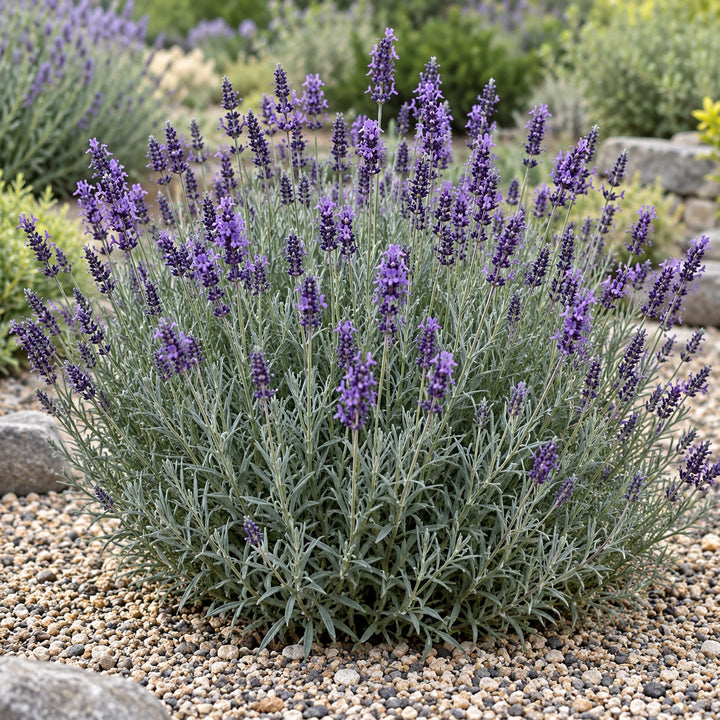
Gray Lady Lavender: Dark Violet Flowers over Silver-Gray Leaves
 Save
Gray Lady lavender is a compact English lavender named for its foliage, a soft silver-gray that looks good from spring to the first snow. Above it, violet to dark purple flower spikes open in early June and peak by mid-June. The plant grows about 2 feet tall and 30 inches wide.
The contrast between pale leaves and dark flowers is the whole appeal, and it is a strong one.
Gray Lady at a glance
| Trait | What to expect |
|---|---|
| Botanical name | Lavandula angustifolia 'Gray Lady' |
| Flowers | Violet to dark purple |
| Foliage | Silver-gray |
| Habit | Compact |
| Mature size | About 24 inches tall and 30 inches wide |
| Stems | About 10 inches |
| Bloom | Starts early June, peaks mid-June, moderate rebloom |
| Hardiness | USDA zones 5a to 9b |
Contrast in a small package
Dark-flowered lavenders can disappear against green foliage. Gray Lady's silver leaves make the violet spikes jump. Use it as an edging along a path or patio, in a formal herb garden, or as a low, silver frame around a bed of roses. Because it stays compact, it also does well in a large container with excellent drainage.
The foliage keeps working after bloom, too. A row of Gray Lady stays a soft, gray ribbon through late summer and fall, which is more than many perennials manage.
Planting basics
- Sun: full sun.
- Soil: lean and fast-draining. Silver-leaved lavenders are especially sensitive to soggy soil.
- Spacing: about 24 inches for an edging, 30 inches for separate mounds.
- Mulch: gravel or nothing near the crown; keep wood mulch and compost away from the stems.
Gray Lady benefits from winter chilling to flower well. If you are unsure of your zone, check the USDA Zone Finder.
Pruning and seasonal care
After the June bloom, cut the flower stems and lightly shear the mound to keep it dense; a moderate rebloom may follow. Stop pruning by late summer. In spring, wait for new growth before trimming off any winter-browned tips, and never cut into bare wood. Water deeply through the first season, then only during long dry spells. The Pruning Calendar covers the timing.
Good companions
Silver-gray foliage is a natural partner for roses, which like the same full sun and appreciate a low edging that does not compete for height. Gray Lady also pairs well with white and pale pink English lavenders of similar size, and with other dry-loving plants such as thyme, sage and catmint. Keep companions far enough away that air can move around each lavender mound.
Harvest ideas
Gray Lady's 10-inch stems are a good length for wreaths, small bundles and wands, and the dark flowers dry with good color. Cut on a dry morning when buds are colored and only a few flowers have opened. As an English lavender, it rates great for culinary use; harvest buds from food-grown plants and use them sparingly.
Plant sizes
Choose 3-inch plugs, 4-inch pots or 1-gallon pots. See the product page for current sizes and availability.
Frequently asked questions
Is Gray Lady the same as other gray-leaved English lavenders?
It shares the English lavender type, but its silver-gray foliage and violet to dark purple flowers are its own. Compare it with similar cultivars in the Compare tool.
When should I harvest it?
Early to mid-June, when the buds are fully colored and just starting to open.
Is it deer resistant?
Yes. Like most lavenders, it is rated deer resistant.

































Share how it went in your field