

Product Field NotesLavender Plants
Hidcote Giant Blue Lavender: Big Mounds of Purple-Blue
 Save
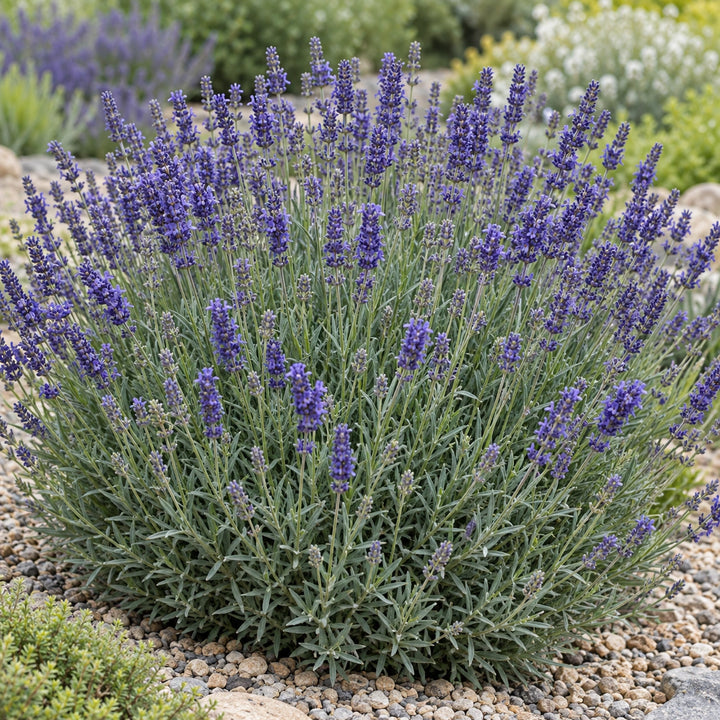
Hidcote Giant Blue lavender takes the Hidcote look and scales it up. It grows into a bushy, compact-mounding plant about 3 feet tall and 3 and a half feet wide, with gray-green foliage and purple-blue to violet-blue spikes. Flowering starts in mid-June and builds to a peak in mid-July, with some rebloom after trimming.
Its listing describes a sweet, floral fragrance with low camphor and rates it great for culinary use, so it combines a big presence with a gentle scent.
Hidcote Giant Blue at a glance
| Trait | What to expect |
|---|---|
| Botanical name | Lavandula × intermedia 'Hidcote Giant Blue' |
| Flower color | Purple-blue to violet-blue |
| Foliage | Gray-green |
| Habit | Bushy, compact and mounding |
| Mature size | About 36 inches tall and 42 inches wide |
| Bloom | Starts mid-June, peaks mid-July, moderate rebloom |
| Hardiness | USDA zones 5a to 8b |
| Fragrance | Strong, sweet floral, low camphor |
Where a big mound belongs
A lavender this size is a shrub in its own right. Use Hidcote Giant Blue to anchor the corner of a bed, as a single specimen in a lawn island, in a row along the back of a border or as a soft, informal hedge along a driveway. Its long bloom window, mid-June into July, keeps it in color while smaller early lavenders fade, and it rates great for pollinators.
Plan the space before you plant. A plant that will eventually be 3 and a half feet wide needs that room from the start. The My Garden planner can help.
Planting
- Sun: full sun.
- Soil: lean and fast-draining; raised rows or berms on clay.
- Spacing: 36 to 48 inches between plants, with extra room near paths.
- Water: deeply through the first summer, then only in long dry spells.
It benefits from a winter chill to bloom well. Its range is zones 5a to 8b.
Pruning for a dense shape
Big lavenders that go unpruned tend to open up in the center and turn woody. After the main bloom, cut the flower stems and shear the whole mound by up to a third, staying in green growth. A moderate rebloom may follow. Finish by late summer, then tidy winter tips in spring once new growth shows. The Pruning Calendar covers the timing.
Harvest
Cut stems for drying when buds are fully colored and a few flowers have opened, then hang bundles in a dark, airy place. It rates good for cut and dried flowers. With its sweet, low-camphor profile and a great culinary rating, food-grown buds can also go into baking and infusions; use a light hand.
Plant sizes
Offered as 3-inch plugs, 4-inch pots and 1-gallon pots. See the product page for current sizes and availability.
Frequently asked questions
Is Hidcote Giant Blue a lavandin or an English lavender?
It is listed as Lavandula × intermedia, while its fragrance and culinary notes read like English lavender. Hidcote names show up in both groups, so check the listing for the current details.
How does it compare with Hidcote Giant?
Both are large. Hidcote Giant is a lavandin listed even wider, up to about 5 feet, with a single flush; Hidcote Giant Blue is listed with moderate rebloom and a sweeter scent. The Compare tool shows them side by side.
Can I grow it in a pot?
Its mature size makes it a plant for the ground rather than a container.

































Share how it went in your field