

Use & Care NotesCompanion Plants
Hopscotch Foamy Bells: Red Lacy Leaves for a Shade Bed
 Save
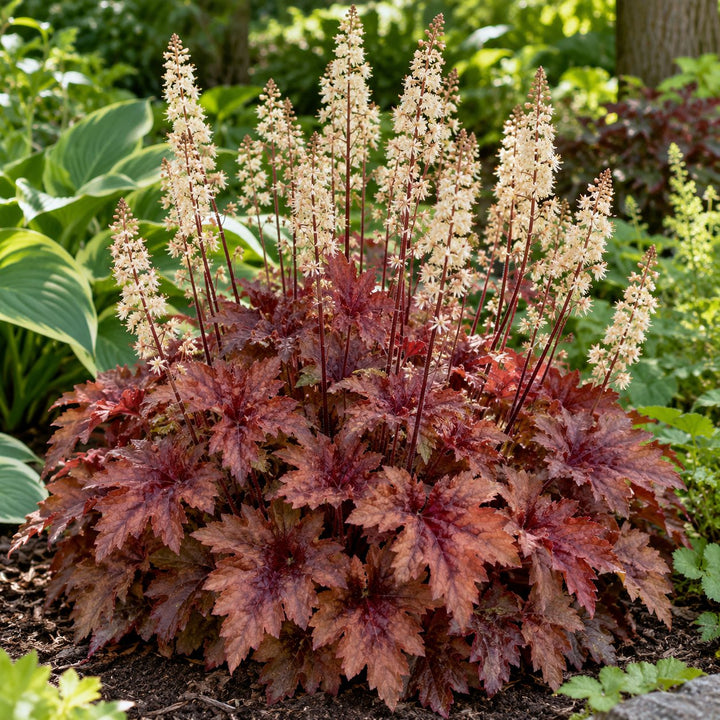
Hopscotch foamy bells changes outfits through the year. Its deeply lobed, lacy leaves open red with dark red centers in early spring, shift to bronze red during bloom, then settle into deep green for summer. In late spring, bottlebrush spikes of tiny cream flowers rise on stems 20 to 24 inches tall above a low, spreading mound.
Foamy bells is a cross between coral bells and foamflower, and this one carries extra vigor and better tolerance of heat and humidity than many. It still prefers shade, which tells you where it belongs in a lavender garden.
Hopscotch at a glance
| Trait | What to expect |
|---|---|
| Botanical name | × Heucherella 'Hopscotch' |
| Foliage | Lacy, lobed; red in spring, bronze red, then deep green |
| Flowers | Cream bottlebrush spikes, some repeat through summer |
| Size | 10 to 12 inches tall, 20 to 24 inches wide |
| Bloom | Mid to late May |
| Hardiness | USDA zones 4-9 |
| Light | Full sun to full shade; best color in part shade |
| Deer | Moderately resistant |
Where it fits with lavender
Lavender rows need open sun and dry roots. Hopscotch wants steady moisture and filtered light, so it belongs in the shaded beds of the same property: under trees, along a north-facing foundation or at the edge of a woodland path. It is a strong partner for green hostas and ferns, where its red spring foliage gives the shade garden the kind of color punch that lavender brings to the sunny side.
It also spreads wider than it grows tall, so a row of them makes a soft, low edging along a shaded walk that leads toward the lavender. Plan both areas together with the Companion Plant Planner.
Planting and care
- Light: part shade gives the richest leaf color. It tolerates more sun than many foamy bells, but afternoon shade still helps in hot summers.
- Soil: average to fertile, evenly moist and well drained. Do not let the crown sit wet.
- Winter: semi-evergreen in Michigan and may brown in hard winters. Mulch lightly after the ground freezes to prevent heaving.
- Spring cleanup: trim winter-damaged leaves as new growth begins.
- Flowers: the plant is seedless, so it puts its energy into foliage and repeat flower spikes.
In containers
Hopscotch is a good container plant for a shaded porch or patio. Its lacy leaves spill over the rim, and the changing color means the pot looks different in April than it does in July. Water containers more often than in-ground plants.
The 72-cell plug tray
This variety is offered as a 72-cell plug tray, which suits mass plantings and edging or potting up your own stock. See the product page for current availability.
Frequently asked questions
Why did my leaves turn green?
That is normal. Hopscotch is red in spring and mellows to deep green in summer heat.
Can I plant it in the lavender bed if it gets some sun?
We would not. Lavender's dry, lean soil is too harsh for foamy bells, and the moisture foamy bells needs is too much for lavender.
Keep exploring
Ready to plant it?
Sizes, prices and shipping times are on its page.


Share how it went in your field