

Use & Care NotesLavender Plants
Joan Head Lavender: A Big Silver Shrub with Midsummer Purple
 Save
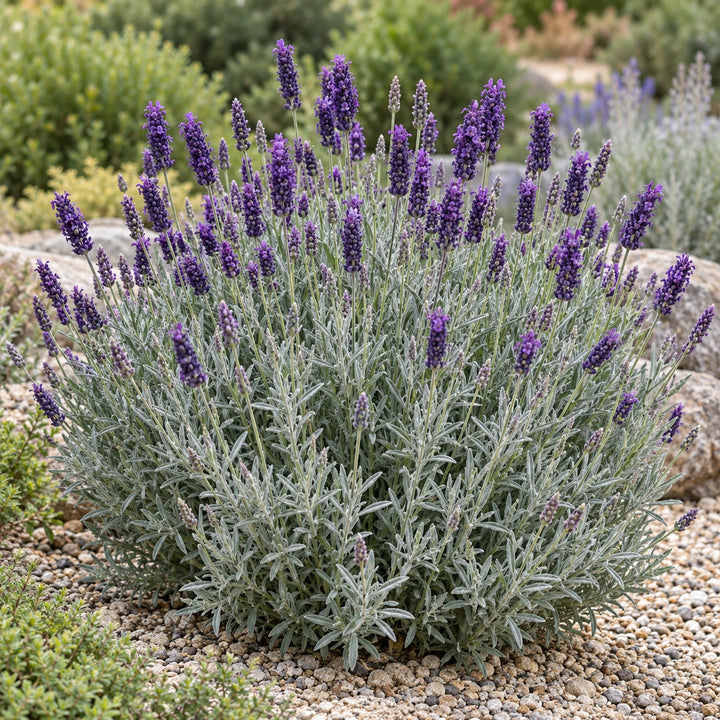
Joan Head lavender is a lavender you plan a bed around. It grows into a bushy shrub about 36 inches tall and 48 inches wide, with silver foliage that looks good all season and purple flowers in midsummer. The fragrance is floral and sweet with herbaceous, aromatic notes.
It is Lavandula × chaytoriae 'Joan Head', a hybrid of English lavender and woolly lavender, rated for USDA zones 6a to 9b. The silver leaves come through strongly, so even out of bloom it reads as a soft, pale mound in the garden.
Joan Head at a glance
| Trait | What to expect |
|---|---|
| Botanical name | Lavandula × chaytoriae 'Joan Head' |
| Parentage | English lavender × woolly lavender |
| Flower color | Purple |
| Foliage | Silver, bushy |
| Size | About 36 inches tall and 48 inches wide |
| Bloom | Mid-July, single flush |
| Hardiness | USDA zones 6a to 9b |
| Fragrance | Moderate; floral, sweet herbaceous and aromatic |
Designing with a silver lavender
Silver foliage is a gift in a garden: it brightens darker greens, cools down hot colors and catches morning and evening light. Joan Head's size lets it act as a backbone plant at the back of a sunny border, at the corner of a bed or as a loose informal hedge. Underplant the front with smaller English lavenders for a layered look, or let it stand alone in gravel where its shape can show.
Because it blooms in a single flush in mid-July, the silver leaves carry the plant for most of the year. That is a feature, not a flaw; it looks tidy and luminous from spring to late fall.
Planting and spacing
Give it full sun and sharp drainage. Woolly lavender in its background makes it sensitive to wet soil and damp foliage, so choose a raised spot, a slope or a sandy bed, and use gravel rather than bark mulch underneath. Space plants about 4 feet apart so air moves freely between them. Water deeply at planting and through the first summer whenever the top few inches dry.
Care through the year
- Water: low needs once established.
- Feeding: none needed.
- After bloom: cut spent stems and shape the shrub lightly, staying in leafy growth.
- Spring: remove any winter-damaged tips once new growth shows.
- Winter: rated to zone 6a; a sunny, well-drained, sheltered site gives it the best chance in borderline areas.
The Pruning Calendar covers timing for lavenders that bloom once.
Uses
Joan Head rates good for fresh bouquets and dried flowers, and great for pollinators; a shrub this size in bloom will hum with bees. Its oil rating is good. It is not recommended for cooking, so keep it for bundles, sachets and the garden. The Beekeeper Tools page is handy if you are planting for bees.
Plant formats
It is listed as a 3-inch plug, 4-inch pot and 1-gallon pot. Even small plants grow quickly into this size class with good conditions. See the product page for current sizes and availability.
Frequently asked questions
How big does Joan Head get?
About 36 inches tall and 48 inches wide at maturity, so give it room.
Can it go in a container?
It can live in a very large container for a while, but its size suits the ground better.
Is it hardy in Michigan?
It is rated for zones 6a to 9b. In zone 6, excellent drainage is the key to getting it through winter.
















Share how it went in your field