

Product Field NotesCompanion Plants
Karl Foerster Feather Reed Grass: The Classic Lavender Backdrop
 Save
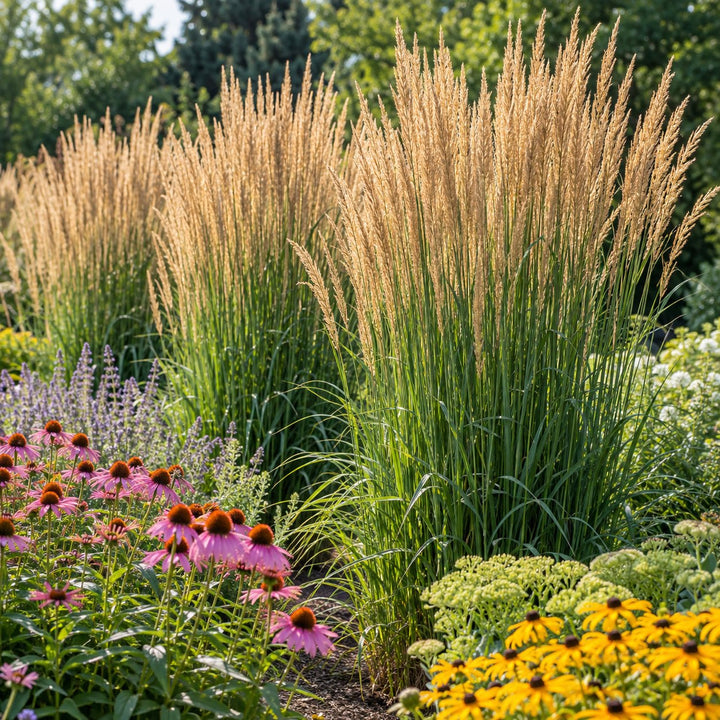
Karl Foerster feather reed grass is one of the most dependable ornamental grasses for northern gardens. It forms a narrow, upright clump of green blades, then in June sends slender stems straight up to about 5 feet, topped with feathery plumes that open with a pinkish-purple tint and ripen to golden wheat-tan. Those plumes stay standing through summer, fall and winter.
It was the first grass named Perennial Plant of the Year, in 2001, and holds an Award of Garden Merit. It is also sterile, so it stays exactly where you plant it.
Karl Foerster at a glance
| Trait | What to expect |
|---|---|
| Botanical name | Calamagrostis × acutiflora 'Karl Foerster' |
| Plumes | Pinkish purple ripening to wheat tan; stand through winter |
| Foliage | Medium green, narrow, upright |
| Size | About 5 feet tall in bloom, about 2 feet wide |
| Bloom | Mid to late June |
| Hardiness | USDA zones 4 to 8 |
| Light | Full sun |
| Deer | Resistant |
Why it is the classic backdrop
A row of Karl Foerster behind lavender is one of those combinations that just works. The grass is only about 2 feet wide, so it adds strong vertical lines without crowding, and its plumes are already up when lavender blooms. Purple mounds in front, wheat-colored spires behind: it looks like a field in miniature. When the breeze moves the grass, the whole bed moves with it.
After the lavender is cut, the grass carries the planting through fall and winter, when its tan plumes stand out against snow. Plan row spacing with the Companion Plant Planner, keeping the grass far enough back that it does not shade the lavender.
Planting and care
- Site: full sun, in almost any soil. It handles heavy clay and wet-to-dry conditions better than most grasses.
- Water: regular water the first season, then it tolerates dry spells.
- Spring cut: cut the whole clump back to about 6 inches in early spring, before new growth begins.
- Heat: as a cool-season grass, it grows most in spring and may look tired in long hot spells.
- Dividing: divide in spring or fall if the clump gets too large.
Cut and dried stems
Karl Foerster's plumes are rated excellent for drying. Cut them in midsummer once they have turned wheat-tan, and combine with dried lavender bundles for a farmhouse arrangement that lasts for months. Plan cutting stems with the Cut Flower Planner.
Plug tray or bare root
Karl Foerster is offered as a 72-cell plug tray, a practical way to plant a long screen or backdrop, and as a bare root plant for a few clumps in a home bed. See each product page for current availability, or visit the Wholesale Hub.
Frequently asked questions
Will it spread through my lavender?
No. It is a sterile clump-former and does not reseed.
Is it good for screening?
Yes. A row of it makes a tall, narrow summer screen that holds through winter.

































Share how it went in your field