

Use & Care NotesLavender Plants
La Diva Eternal Elegance: A Sweet English Lavender with Green Leaves
 Save
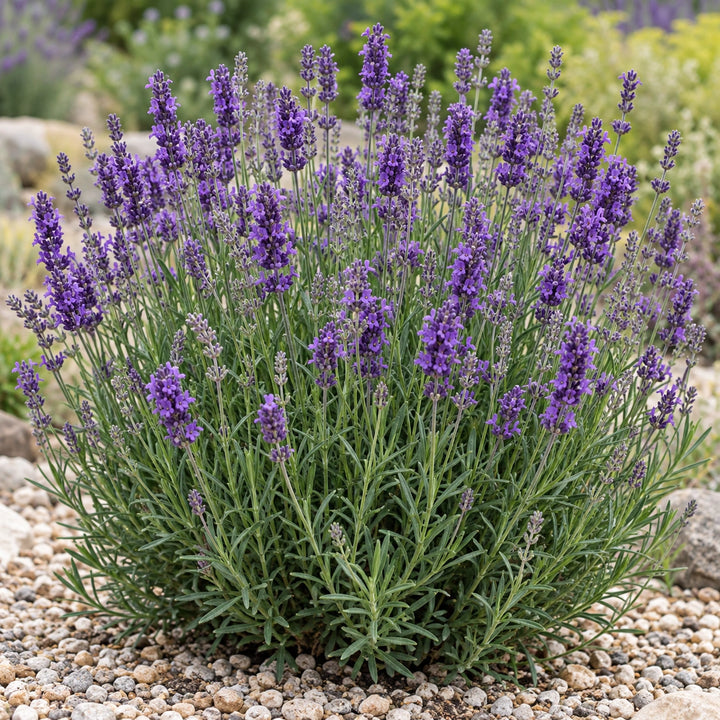
La Diva Eternal Elegance lavender is an English lavender with purple flowers held upright over green foliage, rather than the gray or silver most people expect. It grows to about 20 inches tall and 18 inches wide and is documented with compact vigor, meaning it stays well shaped while growing strongly.
It is Lavandula angustifolia from the La Diva Eternal series, rated for USDA zones 6a to 9b. Its fragrance is strong, sweet and floral with soft herbal notes and low camphor, and it rates great for culinary use, which is why it earns a spot in kitchen gardens.
La Diva Eternal Elegance at a glance
| Trait | What to expect |
|---|---|
| Botanical name | Lavandula angustifolia La Diva Eternal Elegance |
| Flower color | Purple |
| Foliage | Green, upright |
| Size | About 20 inches tall and 18 inches wide |
| Bloom | Long window listed from mid-April, peaking mid-July; moderate rebloom |
| Hardiness | USDA zones 6a to 9b |
| Fragrance | Strong; sweet floral with low camphor |
| Best uses | Culinary, oil, fragrance |
Green foliage, classic flowers
Green-leaved lavender looks fresher and leafier than silver types, and it blends easily into mixed herb and perennial beds. Eternal Elegance's upright habit keeps its purple spikes standing tall, so it gives a clean vertical accent at the middle of a border or in a row along a kitchen garden. The listed bloom window is long, opening as early as mid-April in mild climates; in Michigan, expect the main show around its mid-July peak.
Planting and spacing
Choose full sun and soil that drains quickly. Improve heavy clay with grit or plant in a raised bed, and set the crown level with the soil. Space plants about 18 to 20 inches apart. Its zone 6a rating is a little less cold-tolerant than some English lavenders, so in colder parts of the region pick the warmest, best-drained spot you have, out of winter wind. The USDA Zone Finder will tell you where you stand.
Care through the year
- First summer: water deeply whenever the top few inches dry out.
- Later years: water needs are low; rain usually covers it.
- Feeding: minimal. Rich soil weakens stems and reduces flowering.
- After the main bloom: trim spent stems and lightly shape the plant, staying in leafy growth, for a moderate rebloom.
- Winter: keep mulch off the crown and let drainage do the work.
The Care Calendar breaks the year into simple tasks.
Harvesting for the kitchen
Low camphor is what makes lavender taste sweet and floral rather than sharp. For culinary buds, cut on a dry morning when buds are fully colored but before most flowers have opened. Hang small bunches upside down in a dark, airy spot, then rub off the dry buds and store them airtight. Use only plants grown as a food crop, and start with a small pinch in shortbread, syrups or lemonade. Its oil suitability is rated excellent, and dried buds make lovely sachets.
Plant formats
It is offered as a 3-inch plug, 4-inch pot and 1-gallon pot. See the product page for current sizes and availability, or set up Availability Alerts.
Frequently asked questions
Is Eternal Elegance good for cooking?
Yes. It is an English lavender with a great culinary rating and a sweet, low-camphor profile.
Why are the leaves green instead of gray?
Foliage color varies among English lavenders. This one is listed with green foliage, which gives a fresh, leafy look.
Is it hardy in Michigan?
It is rated to zone 6a. In zone 6 gardens, excellent drainage and a sheltered site matter most.
















Share how it went in your field