

Use & Care NotesLavender Plants
La Diva Vintage Violet: A Slim, Upright English Lavender for Zone 4
 Save
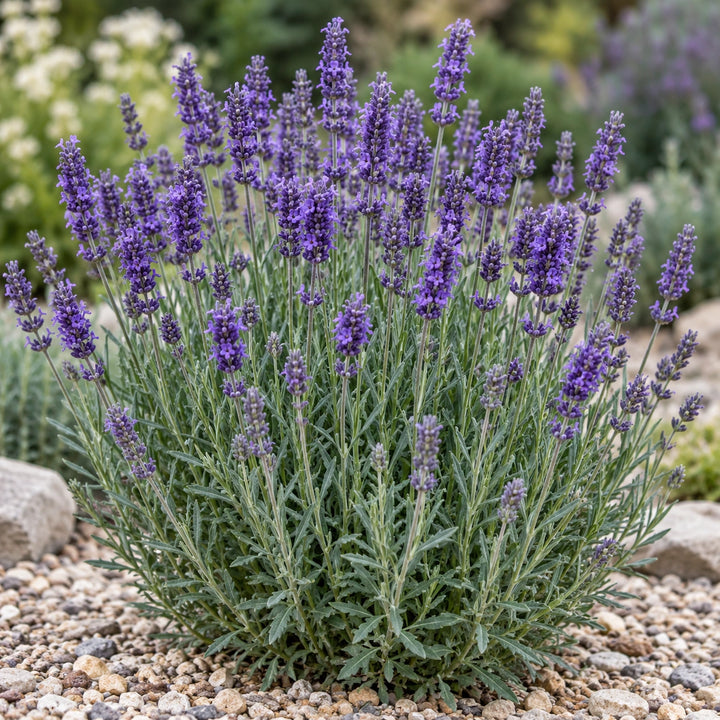
La Diva Vintage Violet lavender is an English lavender with a slim build. It grows upright to about 20 inches tall but only about 12 inches wide, with purple flowers over gray-green foliage. Its documentation notes compact vigor, so it grows strongly without sprawling.
It is Lavandula angustifolia from the La Diva Vintage series, rated for USDA zones 4a to 8b, which puts it among the more cold-tolerant lavenders we offer. Its fragrance is strong, sweet and floral with low camphor, and it rates great for culinary use.
La Diva Vintage Violet at a glance
| Trait | What to expect |
|---|---|
| Botanical name | Lavandula angustifolia La Diva Vintage Violet |
| Flower color | Purple |
| Foliage | Gray-green, upright |
| Size | About 20 inches tall and 12 inches wide |
| Bloom | Starts mid-June, peaks mid-July, moderate rebloom |
| Hardiness | USDA zones 4a to 8b |
| Fragrance | Strong; sweet floral with low camphor |
| Best uses | Culinary, oil, fragrance, narrow hedges |
Where a narrow lavender helps
Most lavenders grow as wide as they are tall, or wider. Vintage Violet's narrow, upright shape fits places others do not:
- Tight borders: along a foundation, a fence or the edge of a narrow side yard.
- Narrow hedges: at about 12 inches apart, it makes a slim, tidy line of purple.
- Containers: its compact footprint suits deep pots, where its height gives a vertical accent.
- Herb gardens: it slips between other sun-loving herbs without crowding them.
Planting
Give it full sun and soil that drains quickly after rain. In heavy clay, raise the bed. Set the crown level with the soil, water deeply and keep bark or compost away from the base. Its zone 4a rating means it handles cold winters well; your main job is keeping its roots out of standing water in spring thaws. Check your zone with the USDA Zone Finder.
Care
Water deeply through the first summer whenever the top few inches of soil are dry, then cut back once it is established; English lavender has low water needs. Keep fertilizer to a minimum. After the main bloom, shear lightly in the leafy growth to keep its upright shape and invite a moderate rebloom. In spring, trim any winter damage once new growth is visible. The Lavender Care Academy covers pruning English lavender in detail.
Harvesting
Vintage Violet rates great for culinary use and excellent for oil suitability, with good cut and dried ratings. For culinary buds, cut on a dry morning when buds are fully colored and only a few flowers have opened. Dry small bunches in a dark, airy place and store the buds airtight. Use only plants grown as a food crop, and start small. Upright stems also bundle neatly for small dried bouquets and sachets.
Plant formats
It is listed as a 3-inch plug, 4-inch pot and 1-gallon pot. For a narrow hedge, plugs make it affordable to plant at close spacing. See the product page for current sizes and availability, or sign up for Availability Alerts.
Frequently asked questions
How cold-hardy is Vintage Violet?
It is rated for zones 4a to 8b, colder than most of Michigan. Drainage decides winter survival more than temperature.
Can I grow it in a pot?
Yes. Its narrow habit suits a deep pot with drainage holes and a gritty mix. Potted lavender is more exposed to cold, so a sheltered spot helps in winter.
Is it good for baking?
Yes. It is an English lavender with a great culinary rating and a sweet, low-camphor scent.
















Share how it went in your field