

Product Field NotesLavender Plants
Lady Ann Lavender: Dusky Pink English Lavender for Cooks
 Save
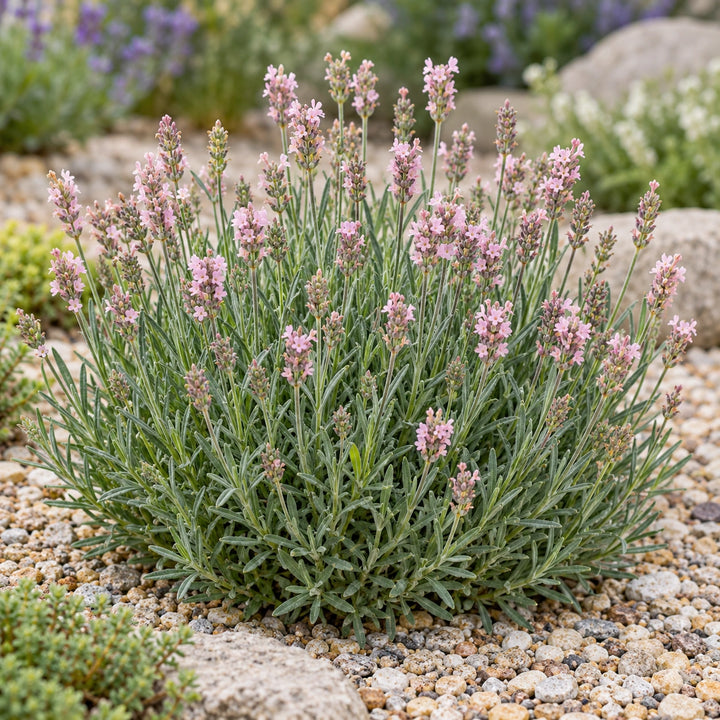
Lady Ann lavender is a pink English lavender, introduced in 2001, with pale dusky pink flowers on short stems over gray-green foliage. Look closely and you will see off-pink petals set in sage-green calyces tipped with pink. It forms a very compact, low hummock, the kind of plant that suits a rock garden, a container or the very front of a border.
It also has a reputation in the kitchen. Its culinary rating is excellent, so it does double duty as a pretty plant and a baking lavender.
Lady Ann at a glance
| Trait | What to expect |
|---|---|
| Botanical name | Lavandula angustifolia 'Lady Ann' |
| Flower color | Pale dusky pink |
| Foliage | Gray-green |
| Size | Very compact; records range from about 6 to 14 inches tall and about 8 inches wide, so check the listing |
| Stems | Short, about 4 to 6 inches |
| Bloom | Begins late June to mid-July, with moderate rebloom |
| Hardiness | USDA zones 5a to 9b |
| Best uses | Culinary, essential oil, containers, rock gardens |
A pink lavender with a job
Pink English lavenders are prized as accents. Lady Ann's soft, dusky color reads almost blush from a distance, and it brightens a planting of deep purple cultivars when tucked in between. Because it stays so small, it can sit in front of taller lavenders without hiding them.
The culinary rating is the bonus. English lavender is the classic choice for cooking because its flavor is sweeter and softer than the camphor-heavy hybrids, and Lady Ann is rated excellent. Pink buds also add a gentle color to lavender sugar or shortbread, which is fun for a garden party.
Planting a compact lavender
Small lavenders are sensitive to drowning because their roots are shallow and their crowns sit close to the soil. Give Lady Ann the sharpest drainage you have: a raised bed, a rock garden pocket or a pot with gritty mix. Full sun keeps the habit tight and the color clear. Space plants about 10 to 12 inches apart for a low ribbon of pink.
It carries an RHS hardiness rating of H5 and, like other English lavenders, is generally among the hardier lavenders. In Michigan the risk is winter wet, not winter cold, so keep mulch away from the crown.
Through the seasons
- Spring: wait for green growth, then trim off winter-damaged tips.
- Early summer: water young plants deeply when dry; established plants need little.
- Bloom: harvest buds or enjoy the show, then shear spent stems to tidy the mound and encourage a moderate rebloom.
- Fall: no fertilizer, minimal water. It needs winter cold to bloom well next year.
Harvesting for the kitchen
Cut stems on a dry morning when the buds are colored and only a few flowers are open. Dry them in small bundles out of the sun, then rub the buds free. Use only plants grown and handled as a food crop, and start with a small amount; a pinch of lavender goes a long way. Browse our Harvest Calendar for timing.
Lady Ann is offered as a 3-inch plug, a 4-inch pot or a 1-gallon pot. See the product page for current sizes and availability.
Frequently asked questions
How big does Lady Ann get?
Sources disagree, with heights from about 6 to 14 inches and a spread near 8 inches. Either way it is a very compact lavender; check the listing for the current size.
Is pink lavender good for baking?
Lady Ann is rated excellent for culinary use. Use food-grown buds and small amounts.
Can I grow it in a pot all year?
Yes. Keep the pot outdoors in winter in a sheltered spot so it gets the cold it needs, and make sure it never sits in a saucer of water.

































Share how it went in your field