

Product Field NotesLavender Plants
Canary Island Lavender: A Bold Patio Lavender with Branching Spikes
 Save
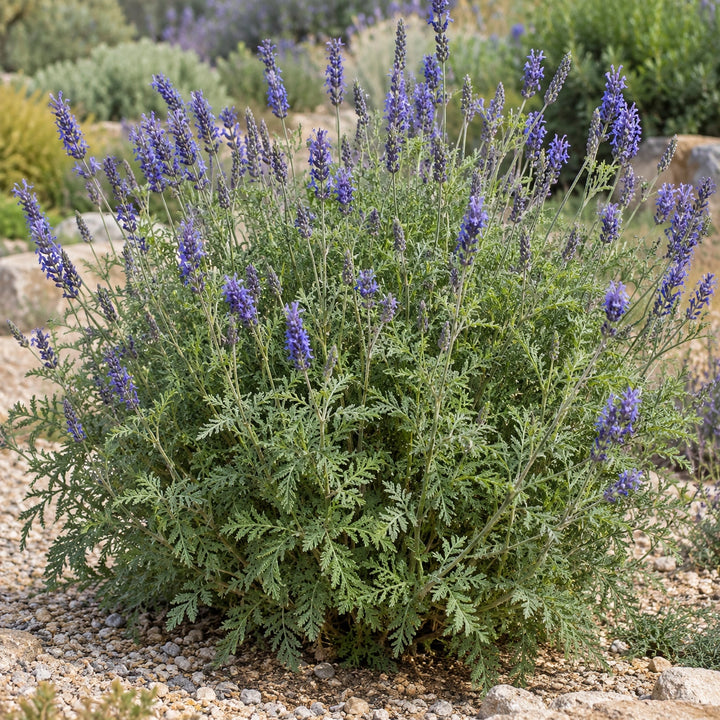
Canary Island lavender is Lavandula canariensis, a species lavender from the Pterostoechas group. Its name points to its island home, and its look says warm climate all the way: bushy growth, finely divided leaves and slender violet-blue spikes that often branch at the tips. Records for this stock describe a plant that can reach roughly 39 inches tall and wide where it grows year after year.
For a Michigan gardener, it is a dramatic patio plant for summer and a houseguest for winter.
Canary Island lavender at a glance
| Trait | What to expect |
|---|---|
| Botanical name | Lavandula canariensis |
| Group | Pterostoechas |
| Flower color | Violet-blue |
| Habit | Bushy |
| Size | Up to about 39 inches tall and wide in long-lived plants; much smaller in a single season |
| Bloom | Starts mid-June, peaks mid-July, long season with moderate rebloom |
| Fragrance | Moderate; resinous and herbal with camphor notes |
| Identity | Commercial species stock; traits can vary |
What to expect from a species lavender
This listing is species stock, not a named cultivar, so plants can differ a little in size, vigor and flower shade depending on source line. That is part of the charm for collectors. What stays consistent is the overall character: a long, steady bloom season, bees all over the flowers and a fine-textured plant that looks nothing like a classic English lavender.
In one Michigan summer, a plug or small pot will not reach full size. A gallon plant in a generous container fills out fastest and makes the best show by midsummer.
Container setup
- Pot: start in a 12 inch pot and move up to 16 inches or more as it grows.
- Mix: fast-draining with plenty of grit or perlite; drainage holes are essential.
- Sun: as much as possible. A south- or west-facing patio is ideal.
- Water: water thoroughly, then let the top couple of inches dry. Big plants in hot weather may need water more often than you expect.
- Feeding: a light, balanced feed every few weeks in summer is enough for a container.
Keeping it through winter
Pterostoechas lavenders are frost-tender, and the listing does not give a hardiness range, so do not leave it outside once frost threatens. Move it into a cool, bright room, a frost-free sunroom or a greenhouse. Water sparingly and expect slower growth. Trim leggy stems lightly in late winter, staying in leafy growth, and move it back outside after the last frost. The Care Calendar can help you plan the seasons.
Flowers for cutting and drying
The branching spikes are rated good for both cut and dried flowers. Cut stems when the spikes are about half open for small vases, and hang bundles in a dark, airy place to dry. The scent is herbal and resinous rather than sweet. Culinary use is not recommended.
It is offered as a 3-inch plug, a 4-inch pot or a 1-gallon pot. See the product page for current sizes and availability.
Frequently asked questions
How big will it get in Michigan?
In a single summer outdoors it stays well below the 39 inch size listed for mature plants. Overwintered plants keep growing year after year in a large pot.
Does it need a cold winter to bloom?
No. Like other Pterostoechas lavenders, it flowers without a winter chill.
Is it good for bees?
Yes. It is rated great for pollinators and blooms over a long season.

































Share how it went in your field