

Product Field NotesLavender Plants
Lavandula latifolia: The Wild Spike Lavender Species
 Save
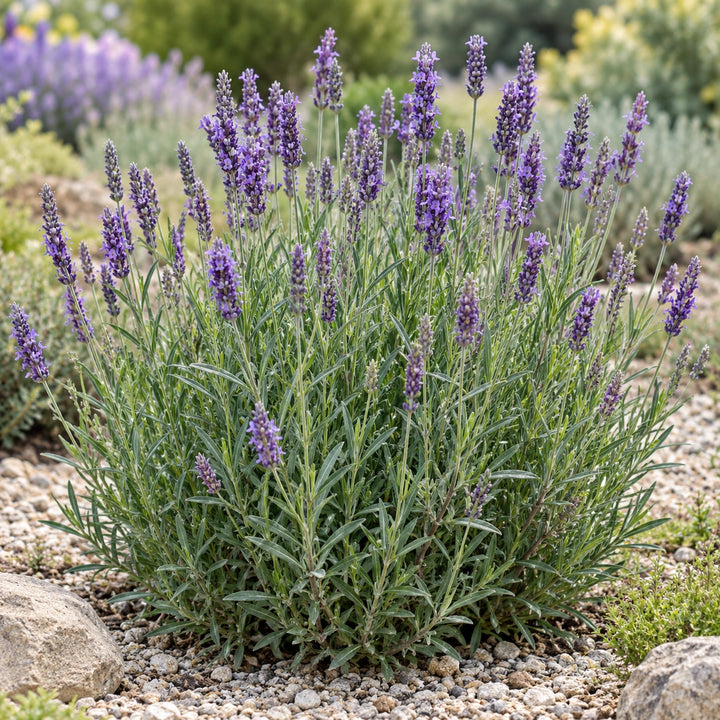
Spike lavender is Lavandula latifolia, one of the two parents of lavandin, the big, strongly scented hybrid behind many lavender fields. On its own it is a subshrub about 24 inches tall and wide with broader leaves than English lavender, hence latifolia, meaning broad-leaved. Its purple flower spikes open in mid-July.
The fragrance is its calling card: sharp and herbal, with eucalyptus-like, camphor and floral notes. It is a crisp, clean smell rather than the sweet perfume of English lavender.
Spike lavender at a glance
| Trait | What to expect |
|---|---|
| Botanical name | Lavandula latifolia |
| Group | Section Lavandula |
| Flower color | Purple |
| Habit | Subshrub with broad leaves |
| Size | About 24 inches tall and 24 inches wide |
| Bloom | Mid-July, single flush |
| Fragrance | Moderate; sharp herbal, eucalyptus-like, camphor and floral |
| Oil suitability | Great |
Where spike lavender fits
For most home gardeners, spike lavender is a plant for the curious: the chance to grow one of the parents of the lavandins and smell the difference for yourself. Plant it beside an English lavender and a lavandin and you have a living lesson in lavender family history. Its essential oil suitability is rated great, which also makes it interesting to small growers exploring oil plants.
In design terms, its broader leaves give a slightly coarser texture than English lavender, and its purple spikes stand well above the foliage on long stems.
Growing it in a cold climate
Spike lavender comes from warm, dry Mediterranean hillsides, and the listing does not give a hardiness range, so expect it to be less cold-tolerant than English lavender. At the same time, it needs a winter chill to flower well, so a warm living room is not the answer either.
- In the ground: choose a south-facing, sheltered spot with gravelly soil, ideally near a wall or on a raised bed.
- In a pot: use gritty mix and a terra cotta container, then overwinter it somewhere cold, bright and dry, such as a cold frame or unheated porch.
- Water: deep but infrequent during establishment; dry afterward.
- Feeding: none needed; lean soil keeps it compact.
Check your zone with the USDA Zone Finder before deciding between bed and pot.
Bloom and harvest
Spike lavender blooms once, in mid-July. It is rated good for fresh and dried flowers. Cut stems when the first flowers open on each spike and hang them in a dark, airy spot; the sharp herbal scent carries well in dried bundles and sachets. After bloom, trim spent stems and lightly shape the plant, staying above bare wood. Culinary use is not recommended.
As species stock, traits can vary among source lines. It is offered as a 3-inch plug, a 4-inch pot or a 1-gallon pot. See the product page for current sizes and availability.
If you grow it for its scent, pinch a leaf on a hot afternoon and compare it with an English lavender leaf. The sharper, more camphor-forward spike lavender note is easy to pick out, and it explains a lot about how lavandin smells.
Frequently asked questions
How does spike lavender smell compared with English lavender?
Sharper and more herbal, with eucalyptus-like and camphor notes. English lavender is sweeter and softer.
Is spike lavender the same as lavandin?
No. Lavandin, L. × intermedia, is a hybrid of spike lavender and English lavender.
Does it rebloom?
It is a single-flush lavender, blooming once in midsummer.

































Share how it went in your field