

Product Field NotesLavender Plants
Cape Verde Lavender: An Island Species with Blue Spikes
 Save
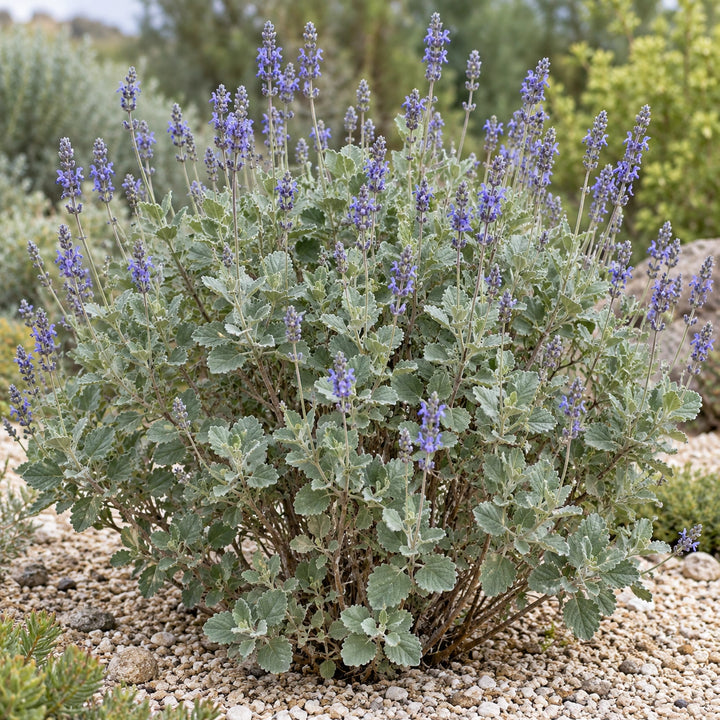
Cape Verde lavender is Lavandula rotundifolia, a Pterostoechas lavender named for the Cape Verde islands off West Africa. Rotundifolia means round-leaved, a hint that its foliage looks different from the narrow leaves of English lavender. It grows as a subshrub about 18 inches tall and wide, with blue flower spikes over a long season that begins in mid-April in warm conditions.
It is a true rarity in northern gardens, and a good conversation starter on a sunny deck.
Cape Verde lavender at a glance
| Trait | What to expect |
|---|---|
| Botanical name | Lavandula rotundifolia |
| Group | Pterostoechas |
| Flower color | Blue |
| Habit | Subshrub |
| Size | About 18 inches tall and 18 inches wide |
| Bloom | Starts mid-April, peaks mid-July, long season with moderate rebloom |
| Fragrance | Moderate; resinous and herbal with camphor notes |
| Identity | Commercial species stock; traits can vary |
A small plant with a long season
At 18 inches, Cape Verde lavender is a manageable size for a container, and its long bloom season gives a good return for the space. Records place the start in mid-April and the peak in mid-July, which in a northern setting translates to flowering through most of the outdoor season once it is set out, with moderate rebloom along the way. Bees rate it great.
Because this listing is species stock, plants can vary in size and exact flower shade among source lines. Growing several side by side shows that natural range.
Care basics
- Pot: 8 to 12 inches with drainage holes; terra cotta helps the mix dry evenly.
- Mix: gritty and fast draining.
- Light: full sun outdoors, the brightest window indoors.
- Water: soak, then let the top inch or two dry. Wet roots are the most common problem.
- Feeding: light, during active summer growth.
- Grooming: clip spent spikes to keep new ones coming.
Bringing it through winter
Island lavenders from warm climates are frost-tender, and the listing does not give a hardiness range, so in Michigan this one comes indoors before frost. Choose a cool, bright spot, water sparingly and skip fertilizer. If growth stretches toward the window, trim lightly in late winter. After the last frost, move it back outside gradually; the Frost Date Estimator helps you set a date.
Using the flowers
Cape Verde lavender is rated good for fresh and dried flowers. Its blue spikes add a cool note to small arrangements and dry well hung upside down in a dark, airy place. The scent is resinous and herbal rather than sweet. Culinary use is not recommended.
It comes as a 3-inch plug, a 4-inch pot or a 1-gallon pot. See the product page for current sizes and availability, or save it to your Wishlist for next season.
Collectors often grow it alongside other island lavenders such as Canary Island or Minutoli lavender. They share the same frost-tender needs, so one bright, cool winter spot can hold the whole collection, and side by side the differences in leaf shape and flower color are easy to appreciate.
Frequently asked questions
Why is it called Cape Verde lavender?
It is named for the Cape Verde islands, where the species is native.
Does it need a cold winter?
No. It blooms without a winter chill, so it flowers in its first season.
Can I plant it in the garden?
For the summer, yes, in full sun and sharp drainage. It will not survive a Michigan winter outdoors.

































Share how it went in your field